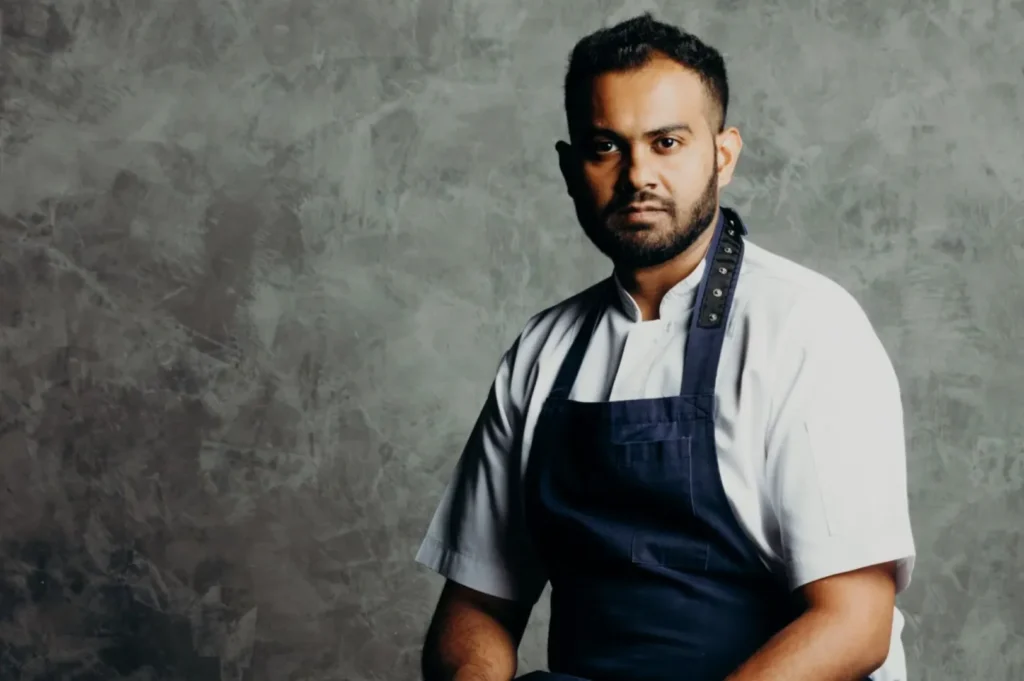
We often associate heritage food with static traditions. We expect the dishes of our childhood to remain exactly as we remember them. But memory is not a recipe. For Mano Thevar, chef and owner of his namesake restaurant in Singapore, heritage is a starting point rather than a rigid set of rules. His approach to modern Indian cuisine asks a fascinating question. How do you take the vibrant, unapologetic flavours of Malaysian Indian street food and subject them to the strict discipline of European technique?
If you are curious about how another Asian cuisine carries its own deep lineage, Food Stories explored Peranakan heritage and its story.
The Mechanics of Memory
The answer begins in Penang. Thevar grew up surrounded by the intense, layered flavours of hawker stalls and neighbourhood eateries. This environment built a palate rooted in deep, complex spices. However, translating these childhood memories into a modern dining format requires immense technical control. A chef cannot simply recreate a traditional curry and place it on a smaller plate. Instead, at Thevar, he breaks down the fundamental elements of a dish to understand its core identity. He then rebuilds it using the rigorous methodologies he absorbed while working in high level French and Japanese kitchens.
Balancing Technique and Tradition
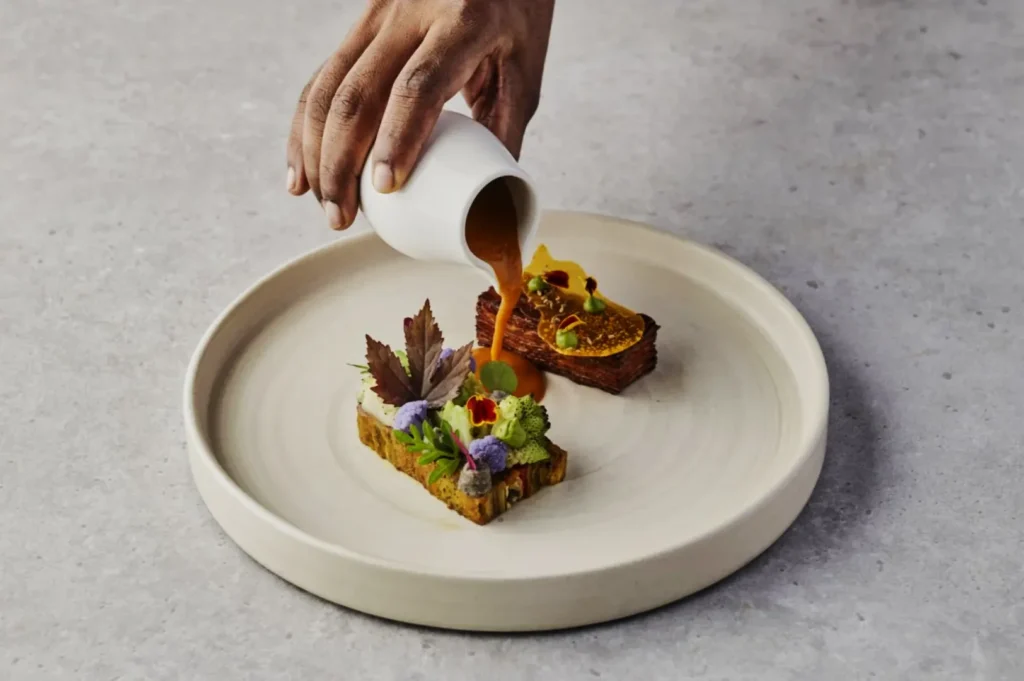
We see this translation in how he handles seasonal ingredients. European fine dining places heavy emphasis on the pure, natural state of seasonal produce. Indian cuisine traditionally relies on slow cooking and heavy spice blends that can easily overpower delicate ingredients. Thevar navigates this tension through restraint. He applies heat and spice not to mask an ingredient, but to amplify its natural characteristics. A rare cut of seafood or a seasonal vegetable receives just enough structural support from a spice paste or a carefully infused oil. Every component on the plate serves a clear, logical purpose. Nothing exists purely for visual decoration.
The Clarity of Spice
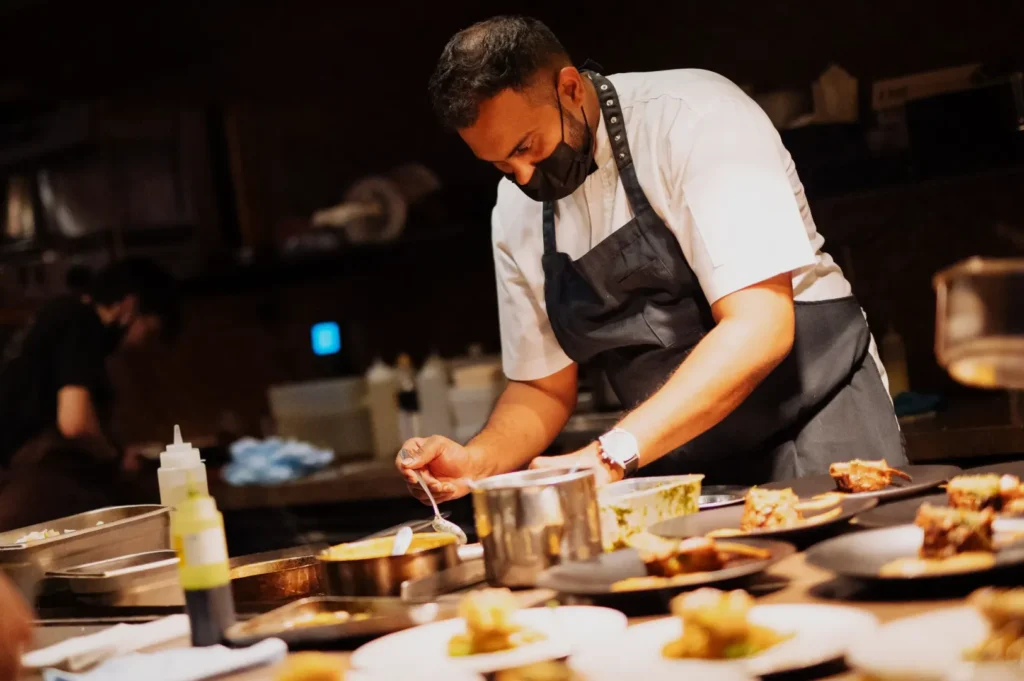
This level of technical precision reveals a deep respect for culinary tradition. It takes a profound understanding of a classic recipe to know exactly which elements can be altered and which must remain intact. When a chef infuses a classic European sauce with south Asian spices, the balance must be exact. The acidity, the fat content, and the heat must align perfectly. If the technique fails, the dish feels confused. When executed correctly, the technique provides clarity. It allows the diner to experience familiar flavours with an entirely new level of focus and texture.
A Quiet Evolution
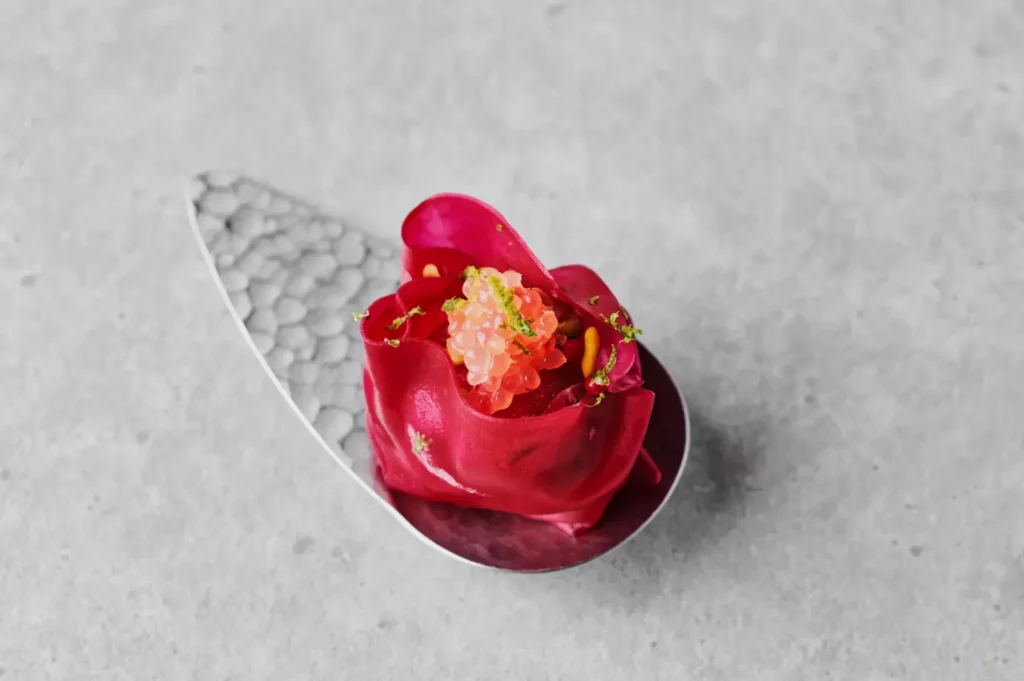
Looking at his work, we realize that redefining a cuisine does not mean abandoning its history. For Mano Thevar, innovation is simply a tool used to explore his heritage more deeply. His careful, analytical approach to cooking strips away the unnecessary, leaving only the essential truth of a dish. The result is a quiet, powerful evolution of Indian food that honors its roots by allowing them to grow into new, unexpected forms.