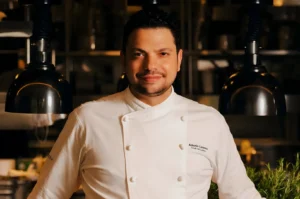
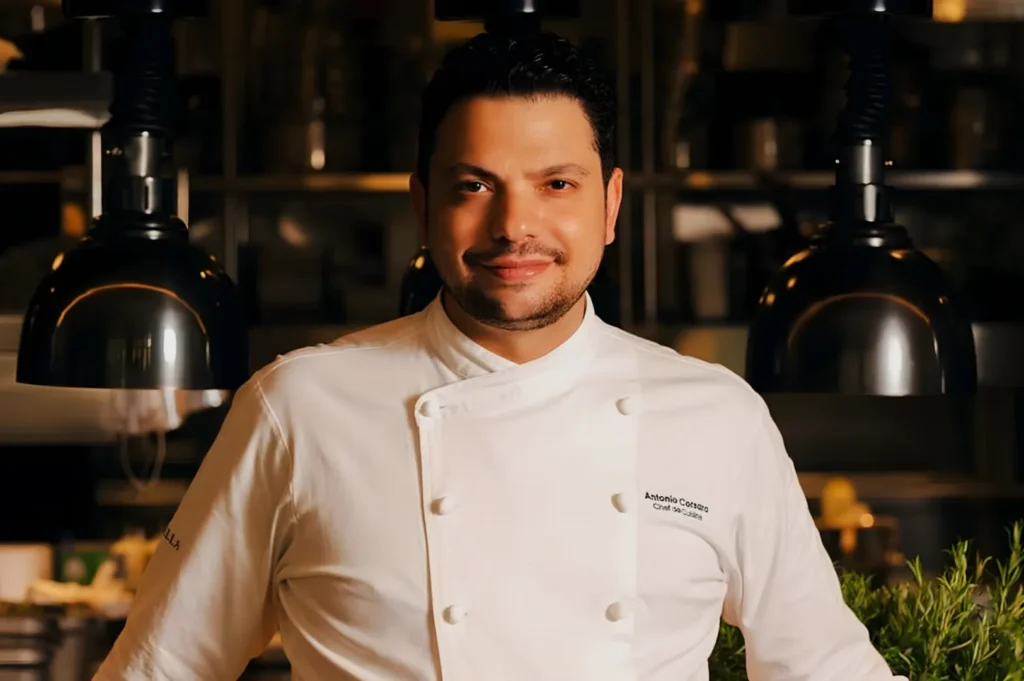
Italian cooking rewards restraint more than reinvention. A handful of good ingredients, treated with respect, can carry a dish further than any clever trick. For Chef de Cuisine Antonio Corsaro, who leads the kitchen at Fiamma in Capella Singapore, that idea is not a slogan. It is the result of a life spent in kitchens, starting long before he ever earned the title of chef.
About Antonio Corsaro
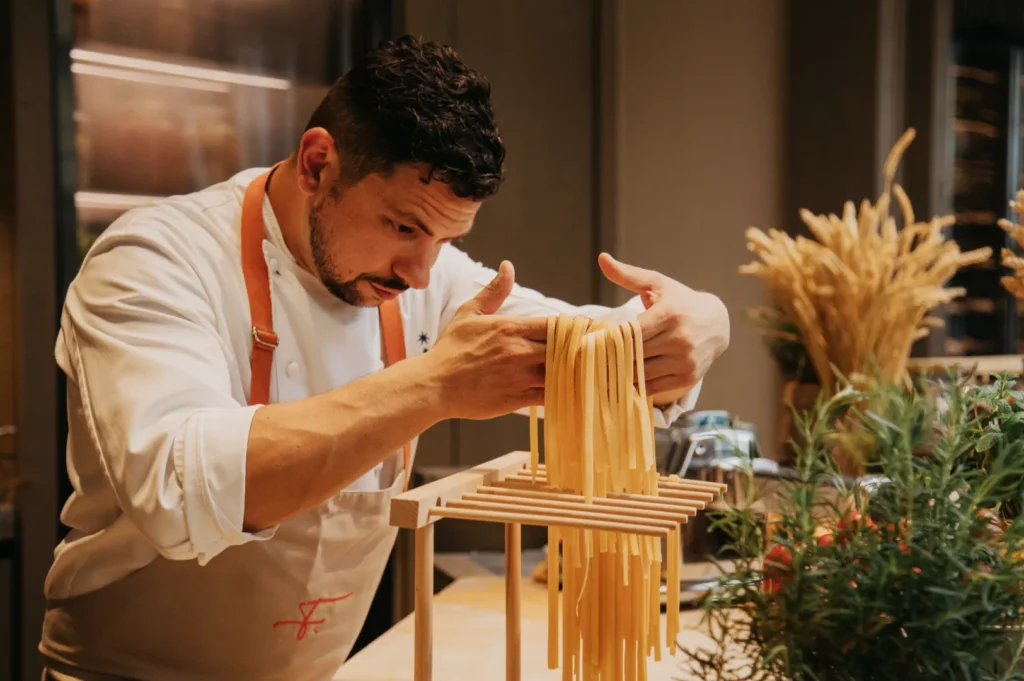
Corsaro grew up in Napoli, a city with two thousand years of culinary history layered into its everyday food. For many diners, that heritage is the foundation of what makes a Best Italian Restaurant feel unmistakably Italian. His first teachers were not famous chefs but the women in his family. His mother, Maria, ran a demanding kitchen and prepared three meals a day. His grandmothers cooked with the same instinct. Those early lessons gave him something technique alone cannot teach: an understanding of why food matters to the people who share it.
He later trained formally in Vico Equense, then built a career across some of Europe’s most exacting kitchens. He worked in Michelin-starred restaurants under Alain Ducasse in Italy and Paris, eventually serving as Head Chef at Rivea in the Bulgari Hotel London. He joined the pre-opening team of BBR at Raffles Hotel in Singapore, then moved to Shanghai as Chef de Cuisine at La Scala in The Sukhothai. Today he helms Fiamma, the Italian concept created with Michelin-starred chef Mauro Colagreco.
What Defines His Cooking
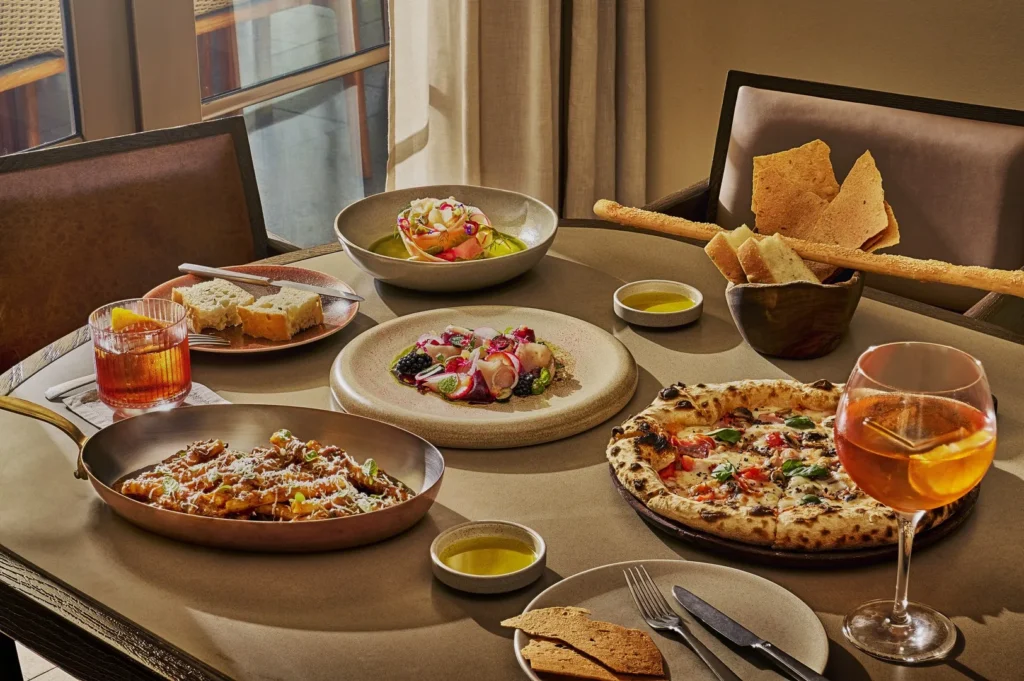
Three ideas sit at the center of how Corsaro works.
- Respect for the ingredient. His goal is to protect the natural flavor of fresh produce, not bury it. He sees his job as enhancement rather than transformation.
- Tradition meeting the present. He combines classic methods with contemporary technique, looking for the point where the past and the future meet on the same plate.
- Conviviality. For Corsaro, a meal is a shared act. He builds food meant to be passed around a table, not admired from a distance.
People often assume that a chef trained in Ducasse kitchens will cook in a formal, intricate style. Fiamma works against that expectation. The food here aims for sincerity and warmth, the feeling of an Italian family gathering rather than a hushed dining room.
The Heart of Fiamma
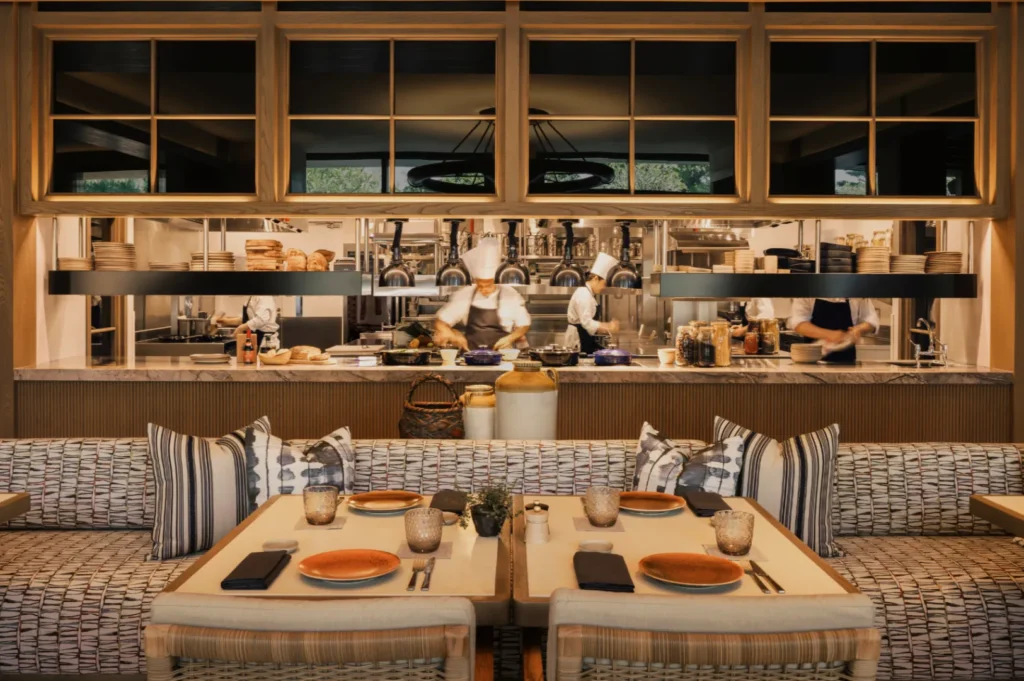
Fiamma means “flame” in Italian, and the restaurant treats simplicity as a kind of luxury. The concept reinterprets Mauro Colagreco’s Italian roots through dishes that feel nostalgic and familiar, then lifts them with fresh, refined flavors. Because Corsaro is also a native Italian, he relates to that memory instinctively. The two chefs share a common history of regional Italian cooking, and they brainstorm dishes that draw on it directly.
What guests should notice is the balance. The flavors feel honest and recognizable, yet the execution carries the discipline of kitchens that do not cut corners. When Colagreco is in town, the team runs taste tests together to hold that standard. When the menu changes, Corsaro pushes the focus toward local and sustainable ingredients.
The Chef's Process
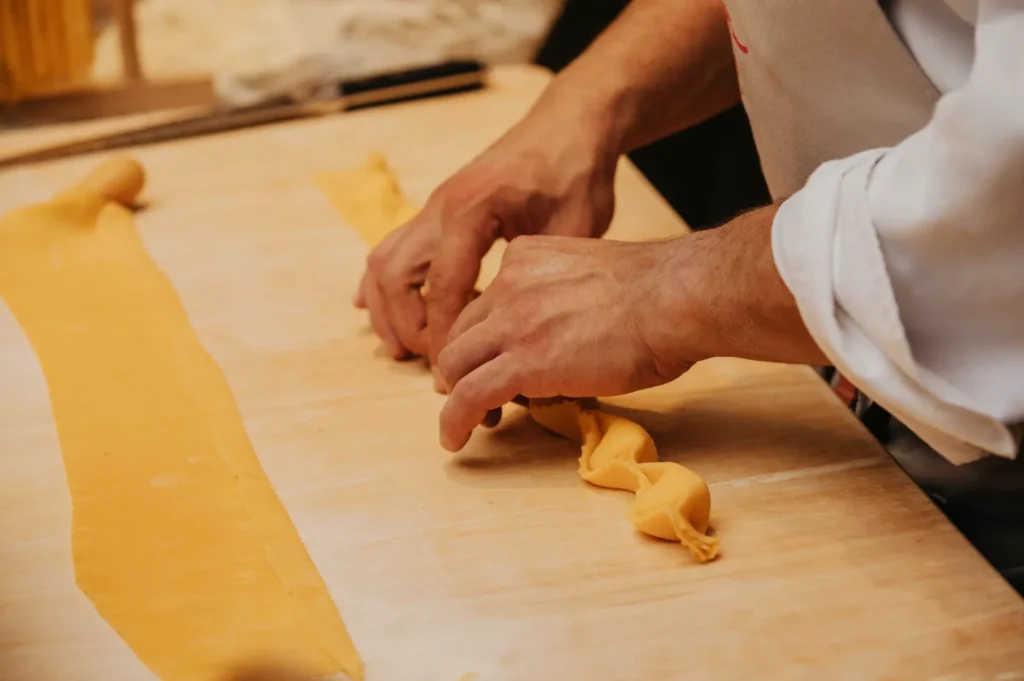
Corsaro’s method begins with sourcing. He treats quality produce as non-negotiable, then works to keep each ingredient’s character intact through to the plate. He favors organic presentation with minimal change, letting the food look and taste like itself.
Seasons drive his creativity. As the produce shifts, he revamps the menu alongside Colagreco, building new dishes around what is at its best. His kitchen culture matters too. He trusts his team with real responsibility and runs daily sharing sessions where they discuss the history of Italian food and the lessons behind it. That habit keeps the cooking grounded in something larger than any single service.
A Table Worth Sharing
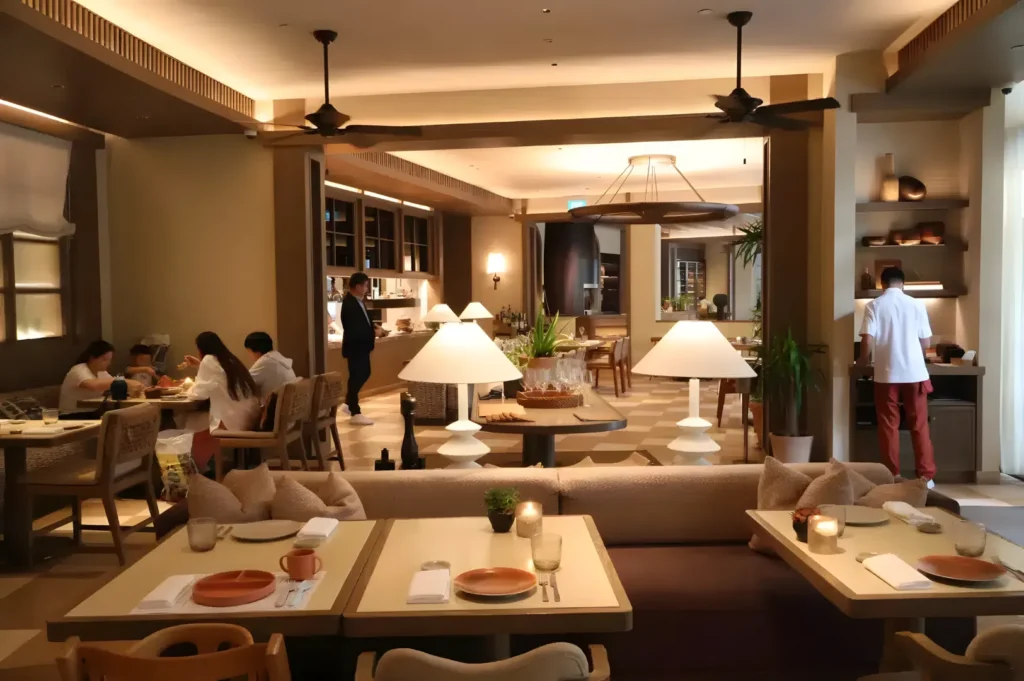
Corsaro wants every guest to feel like they have stepped into Italy, into a place that is welcoming and easy-going. Dining at Fiamma, he says, should feel like a communal meal, where sharing food brings genuine joy. That ambition ties the restaurant back to the kitchen he grew up in, where food was never just sustenance but a way of staying connected.
His career offers a clear lesson about ambition in Italian cooking. The point is not to make familiar dishes more complicated. It is to understand why they comfort us, then protect that feeling with better sourcing, sharper technique, and real care. In Corsaro’s hands, the balance between past and future is not a tension to resolve. It is the very thing that makes the food at Fiamma feel alive.
Come Taste It
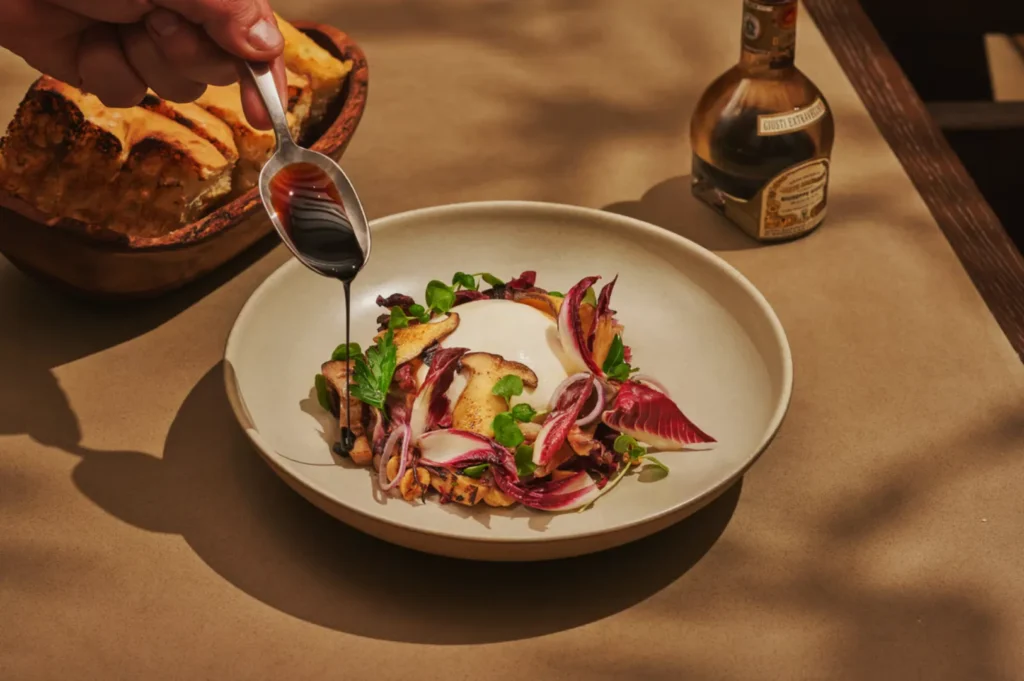
Book a table at Fiamma and experience Italian dining the way Corsaro intends it, shared and unhurried. Start with the wood-fired pizza, a dish he loves for the way it carries the spirit of Napoli straight to Singapore.