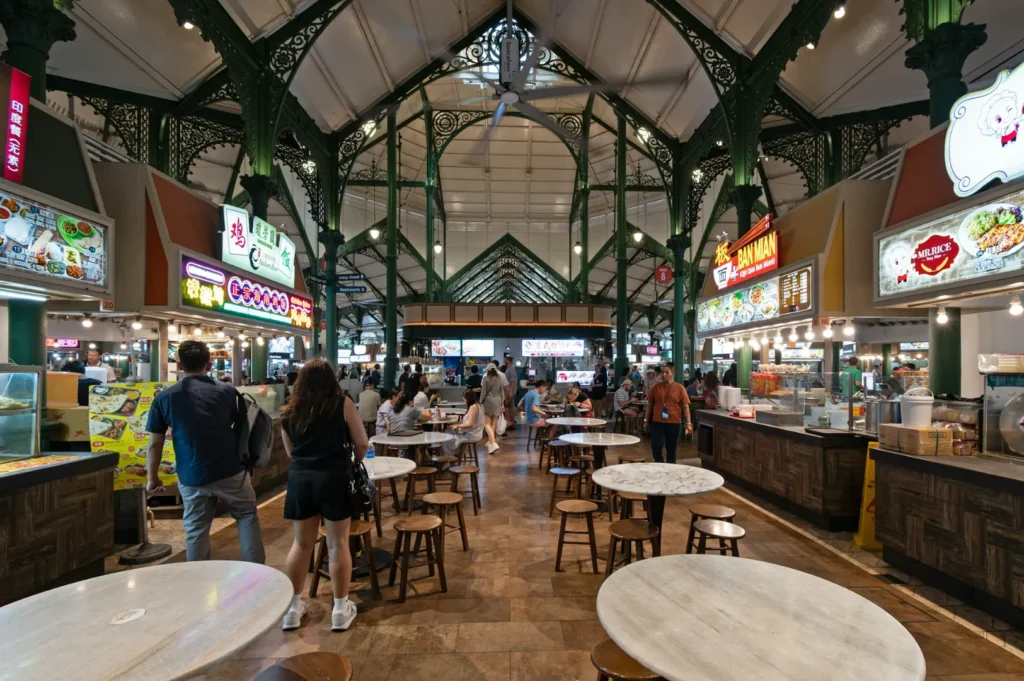
If you ever want to understand Singapore, start with how it eats. Not in a fancy restaurant or a curated tasting menu, but in a busy hawker center at noon, where the air smells like charcoal, curry, and freshly fried noodles all at once.
Food here is more than fuel. It is how people connect, how families spend their weekends, and how strangers strike up conversations while queuing for the same famous stall. It is also one of the easiest places in the world to stumble into good lunch places without even trying. Ask a local what they had for lunch, and you might get a five-minute answer complete with directions and strong opinions.
What Makes Singapore's Food Culture Unique
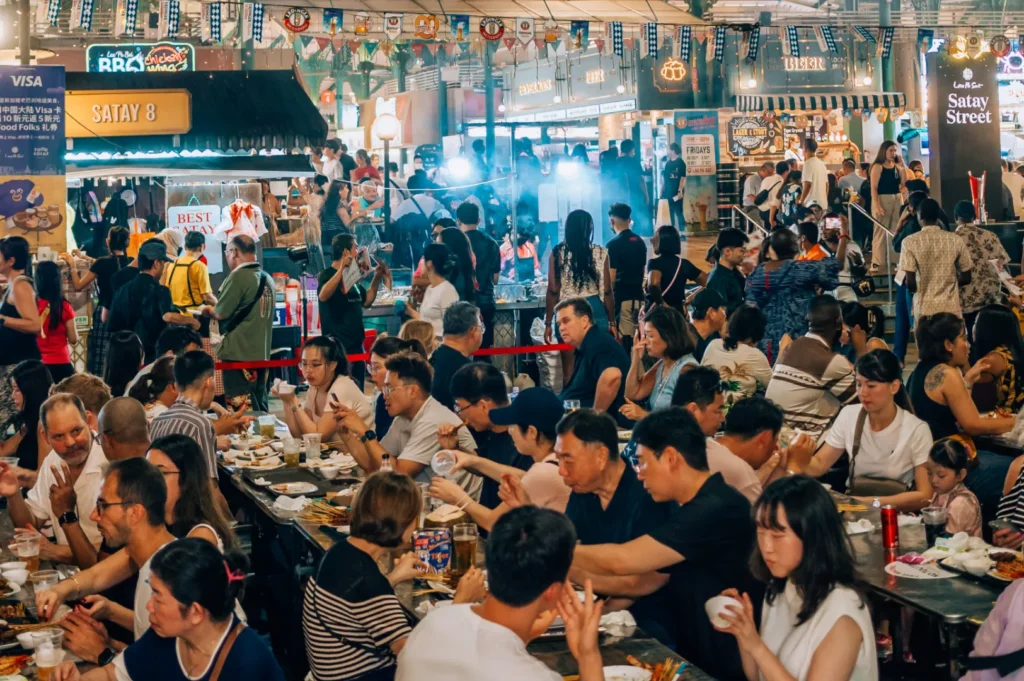
Singapore is a small country with an enormous appetite. Within a few blocks, you can travel through several cuisines without ever leaving the neighborhood.
A big part of this comes from its mix of cultures. Chinese, Malay, Indian, Peranakan, and Eurasian communities have all left their mark on the table. Over generations, these influences blended, borrowed, and built on each other. The result is a food culture that feels both deeply traditional and wonderfully open.
Here are a few things that make it stand out:
- Variety in one place. You can eat Hainanese chicken rice, Indian roti prata, and Malay nasi lemak all under one roof.
- Affordability. Some of the best meals cost just a few dollars.
- Pride in the everyday. A simple bowl of noodles can spark serious debate about who does it best.
- Constant evolution. New dishes and fusions appear all the time, yet the classics stay loved.
It is a place where heritage and creativity sit comfortably side by side.
The Heart of It All: Hawker Centers
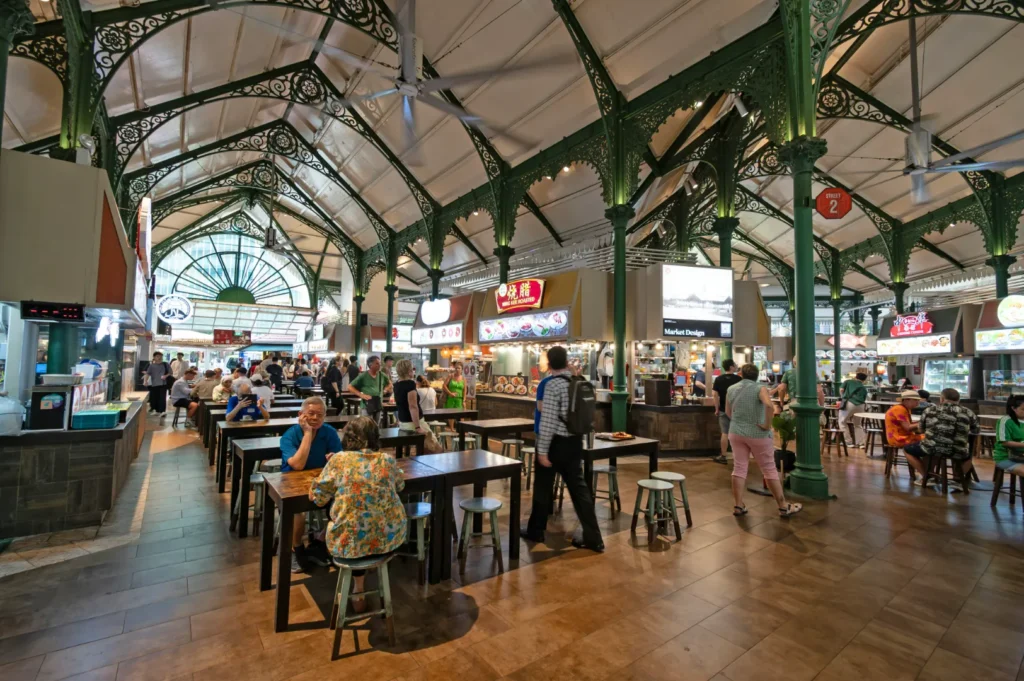
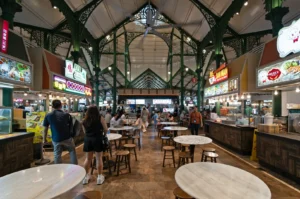
You cannot talk about Singapore’s food culture without talking about hawker centers. These open-air food courts are the soul of how the country eats.
Picture rows of small stalls, each one focused on a handful of dishes they have perfected over years, sometimes decades. One stall might only sell char kway teow. Another has been making the same satay recipe passed down through the family. That focus is exactly why the food is so good.
Hawker centers are also where the country comes together. You’ll see office workers, students, retirees, and tourists sharing tables and elbow room. There is no dress code and no pretension. Everyone is there for the same reason: a good, honest meal.
A few things to know before you go:
- Chope your seat. Locals reserve tables by placing a packet of tissues on them. It sounds odd, but it works.
- Cash helps. Many stalls now take digital payments, but smaller ones may still prefer cash.
- Clear your tray. Returning your tray after eating is now the norm.
A Beautiful Mix of Cultural Influences
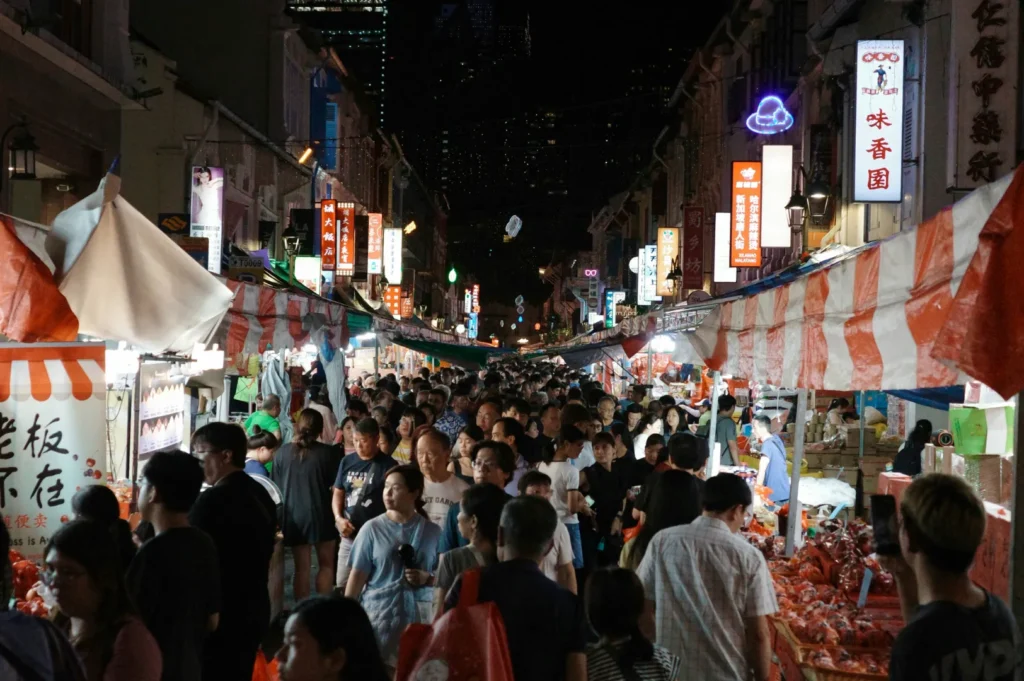
The flavors of Singapore tell a story of migration, trade, and shared kitchens. Each community brought something to the table, and over time those traditions started talking to each other.
Here’s how the main influences show up in everyday food:
- Chinese: Think chicken rice, char kway teow, bak kut teh, and countless noodle dishes. Different Chinese dialect groups brought their own regional specialties.
- Malay: Nasi lemak, satay, and rich, fragrant rendang bring coconut, chili, and warm spices to the mix.
- Indian: Roti prata, fish head curry, and biryani add depth, heat, and incredible aroma.
- Peranakan: This blend of Chinese and Malay heritage gave us laksa, ayam buah keluak, and other dishes full of complex flavor.
- Eurasian and others: Dishes like devil’s curry show how even more cultures shaped the local plate.
What’s lovely is how these lines blur in real life. A Chinese stall might serve curry. A Malay dish might use techniques borrowed from a neighbor. That mixing is the whole point.
How Locals Eat Throughout the Day
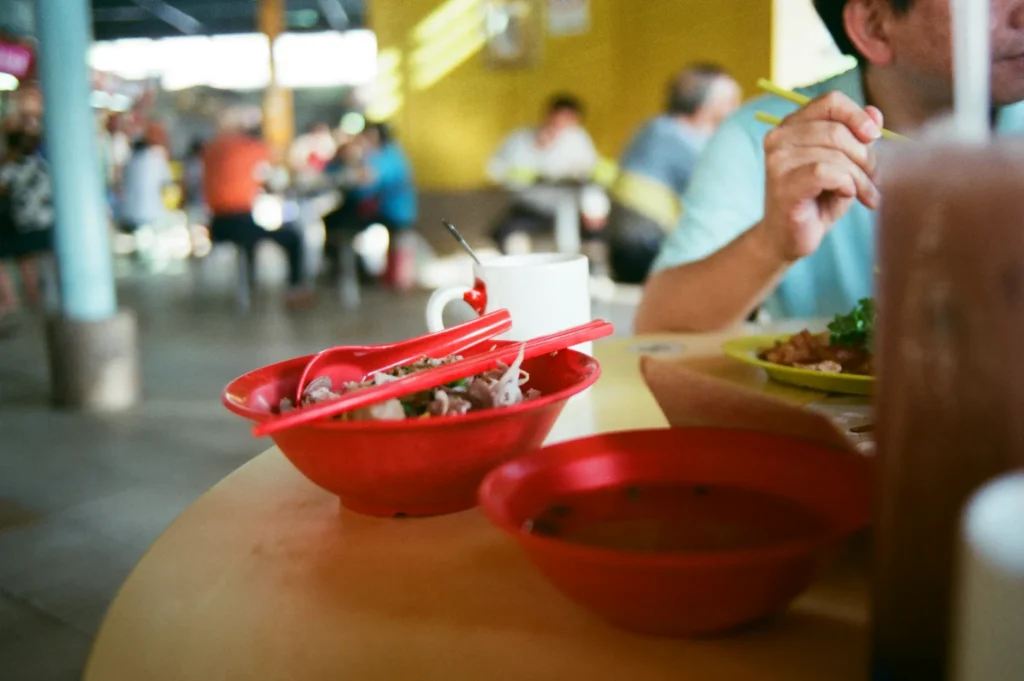
One of the easiest ways to understand the culture is to follow the rhythm of a typical day. Eating in Singapore is almost a full-time hobby, and there’s a dish for every hour.
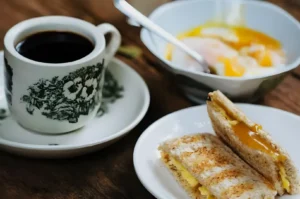
- Breakfast: Kaya toast with soft-boiled eggs and a cup of kopi is a classic start. Some go for a quick bowl of fish ball noodles instead.
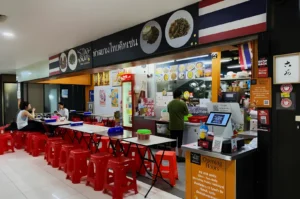
- Lunch: This is hawker territory. Chicken rice, laksa, economy rice (where you pick your dishes over rice), and noodle plates rule the midday rush.
- Afternoon tea: A light snack like curry puffs or a kopi break helps bridge the gap.
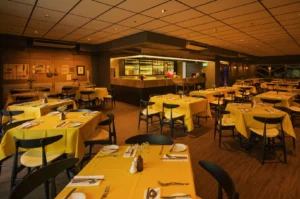
- Dinner: Often a sit-down affair, whether at home, a hawker center, or a casual restaurant. Think zi char, where families share several cooked-to-order dishes.
- Supper: Late-night eating is its own tradition. Roti prata, satay, or a steaming bowl of bak kut teh round out the day.
You don’t have to eat this much, of course. But it helps to know that food moments here are spread generously across the day.
How First-Time Visitors Can Dive In
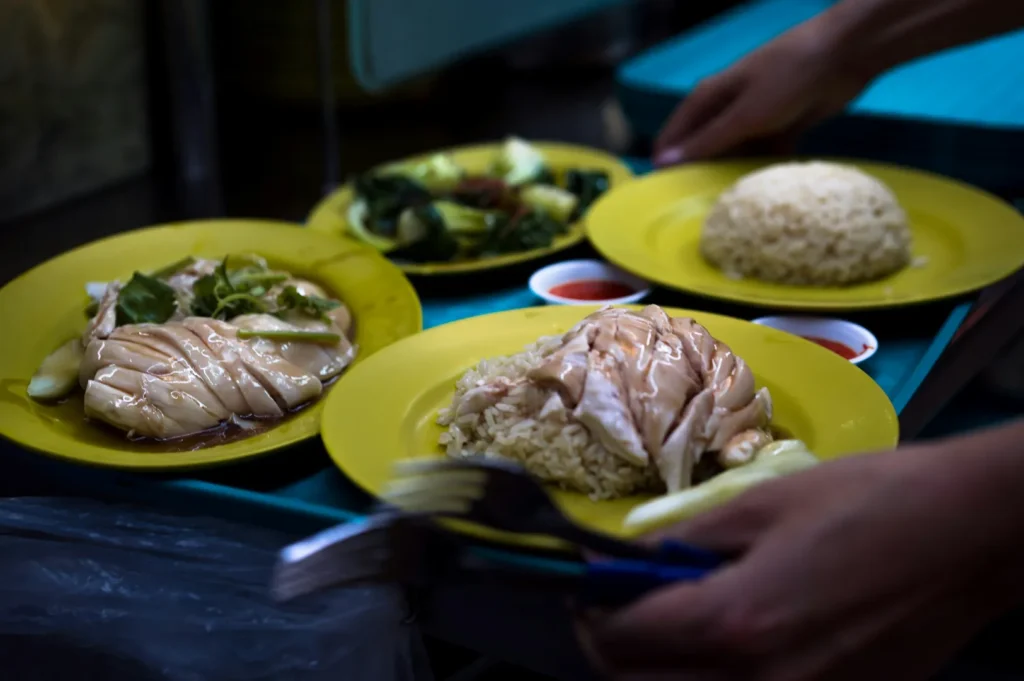
If you’re new to Singapore, the food scene can feel exciting and a little overwhelming. So many stalls, so many choices, and often a queue at every turn. If you’re specifically looking for Orchard Plaza Food, the trick is to relax and take it slowly.
Here are a few simple tips to help you enjoy it:
- Start at a hawker center. It’s the fastest way to sample variety in one sitting.
- Follow the lines. A long queue usually signals something worth waiting for.
- Order small, order often. Share dishes so you can try more without filling up too fast.
- Ask questions. Stall owners and fellow diners are usually happy to point you toward their favorites.
- Try one new thing each meal. Maybe it’s a fruit like durian, or a dish you can’t quite pronounce yet.
There’s no wrong way to do this. Some of my favorite food memories came from simply pointing at something that looked good and hoping for the best.
If you are planning your next food hunt, you might also enjoy: Fortune Centre Singapore: Where to Eat Beyond Vegetarian Food.
A Few Food Habits Worth Knowing
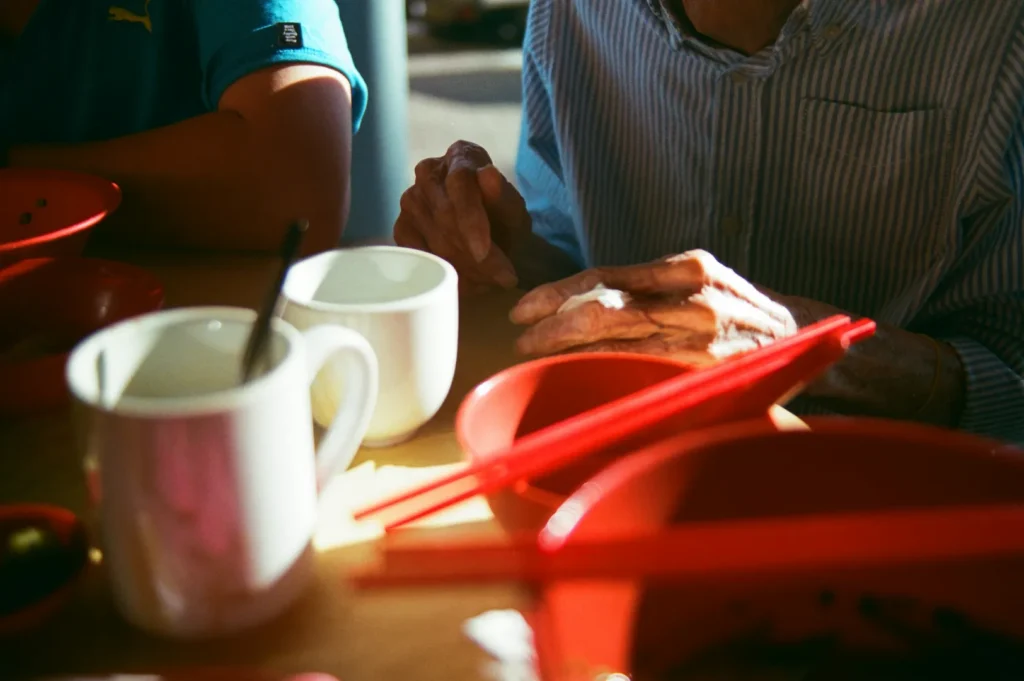
Beyond the dishes themselves, a few cultural habits shape how people eat here. Understanding them helps you feel right at home.
- Kopi culture. Ordering coffee has its own vocabulary. “Kopi” means coffee with condensed milk, “kopi o” is black with sugar, and “kopi c” uses evaporated milk.
- Sharing is normal. Meals are often communal, especially at dinner.
- No rush at the table, but quick at the stall. Ordering is fast and efficient, so know what you want before you reach the front.
- Everyone has an opinion. Where to find the best version of any dish is a beloved national debate.
Explore Singapore One Meal at a Time
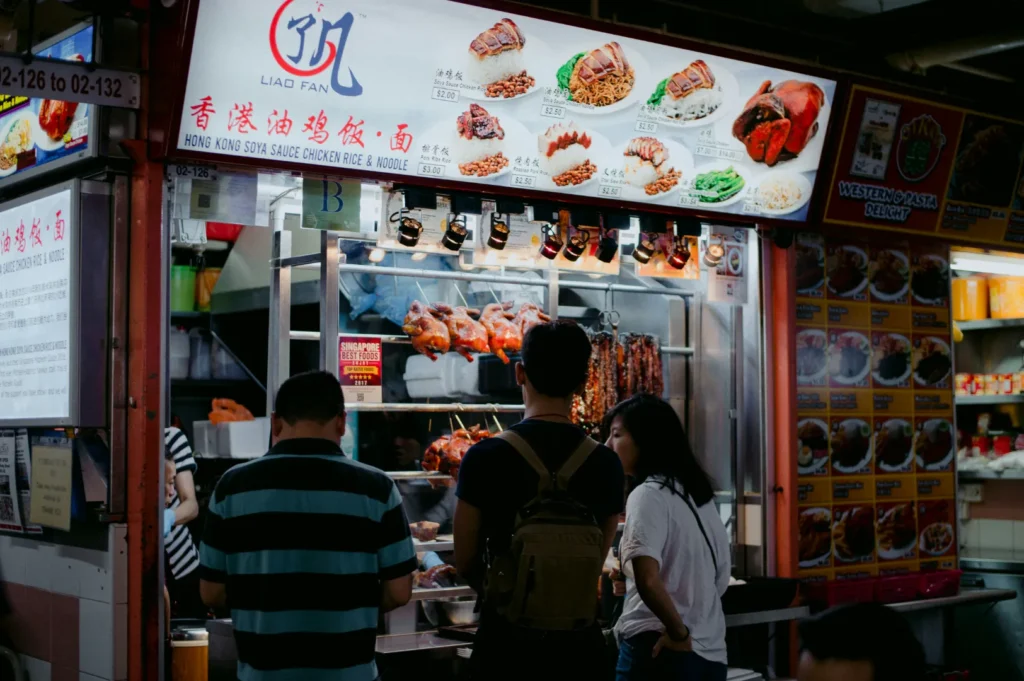
Singapore’s food culture is generous, diverse, and deeply human. It reflects the people who built the country and the everyday joy they find in a good meal shared with others.
You don’t need to understand every dish or eat your way through an entire guide in one trip. Just stay curious, stay a little hungry, and let your appetite lead the way. Have kaya toast in the morning, wander into a hawker center for lunch, and save room for a late-night supper if you can.
That, to me, is the best way to experience this place. One bowl, one plate, and one delicious discovery at a time.