There is a kind of chef who arrives at their ingredient by subtraction. Who learns, slowly and sometimes painfully, that the best thing they can do is step back.
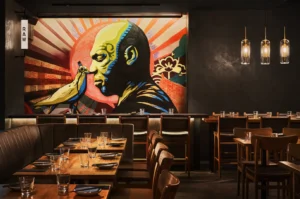
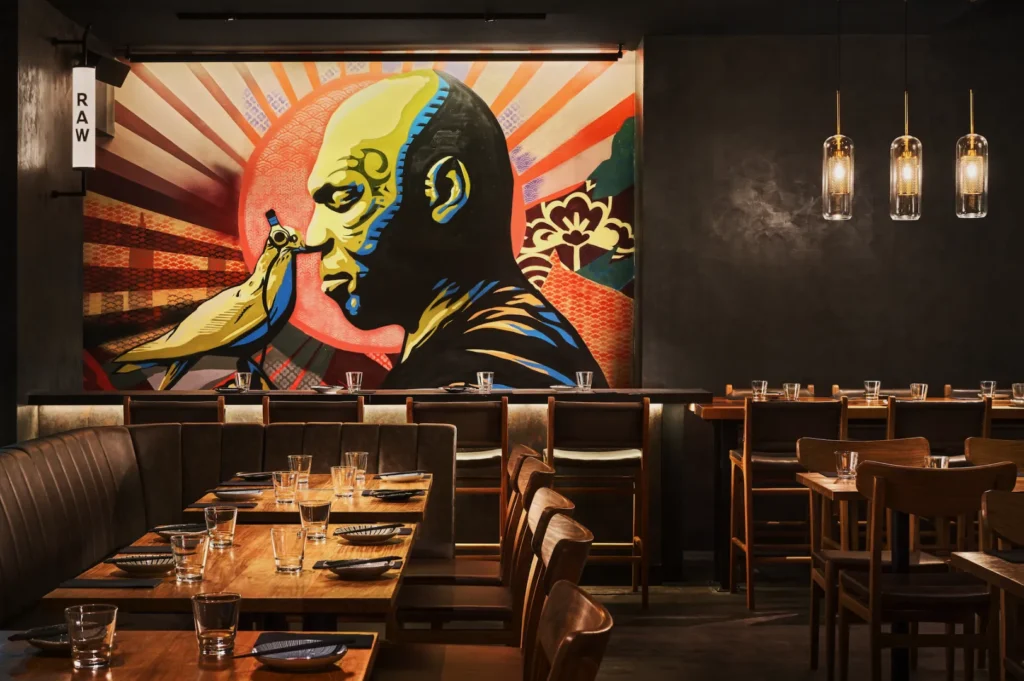
Sean Mell took that road. The New York native came to Japanese cuisine late, and almost by accident. Today he leads the kitchen at Neon Pigeon on Carpenter Street, a place loud enough to make you forget how much quiet work is happening behind every plate.
For more standout (and affordable) izakaya spots around the city, see this guide to unique yakitori and izakaya options in Singapore.
Quick Bio
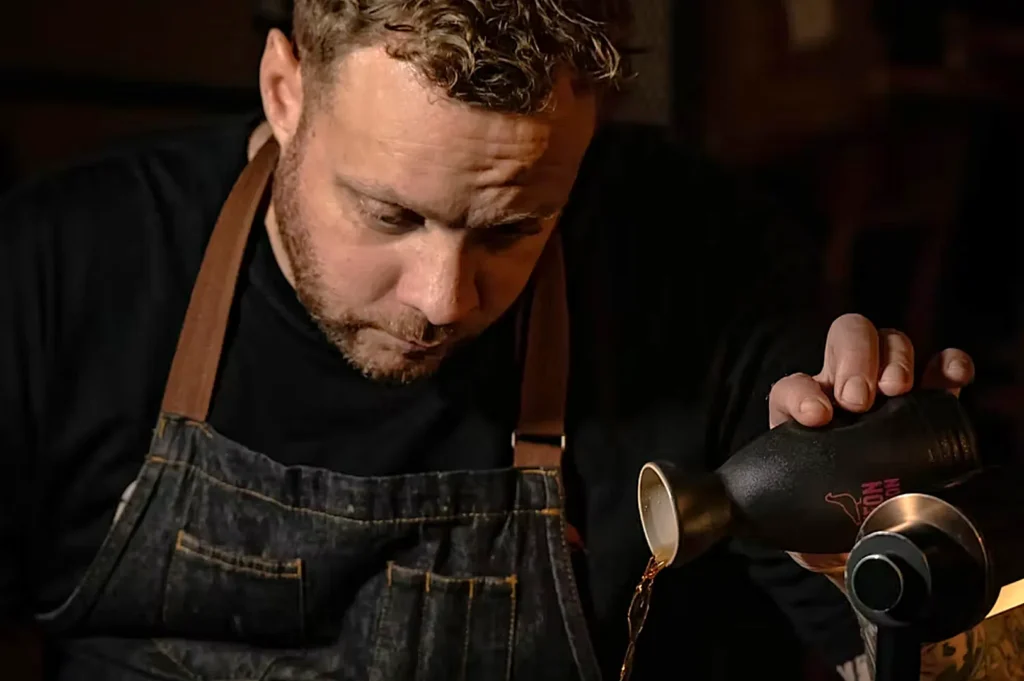
- Role: Head Chef at Neon Pigeon, Singapore
- Signature focus: Modern izakaya cooking, rooted in Japanese technique
- Background highlight: Former Executive Chef at Nobu in Hawaii and Hong Kong, trained under Nobu Matsuhisa
- Origin: Born and raised in New York City
- First spark: Family meals, and one unforgettable Thanksgiving table
He watched Japanese chefs treat their ingredients with a kind of seriousness he hadn’t seen before. How they stored things. How they touched them. The care taken long before anything hit the fire.
“Japanese chefs master their ingredients. They figure out the best possible way to use them.”
That stayed with him. Even now, behind the noise and neon of an izakaya, that quiet discipline is still doing the work, you just have to know to look for it.
The Food at Neon Pigeon
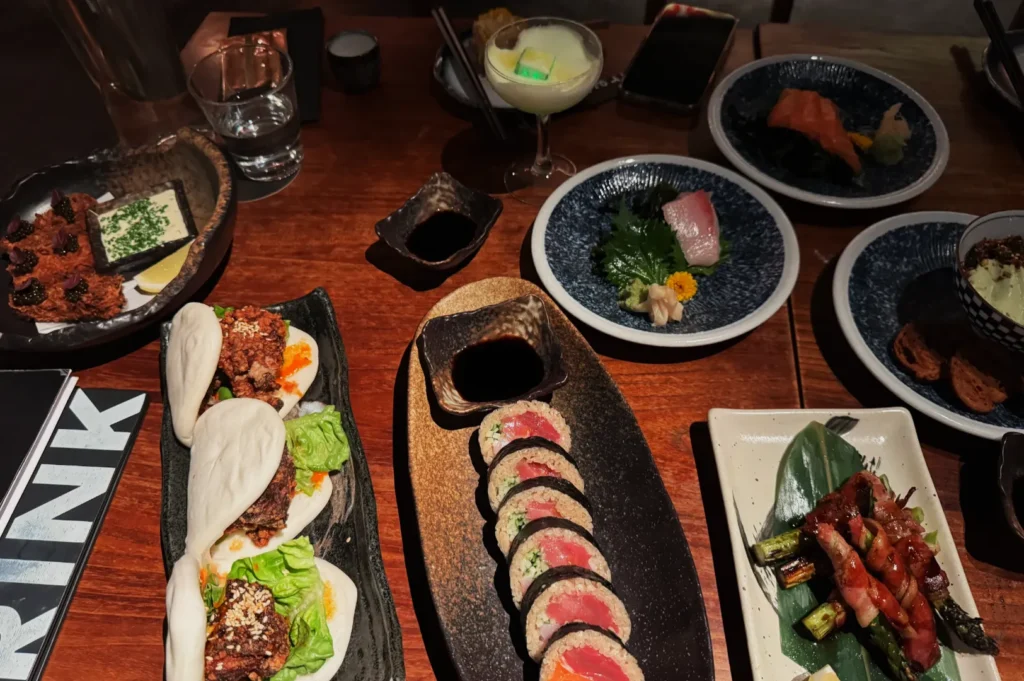
A chef trained in Nobu kitchens could have gone somewhere more formal. Sean Mell didn’t.
He pours that precision into food meant to make you feel at ease. The KFC Bao—karaage chicken, soy glaze, a low hum of gochujang—has sold hundreds in a single month, one piece at a time. It reads as simple. It isn’t.
Mell thinks about nostalgia the way some chefs think about technique. He takes a flavour you already know and turns it just slightly, until it becomes something new. Comfort made thoughtful. Nothing that needs a paragraph of explanation on the menu.
He is also protective of the word izakaya. In Singapore, it gets used loosely. For him, it means something specific: a drinking den, intimate, a little irreverent, where the conversation is louder than the food. You still get sashimi. You also get a kitchen willing to play.
The playfulness is the disguise. The discipline underneath is real.
Signature Dish: KFC Bao
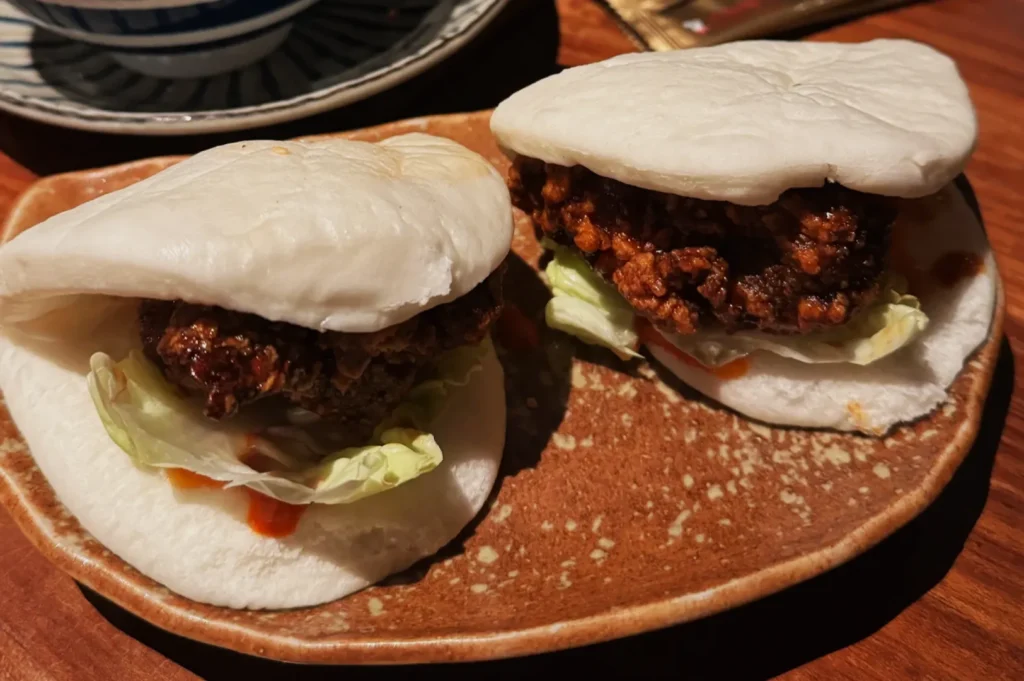
Tastes like: Crisp karaage chicken, a slick of soy glaze, the low warmth of gochujang, folded into a soft bao that holds it all together without fuss.
Why it matters to him: It is nostalgia built with care. He wants you to recognise something—fried chicken, a comfort you already carry—then feel it land somewhere just beyond what you expected. The soul of the dish arrives before any of the cleverness does.
Best paired with: A sake layback or a clean highball. Something cold and simple, to cut through and let you start again.
A Place to Belong
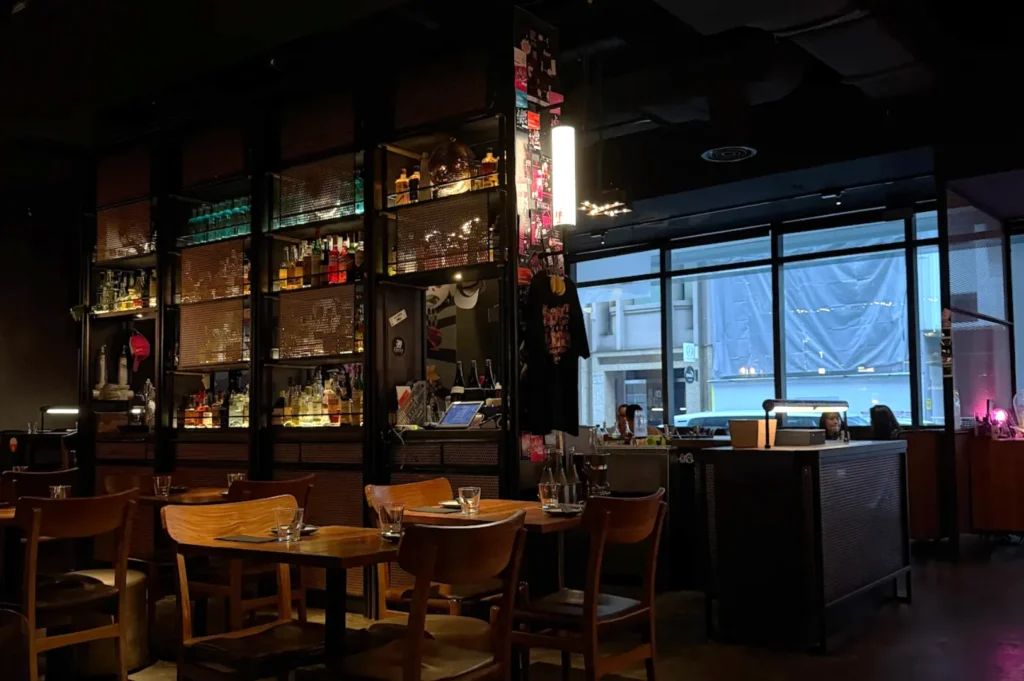
What stays with you, after talking to Mell, is not the technique. It is something harder to name.
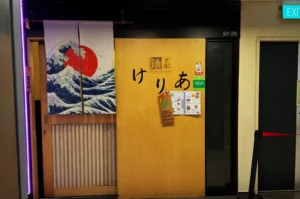
He talks about the door. How you stand outside Neon Pigeon, hear the music seeping through, feel the pull of it, and already know the night is going somewhere good. You walk in and someone hands you a shot of sake before you’ve even found your seat. You don’t feel like a customer. You feel like you showed up somewhere that was expecting you.
That feeling, the one that starts before the food, is what he is really cooking toward.
The precision he learned in Japanese kitchens. The warmth he grew up with at a family Thanksgiving table. Both of them, somehow, in a loud little room on Carpenter Street.
Try It Next
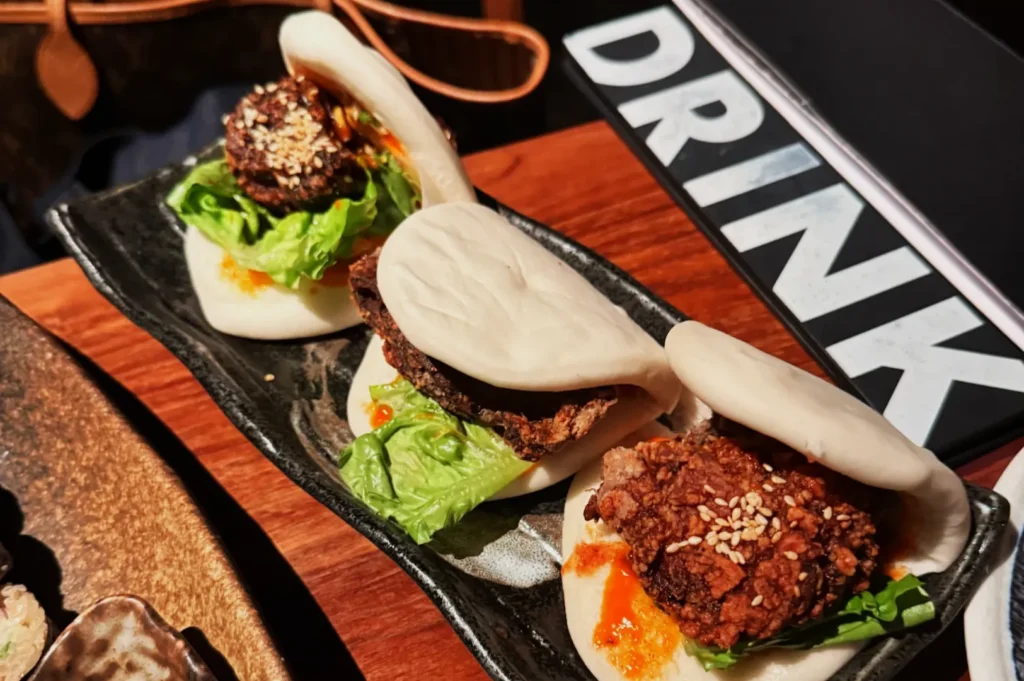
Go hungry. Order the KFC Bao first, then let the kitchen take it from there.
Neon Pigeon is at 36 Carpenter Street. A table is worth booking ahead, the room fills, and the night moves fast once it starts.
The Turn Toward Japan
He started in French and modern American kitchens. Butter. Mother sauces. The kind of cooking where everything gets covered.
After a while, it began to feel like the same meal dressed differently. The same richness. The same logic. He was good at it, but something was missing.
When culinary school offered him an externship, he went looking for the opposite of what he knew. He came back with one name: Nobu.
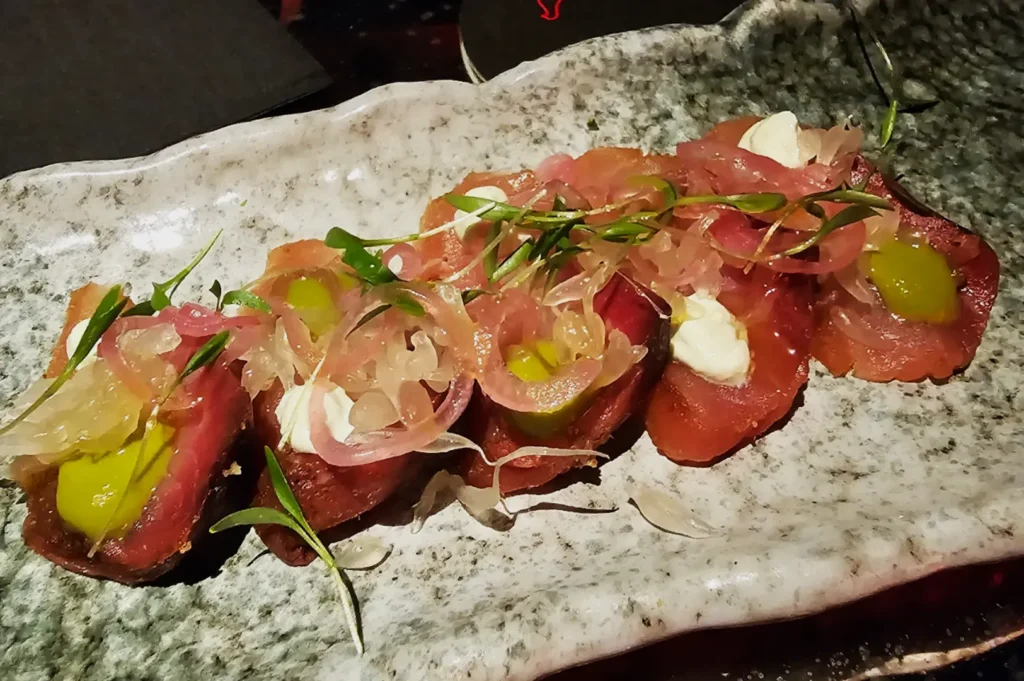
He had barely eaten Japanese food before then. A shrimp tempura roll, maybe. At Nobu, he had sashimi for the first time. Just fish. Just a clean, cold slice of something honest.
Something shifted. He stayed in that world for years, eventually running Nobu kitchens in Hawaii and Hong Kong, and never quite left.
What Japanese Cooking Taught Him
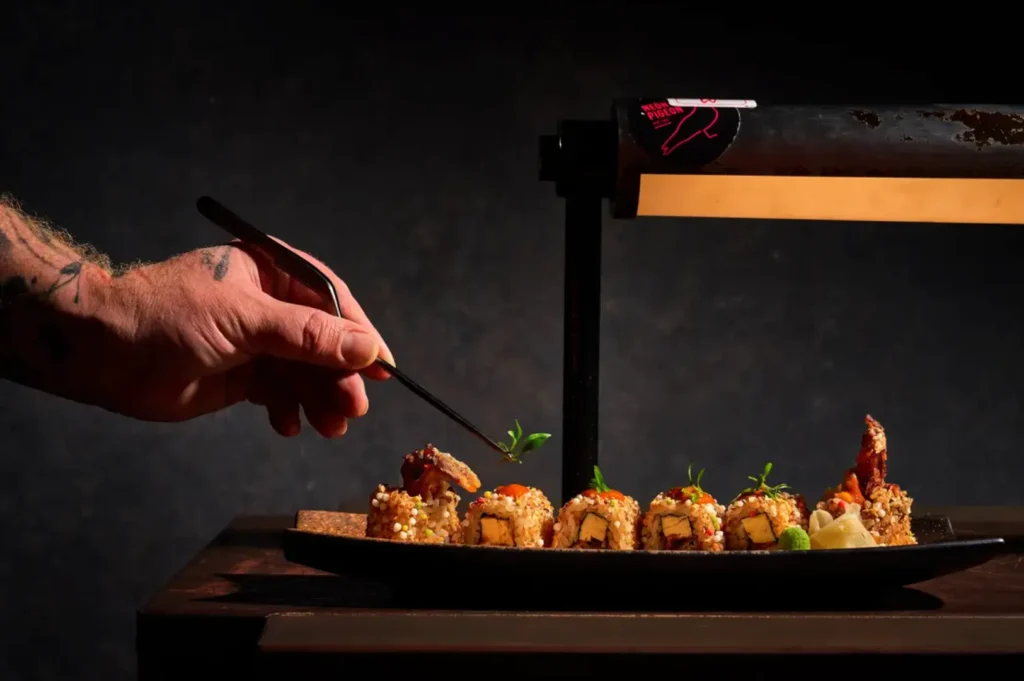
The lesson was restraint.
French cooking asks you to build. To layer, to enrich, to transform. Japanese cooking asked him to do less. To handle a product carefully, then mostly get out of its way.