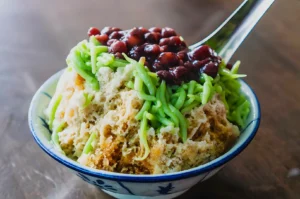
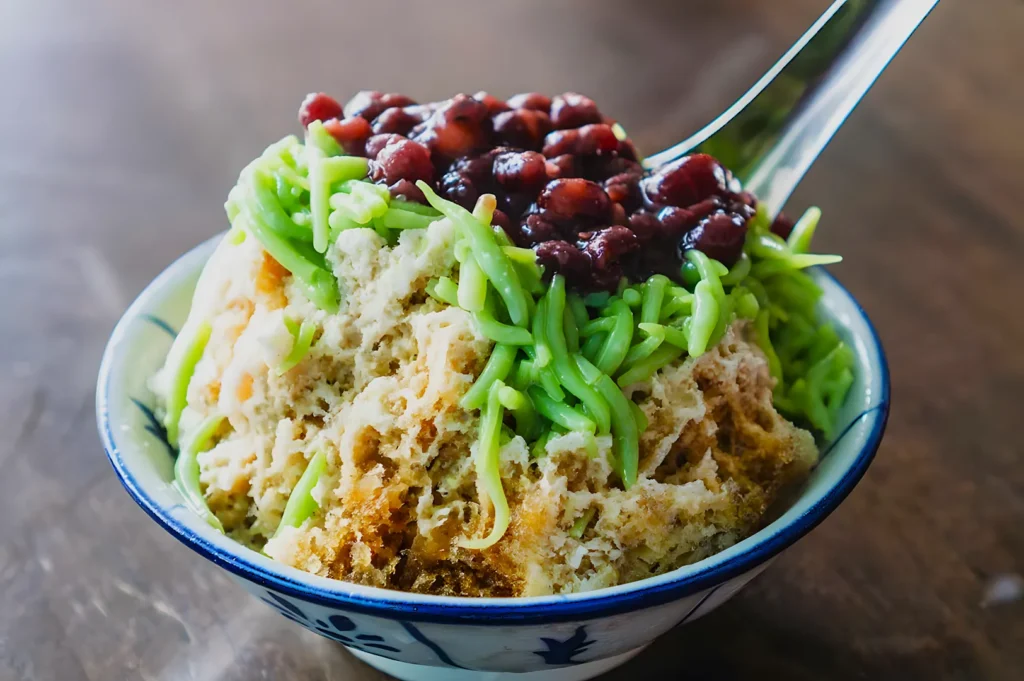
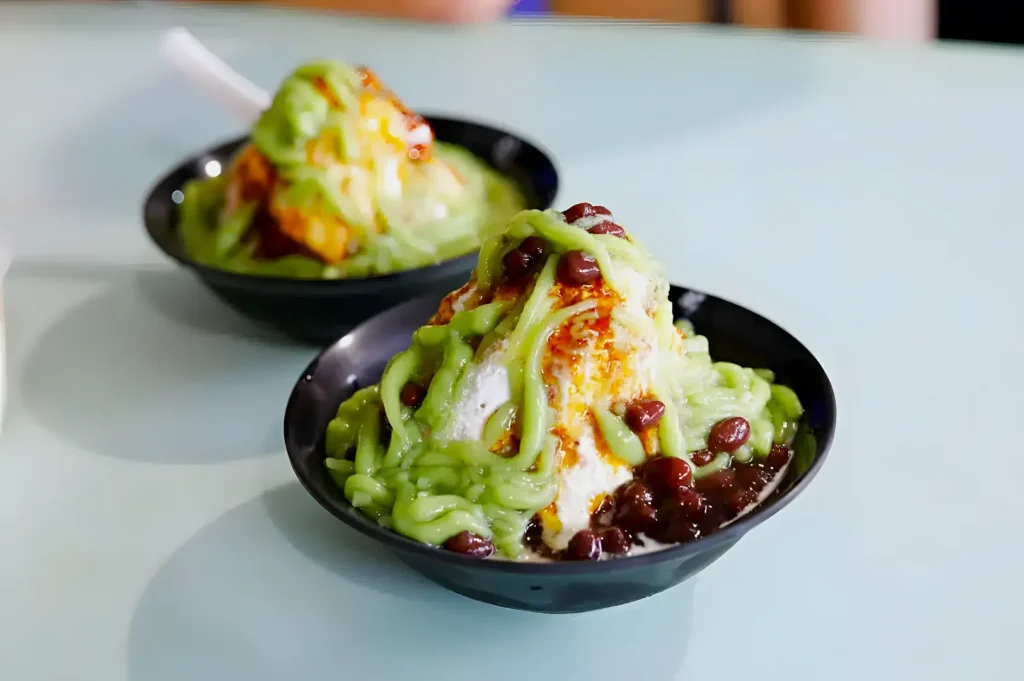
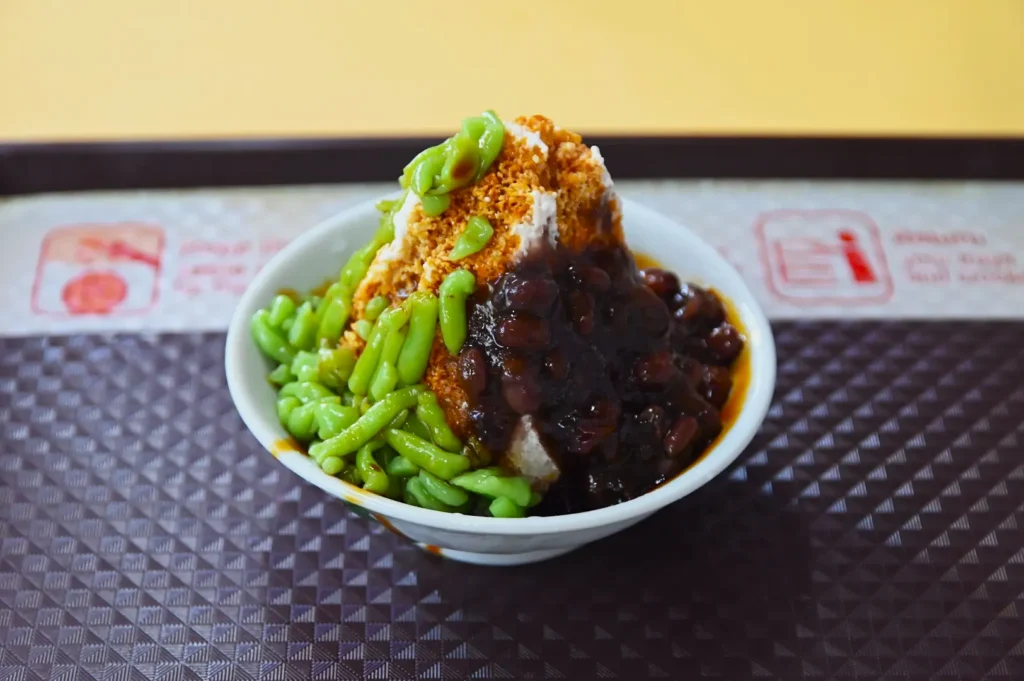
There is a distinct pause that occurs when the spoon scrapes the bottom of the bowl for the final time. The sweetness that defined the last fifteen minutes is gone, replaced by a sudden, cooling stillness. The bowl, once a mound of shaved ice crowned with green jelly worms and red beans, is now a shallow pool of pale brown liquid. It sits on the table like a quiet aftermath, the remnants of a treat that was consumed perhaps a little too quickly in the heat of the afternoon.
For more culinary adventures, discover authentic yakitori in Singapore at Fukuda Yakitori Dining.
The Ice’s Final Surrender
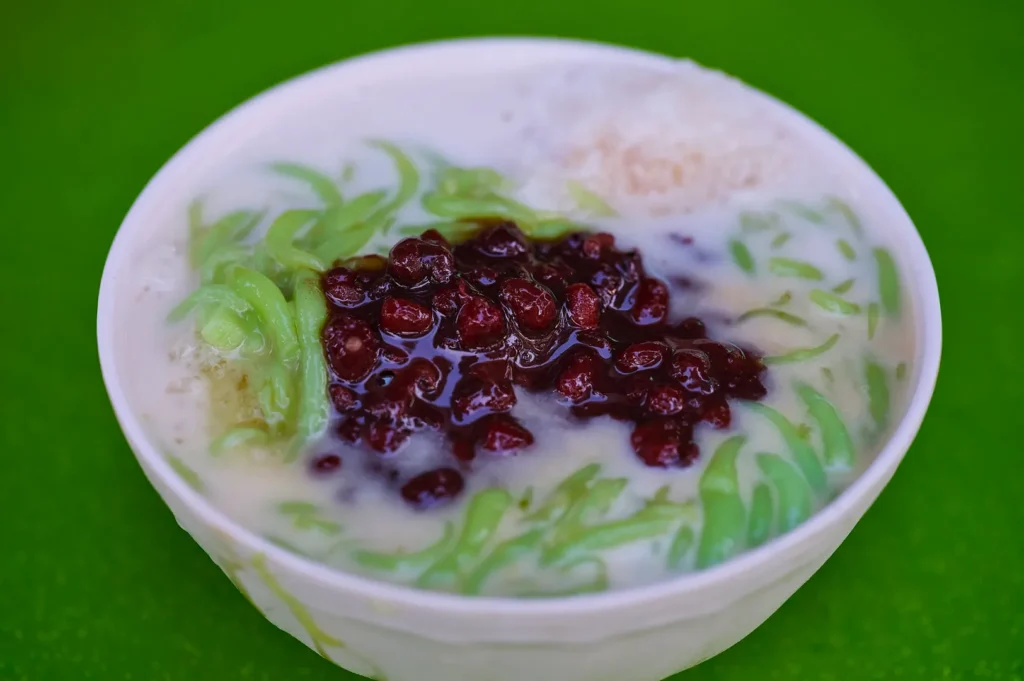
The ice has mostly surrendered. What remains are small, translucent shards floating in the diluted coconut milk. They drift slowly, colliding with the side of the bowl without a sound. The rich, dark streaks of gula melaka that once coated the ice have dissolved completely, merging into the milk to create a uniform, sandy hue. It is a color that speaks of an ending. The vibrant contrast of the dessert, the bright green pandan jelly against the white coconut milk and the deep brown palm sugar, has faded into a single, muted tone.
A Lingering Stillness
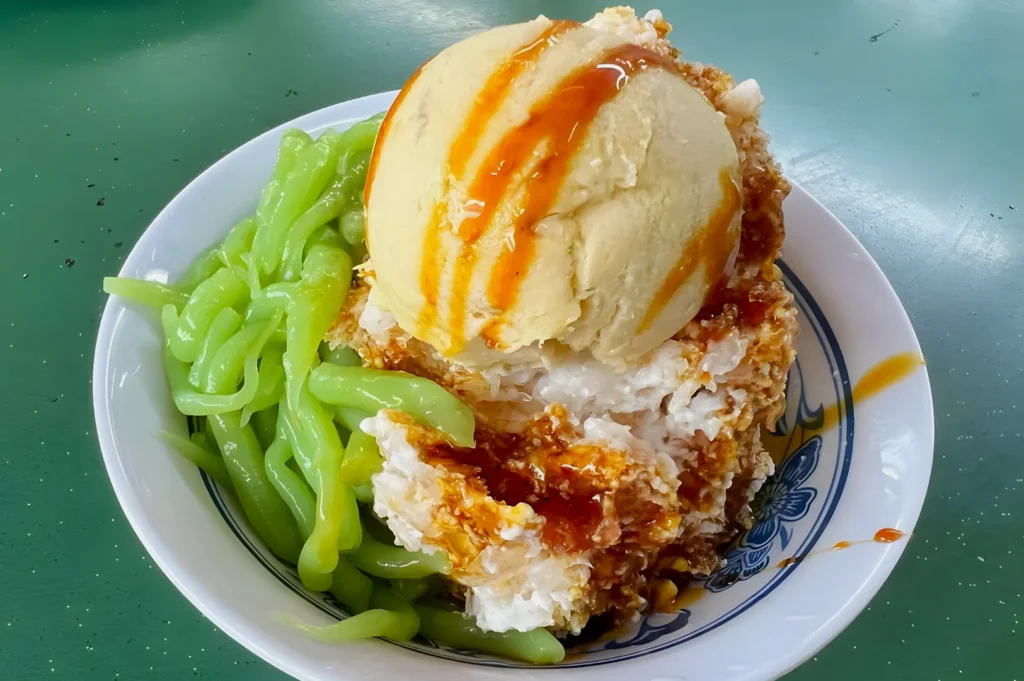
I sit for a moment, the taste of salt and caramel still lingering on my tongue. The coldness of the dessert has done its work. The humidity that pressed against my skin when I first sat down feels less oppressive now, pushed back by the internal chill of the ice. But it is a temporary reprieve. Already, I can feel the warmth of the hawker center creeping back in, reclaiming the space around me. The ceiling fans spin overhead, their rhythmic whirring a constant backdrop to the clatter of plates and the murmur of voices from the tables nearby.
The Small Debris of Enjoyment
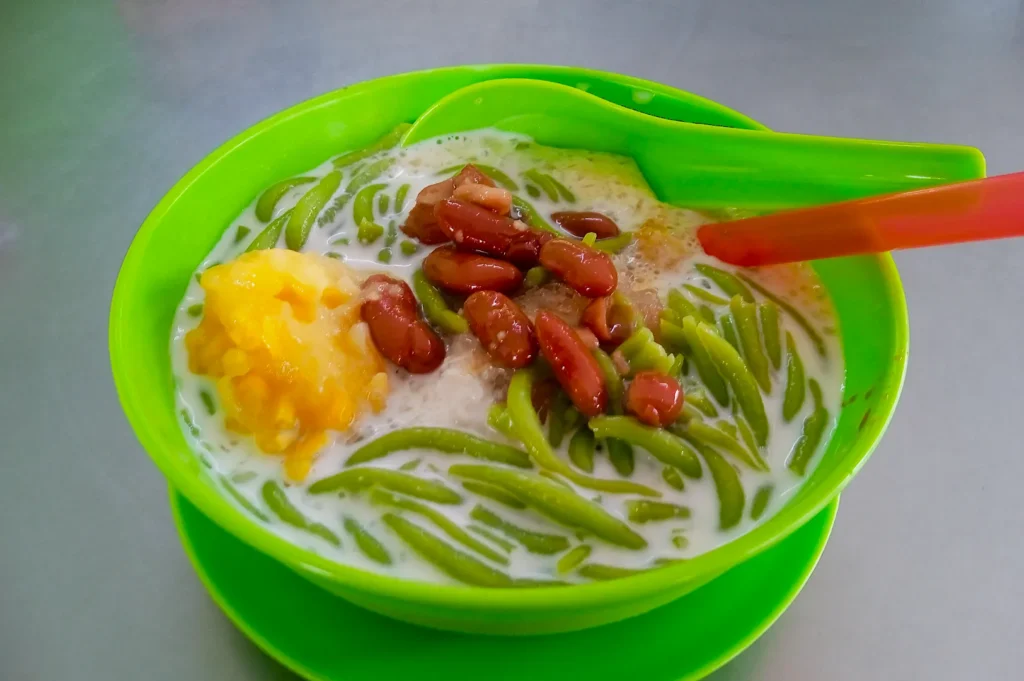
Looking down at the bowl, I notice a single strand of green jelly left behind, resting at the bottom. It is a small oversight, a piece that escaped the spoon. It looks soft and almost waterlogged now, stripped of its structure. Beside it, a stray red bean sinks below the surface. These are the small debris of enjoyment, the parts we leave behind without thinking.
A Fleeting Moment
The table around the bowl is speckled with condensation. The cold ceramic has sweated in the tropical heat, leaving a ring of water that reflects the fluorescent lights above. I trace the edge of the puddle with my finger. The water is cool to the touch. It is a small, tactile reminder of the temperature difference between the bowl and the air, a physical boundary that is slowly disappearing as the ice melts further.
The Lull Before Departure
Around me, the life of the food center continues. An uncle clears a table two spots away, stacking bowls with practiced efficiency. The sound of plastic hitting plastic is sharp and quick. A group of students laughs loudly near the drink stall, their voices rising above the general hum. But at my table, there is a quiet lull. The act of eating is finished, but the act of leaving has not yet begun. It is a strange, suspended moment. The body is still adjusting to the sudden intake of sugar and cold, slowing down just as the mind begins to turn back to the obligations of the day.
Moving On
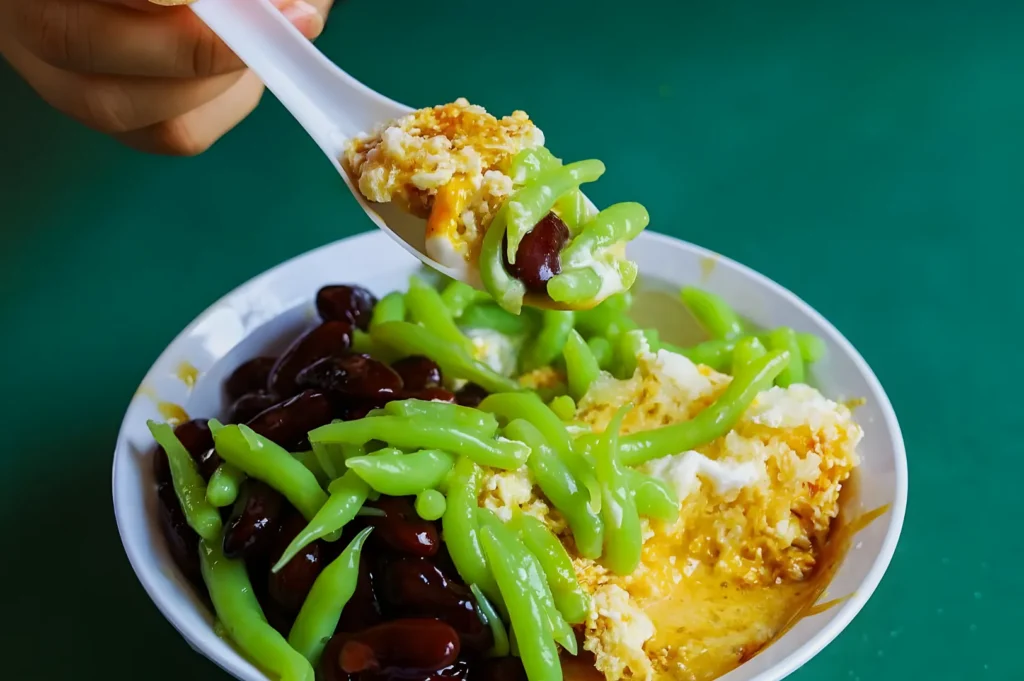
I pick up the spoon one last time, stirring the milky liquid aimlessly. The metal makes a dull sound against the ceramic. There is nothing left to eat, yet there is a reluctance to push the bowl away. It is the reluctance to acknowledge that the break is over. The chendol was not just a dessert. It was a punctuation mark in the middle of the day, a necessary pause. Now that the bowl is empty, the sentence must continue.
Slowly, I push the chair back. The legs scrape against the concrete floor, a sound that signals departure. I stand up, leaving the bowl and its pale, melting contents behind. The condensation ring remains on the table, a fleeting ghost of the meal. As I walk away, the taste of coconut and palm sugar begins to fade, replaced by the warm, humid air of the afternoon, and the quiet memory of a cold bowl on a hot day.