Stepping into Ki Su Shoujin on Tras Street, you immediately embark on an intimate and elegant journey into the world of vegan omakase Singapore. Nestled at 60 Tras Street, Singapore, this hidden gem offers just 16 seats arranged around a sleek counter, creating a cozy yet sophisticated space that fosters a close connection between diners and chefs. The minimalist decor, warm lighting, and open kitchen concept set the perfect stage for an immersive culinary adventure focused on exquisite plant based cuisine. While the compact setting may feel a bit snug during peak hours, it only adds to the unique charm of this exclusive dining experience, where every detail invites you to trust the chef’s expertise and savor the artistry behind each course.
The Art of Plant Based Omakase and Japanese Food
As the meal began, I was struck by the chef’s expertise, artistry, and creativity. The menu offered two options: an eight-course lunch priced at S$88 or a ten-course dinner priced at S$168, each crafted with the finest seasonal ingredients. Watching the chefs prepare each dish with precision and care was like witnessing an art form in motion, transforming humble vegetables, mushrooms, and grains into sophisticated, flavorful creations. However, the price point may feel steep for some, especially given the absence of meat or seafood, which traditionally justify higher costs in omakase dining.
Starters That Surprise and Delight: Truffle Pate and More
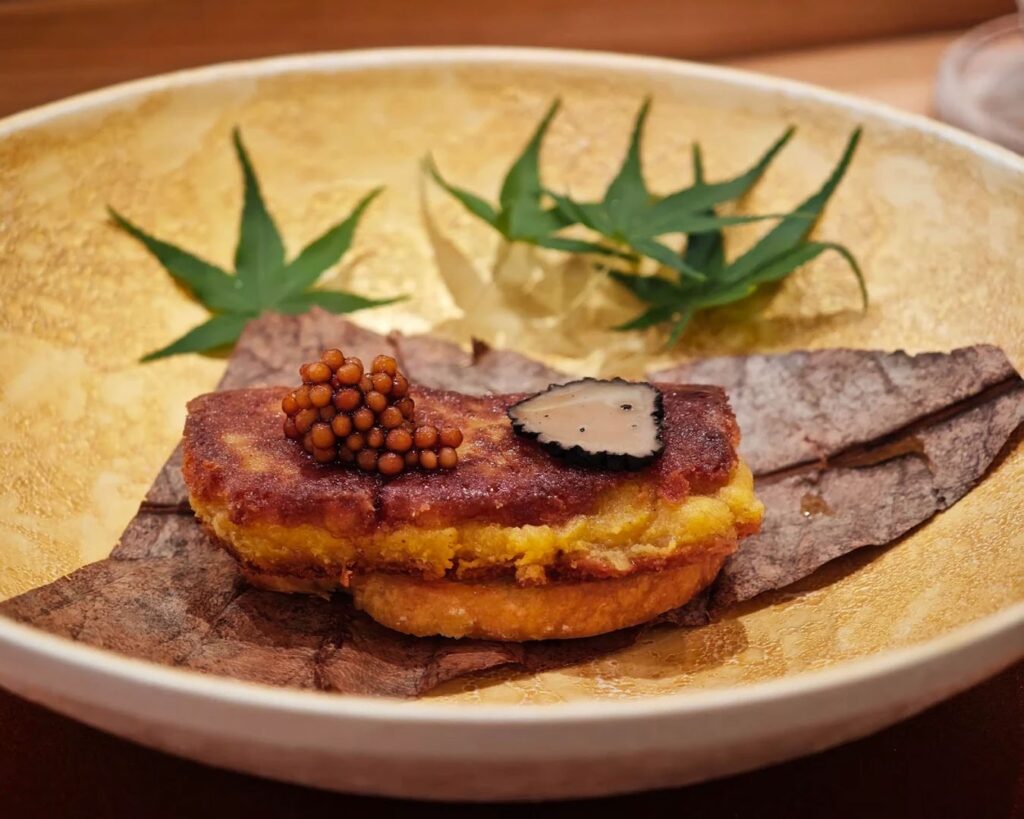
The first courses gently introduced me to the world of vegan omakase. A standout starter was delicately served with air flown tonburi caviar, adding a luxurious and refined touch to the appetizer selection. The egg yolk toast was rich and comforting despite being entirely plant based, while the avocado taco provided a fresh, vibrant contrast. Then came the beetroot cigar, whose crunchy texture and nutty flavor added an unexpected twist. Each bite invited me to reconsider what plant based dining could be, building anticipation for the main entree in the omakase progression. That said, some of the flavors felt a bit muted, lacking the boldness one might expect from a more daring plant-based menu.
Vegetarian Omakase Nigiri Sushi: A New Take on Tradition
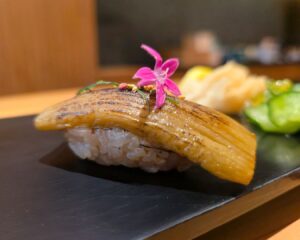
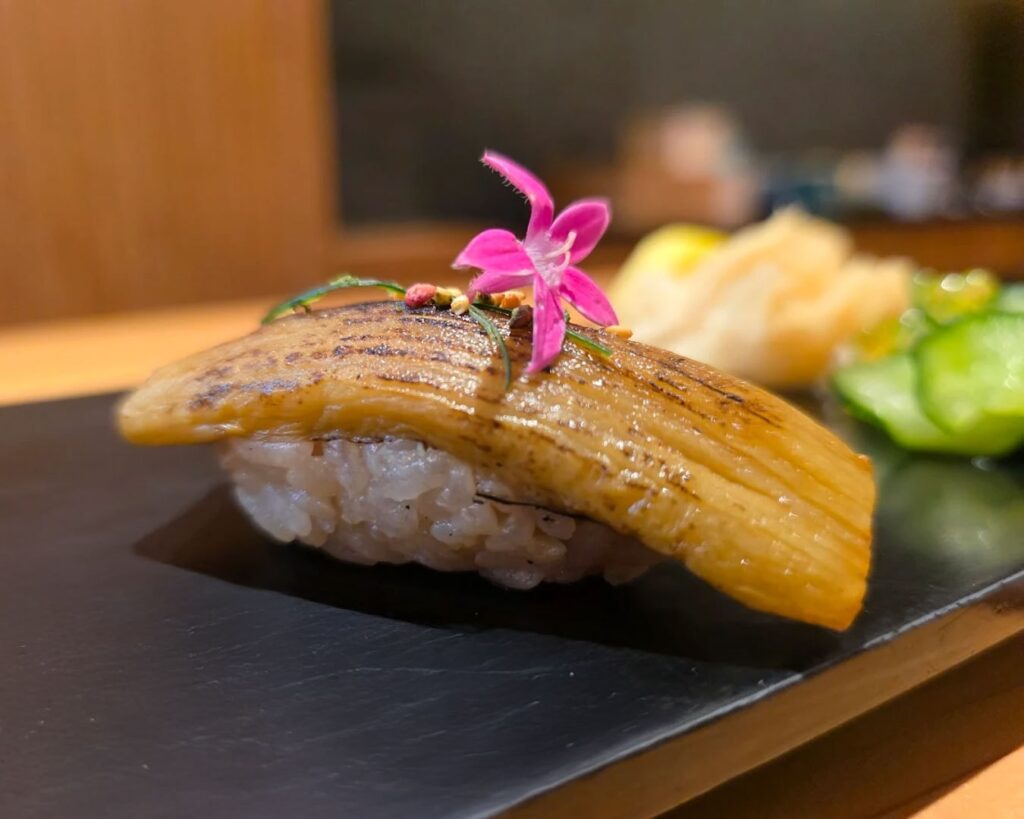
The nigiri sushi course was a highlight, featuring innovative toppings like uni-style pumpkin and delicately prepared pumpkin slices. While traditional nigiri sushi features fish as the centerpiece for flavor, texture, and umami, here, plant-based alternatives such as king oyster mushroom are skillfully used to replicate the texture and umami depth typically associated with fish. Chefs in vegan omakase creatively use these plant-based substitutes to deliver a sushi experience that excites the palate with diverse flavors and intricate textures. The truffle pate, creamy and decadent, paired perfectly with crispy toast brushed with a subtle sauce, showcasing the chef’s skill in balancing flavors. On the downside, some might find the absence of the familiar seafood taste a notable departure from traditional omakase, which could be a letdown for purists.
Golden Temaki and Mushrooms: A Symphony of Textures in Plant Based Omakase
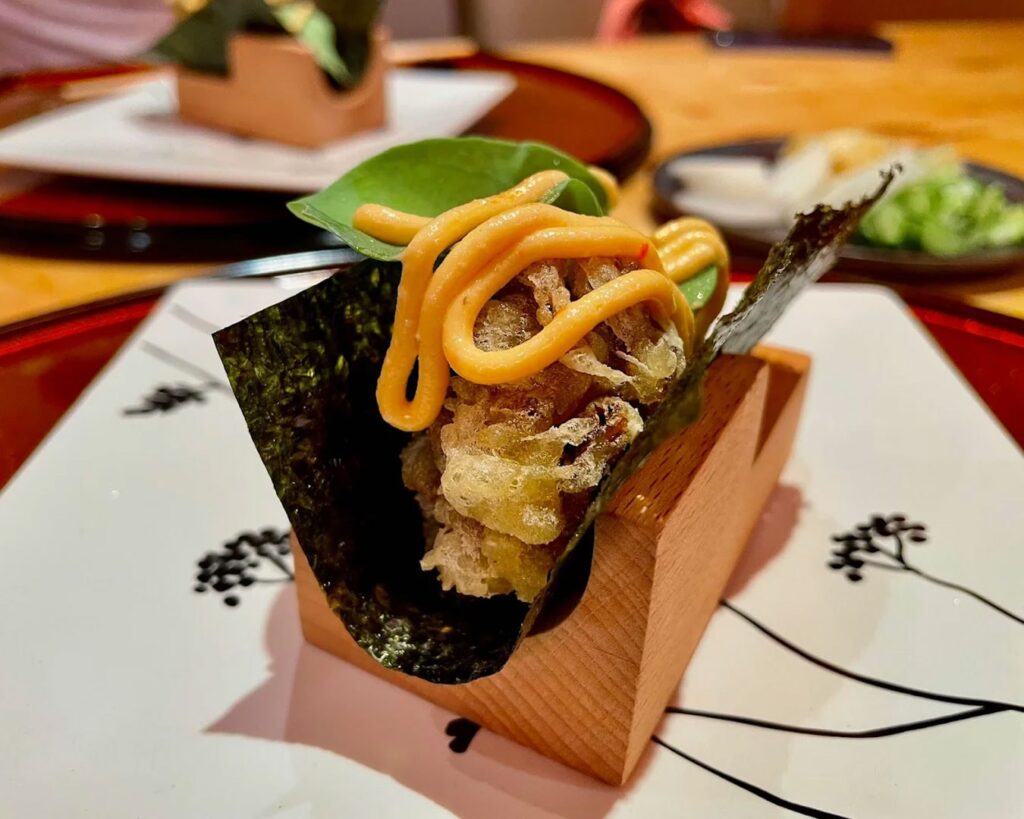
One of the most memorable moments was the golden temaki handroll. Filled with maitake mushrooms and adorned with gold flakes and a touch of egg yolk, it offered a delightful mix of crunchy seaweed and tender mushrooms. Mushrooms, particularly King Oyster and Monkey Head, are commonly used in vegan omakase for their meaty textures, and here they truly shine. This dish allows diners to indulge in a luxurious, sensory experience, where every bite is crafted to satisfy any craving for authentic Japanese flavors. The taste is both harmonious and memorable, elevating the overall enjoyment of the meal. The layers of texture and flavor made this dish feel both indulgent and refined. Still, some dishes occasionally leaned too heavily on mushrooms, which may feel repetitive over the course of the meal.
Seasonal Ingredients and Japanese Food Philosophy at Ki Su
Throughout the meal, there was a clear focus on each ingredient, with mindfulness in its preparation that encouraged diners to be present and attentive. Seasonal ingredients like baby napa cabbage and eggplant were chosen to align with the Japanese concept of shun, celebrating produce at its seasonal peak. Gentle soy-based sauces enhanced rather than overpowered, allowing each ingredient’s essence to take center stage. However, the subtlety of flavors might not satisfy those who prefer more robust or adventurous seasoning.
Soups and Broths: A Comforting Element in Vegan Omakase
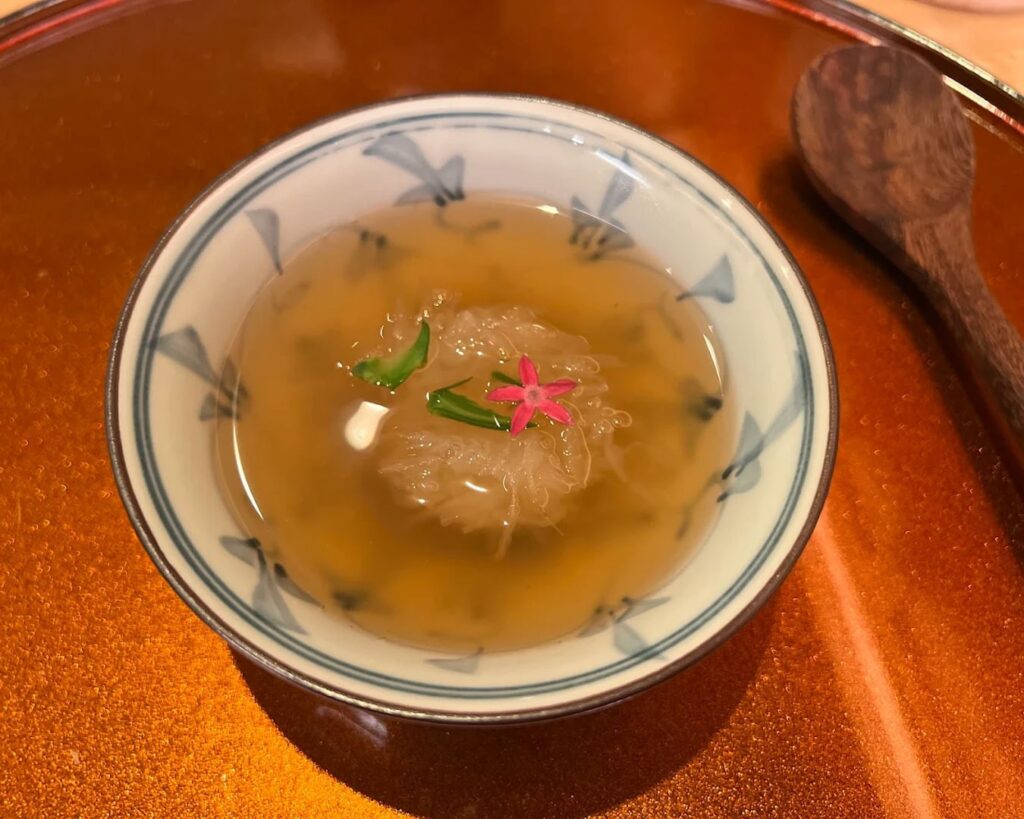
A thoughtfully prepared soup course featuring delicate broths infused with seasonal vegetables such as baby napa cabbage adds warmth and depth to the dining experience. These soups often incorporate subtle yuzu or kombu notes to enhance umami without overpowering the palate, reflecting the balance and harmony central to Japanese food philosophy. The soup serves as a palate cleanser and a comforting interlude that complements the other courses beautifully. This course highlights the chef’s expertise in using the finest ingredients to create layers of flavor that elevate the plant based cuisine, demonstrating how even simple components can reach new heights in taste and presentation.
Desserts in Vegan Omakase Singapore: A Sweet and Savory Farewell
Desserts in vegan omakase Singapore are often the highlight of the multi-course menu, showcasing creative and visually stunning presentations. In this experience, the dessert was playful yet thoughtful, combining sweet caramel, matcha cookie crumbs, crushed almonds, and watercress leaves. Artistic plating and interactive elements, such as the use of liquid nitrogen, are sometimes incorporated to elevate the final course. The balance of sweet and savory notes provided a satisfying conclusion to the meal, rounding out the culinary journey with a surprising harmony of flavors. On the flip side, the dessert’s subtle savory notes might not appeal to everyone, especially those expecting a more traditional sweet finish.
Beverage Pairings: Enhancing the Vegan Omakase Experience
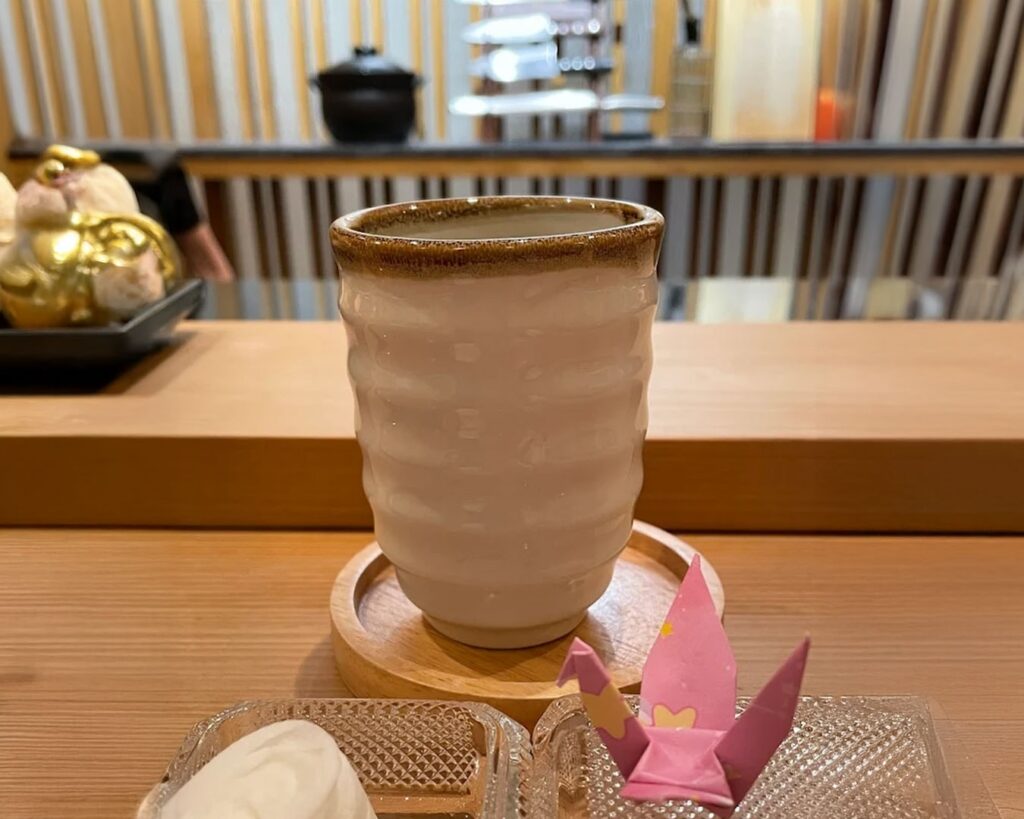
Complementing the plant based cuisine, a carefully curated selection of beverages elevates the dining experience at Ki Su Shoujin Omakase. Traditional Japanese sake, including Junmai and Daiginjo varieties, offers delicate, umami-rich notes that harmonize beautifully with the subtle flavors of each dish. For those who prefer non-alcoholic options, premium Japanese green teas such as Sencha and Genmaicha provide refreshing contrasts and cleanse the palate between courses. Additionally, light, crisp sparkling water with a hint of yuzu or citrus is often recommended to enhance the freshness of the plant based dishes. These thoughtfully paired beverages not only enhance the culinary journey but also invite guests to savor the meal in its entirety, making the vegan omakase Singapore experience truly memorable.
Ki Su Shoujin Omakase Experience: Beyond the Food and Into the Culinary Journey
What truly set Ki Su Shoujin apart was the atmosphere and service. Guests are welcomed into an intimate counter seating arrangement that encourages interaction with the chefs, offering insights into the philosophy and techniques behind each dish. This personalized omakase experience is thoughtfully curated by the chef, ensuring each guest enjoys a unique culinary journey. The unhurried pacing allowed me to savor every course fully, making the dining experience feel like a carefully choreographed performance that emphasizes trust in the chef’s expertise, much like traditional omakase. However, the limited seating and high demand mean that securing a reservation can be challenging, which may deter spontaneous visits.
Tips for Enjoying Vegan Omakase in Singapore

Make Reservations Early: Due to limited seating and high demand, booking in advance is essential for most vegan omakase restaurants.
Specify Dietary Preferences: Inform the restaurant of any allergies or strict vegan requirements to ensure the meal is tailored appropriately.
Embrace the Culinary Journey: Vegan omakase is about trust and discovery; be open to new flavors, textures, and presentations that may differ from traditional seafood omakase.
Pair with Traditional Beverages: Enhance your experience with sake or Japanese teas thoughtfully paired with the courses.
Explore Seasonal Menus: Many restaurants change their offerings to highlight seasonal ingredients, providing fresh experiences with each visit.
These points help diners fully appreciate the artistry and philosophy behind vegan omakase Singapore, making each meal a memorable culinary adventure.
Final Thoughts on Ki Su and the Future of Plant Based Omakase in Singapore
You might find yourself drawn to Ki Su Shoujin Omakase, where Japanese food traditions unfold through a gentler lens of creativity and artistry. It helps to know that Ki Su Shoujin Omakase, operated by the same group behind Joie by Dozo, offers one of the few meatless, plant-based omakase experiences in Singapore, drawing inspiration from shojin ryori – a traditional Buddhist cooking style that naturally excludes meat and fish while celebrating the quiet beauty of plant-based flavors.
It can feel different from what you might expect if you’re familiar with traditional omakase. The vegetarian omakase at Ki Su Shoujin Omakase gently replaces seafood and meat with vegetables, tofu, mushrooms, and grains. This approach creates space for a thoughtful dining experience, especially if you’re seeking vegetarian options, though you might notice the experience feels softer and more subtle than the boldness you’d find in conventional omakase. The dishes are prepared with care using Japanese cooking techniques that allow the natural textures and gentle flavors of simple ingredients to speak for themselves, creating courses that feel both thoughtful and nourishing.
. While the concept feels refreshing and the preparation is skillful, it’s perfectly natural if you find the flavors more delicate than expected, or if the overall experience feels different from what you might be used to in traditional omakase meals. There’s no need to decide whether this feels right or wrong for you – it simply offers a different way of experiencing this culinary tradition.