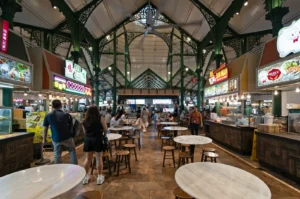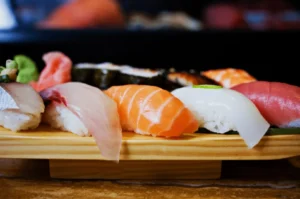
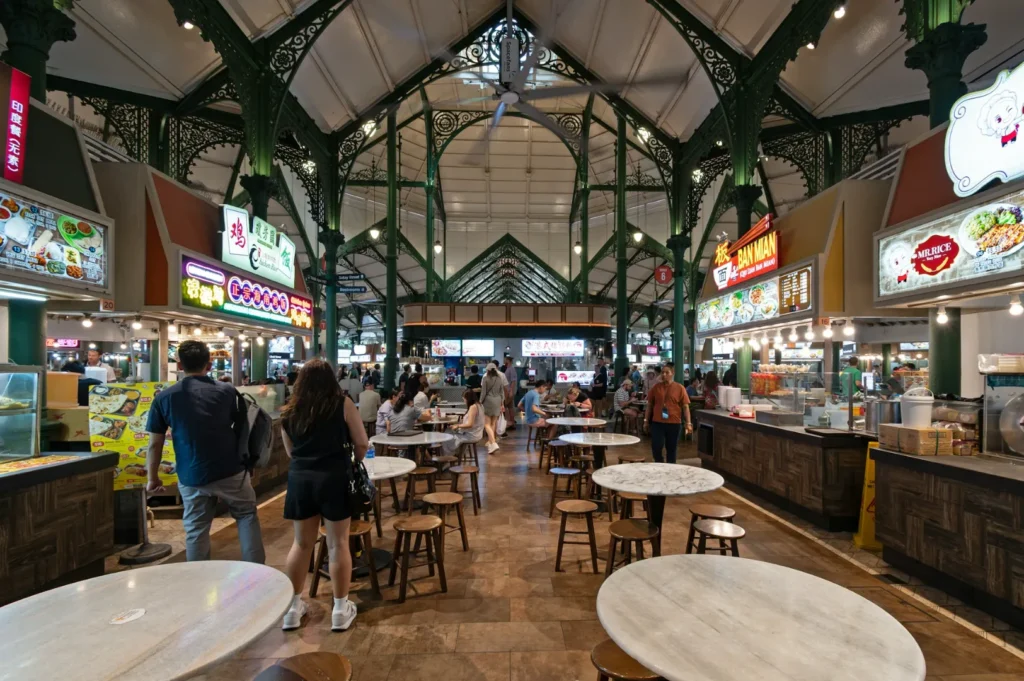
There is a moment, usually somewhere between the second stall and the third, when you stop thinking about what to order and start noticing everything else. The fan overhead. The tray clatter. Two strangers splitting a plate of char kway teow without a word between them.
Food centres in Singapore are not a dining option. They are a daily condition. Morning kopi. A fast lunch. Supper long after the restaurants have shuttered. These spaces have been woven into the fabric of the city so quietly and so completely that most people who eat in them do not think of it as a cultural experience. It is just Tuesday.
What Are Food Centres in Singapore?
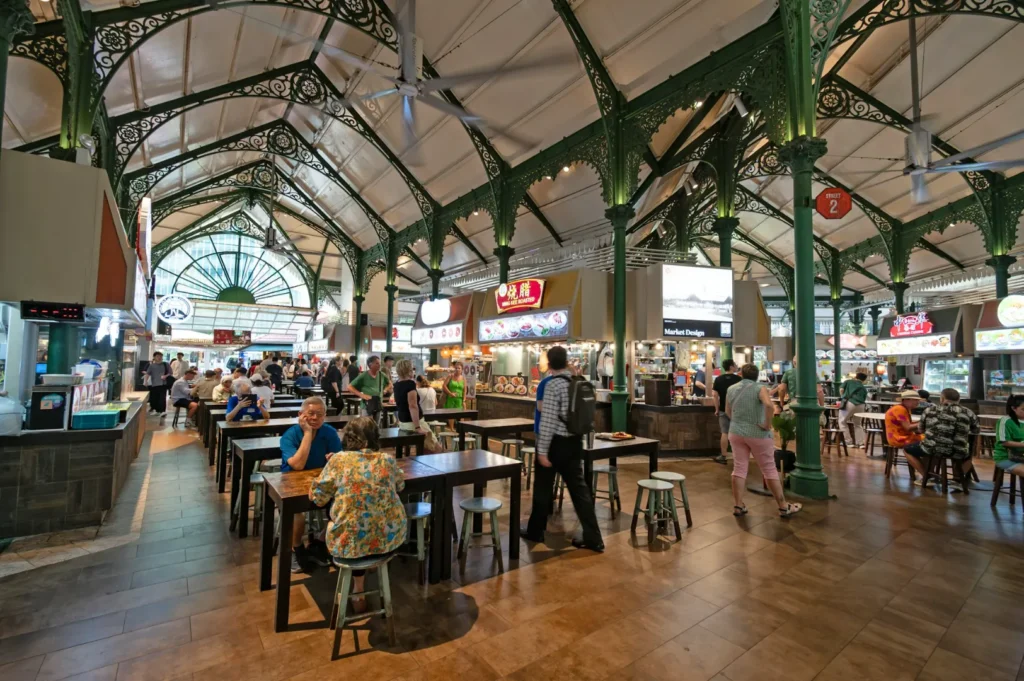
The term covers a few different things, and the distinctions are worth knowing.
Hawker centres are the most familiar. Open-air or semi-open, usually government-managed, with rows of individual stalls and shared tables that belong to no one and everyone. Prices are kept modest by design. Some run through the night.
Food courts are the enclosed version. Air-conditioned, often tucked inside malls or office buildings, run by private operators. A little more controlled, a little more expensive, but the same essential idea: many stalls, one roof, communal seating.
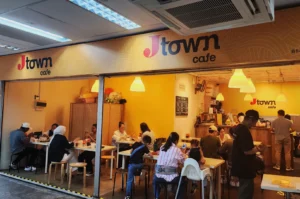
Neighbourhood kopitiams are smaller and quieter. A few stalls, the same regulars every morning, a drinks uncle who probably knows your order. They have a specific gravity that larger centres do not. Something about the scale makes them feel like they belong to you.
Independent food hubs are their own thing entirely—places where a community forms around a very specific kind of appetite. Fortune Centre is a good example: Fortune Centre meals that goes well beyond vegetarian cuisine.
All of it falls under the same idea: shared, practical, accessible spaces where the food is the whole point.
How Food Centres Became Part of Daily Life
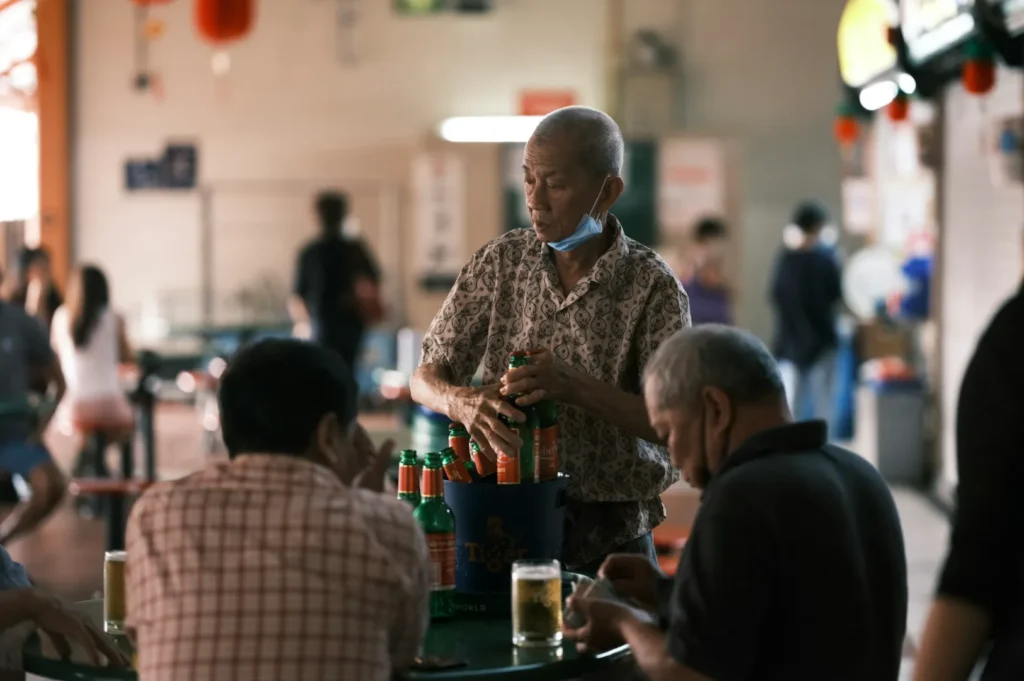
It started with the streets.
Singapore’s hawker culture grew from the street food vendors who fed the city in its earlier decades. By the 1970s and 1980s, the government moved these vendors into organised centres. Proper stalls. Running water. A licensed place to cook and serve.
That shift gave the culture somewhere to stay.
What followed was a slow, generational settling. Families began eating at the same stall every week. Dishes became memory. The bowl of noodles from a particular stall, ordered the same way, year after year, is not just a meal. It is a small thread in the fabric of daily life.
Today, Singapore food centres carry the rhythm of the day from one end to the other. Kaya toast and soft-boiled eggs in the morning. A plate of rice at noon. Fish soup for dinner at the stall that has been in the same corner for thirty years. These are not occasions. They are routine.
A Multicultural Food Story Under One Roof
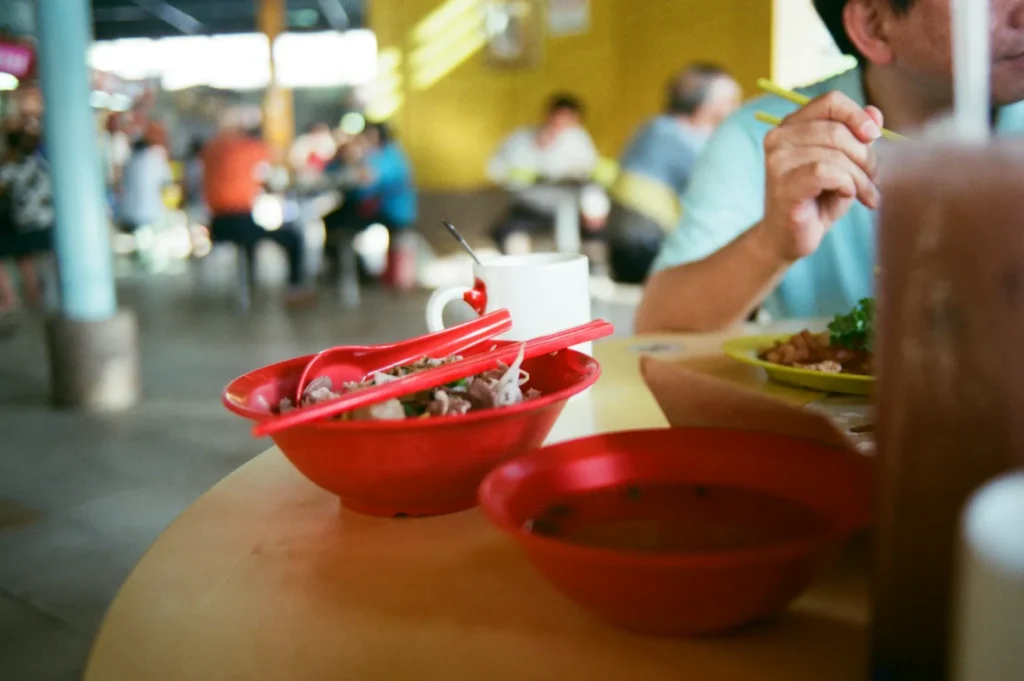
Singapore hawker food is where the city’s history becomes something you eat.
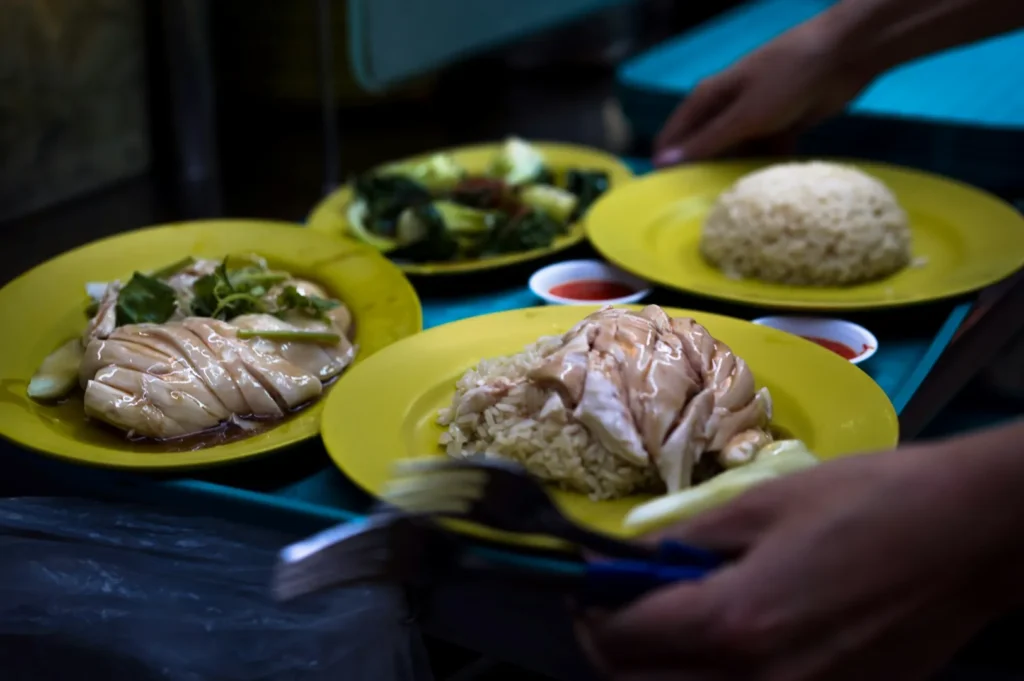
Chinese, Malay, Indian, Peranakan, and other food traditions share space in the same centre, sometimes in the same row. Chicken rice beside roti prata. Nasi lemak across from a bowl of laksa. Satay over charcoal, served with peanut sauce and sliced cucumber. Fish soup, clean and pale, ladled into a simple bowl.
The variety is not the remarkable part. What stays with you is how ordinary it feels. The same crowd sits down to all of it. Nobody remarks on the range. They just eat.
What lands on your tray now is the quiet result of decades of that exchange. Not fusion for its own sake. Just people feeding people, across a shared table.
Why Food Centres Feel Different From Restaurants
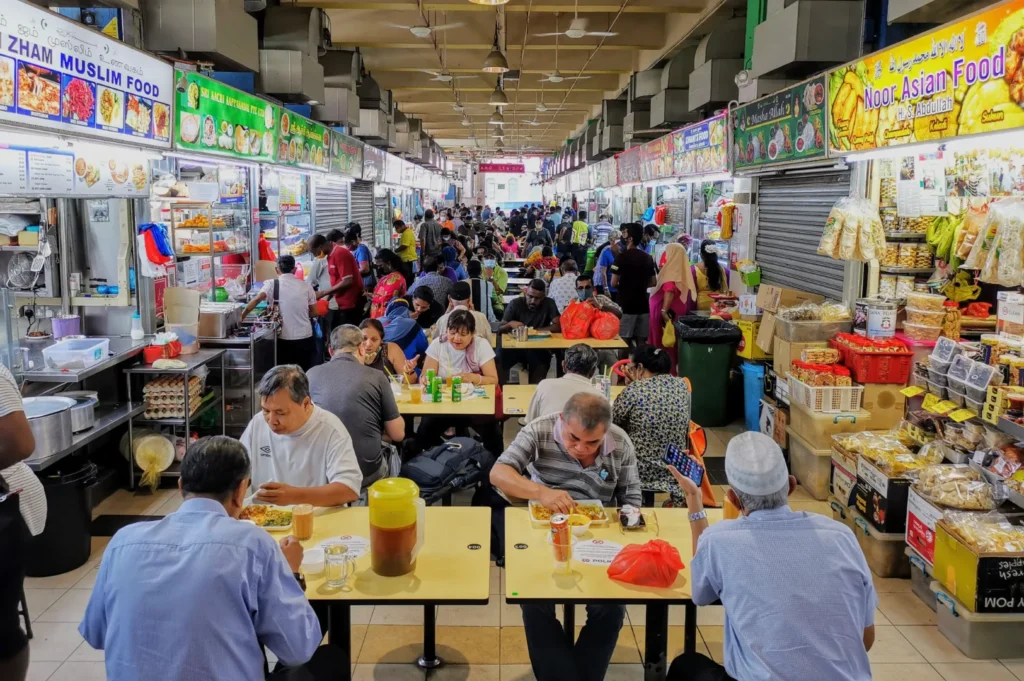
There is no host waiting at the entrance. No menu pressed into your hands.
You queue. You read the board. You find a table by leaving a tissue packet on it, a local custom as natural here as breathing. You carry your tray to a plastic chair and sit beside someone you have never met and will likely never see again.
The stall cook does not describe the dish. She has been making it for years. The food arrives quickly and without decoration. And often, it is very good.
That absence of performance is the thing people come back for. Where locals eat in Singapore, the food tends to speak first. The stall is not interested in impressing you. It is interested in feeding you. There is a kind of respect in that.
For an iconic stop, try Tekka Centre Food for an Authentic Culinary Journey.
Affordability, Access, and Everyday Comfort
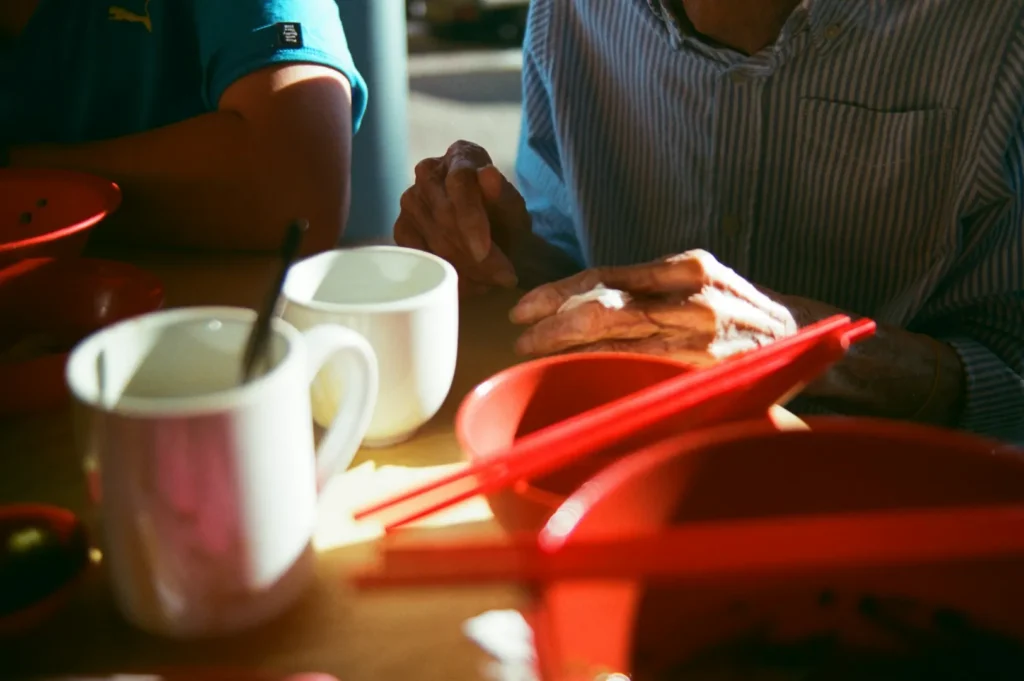
Food centres in Singapore were built to be accessible, and that intent has held.
At a hawker centre, a full meal often costs between three and five dollars. The range of options means that most dietary needs, whether shaped by preference, religion, or health, are accommodated without much searching.
Centres are distributed across the island. Housing estates, business districts, transport hubs, residential blocks. The distances are short by design.
In December 2020, UNESCO inscribed hawker culture in Singapore on the Representative List of the Intangible Cultural Heritage of Humanity. The recognition named not just the food, but the social function of these spaces: community dining rooms where people from every background sit down together and share, briefly, the same meal and the same table.
How Food Centres Continue to Evolve
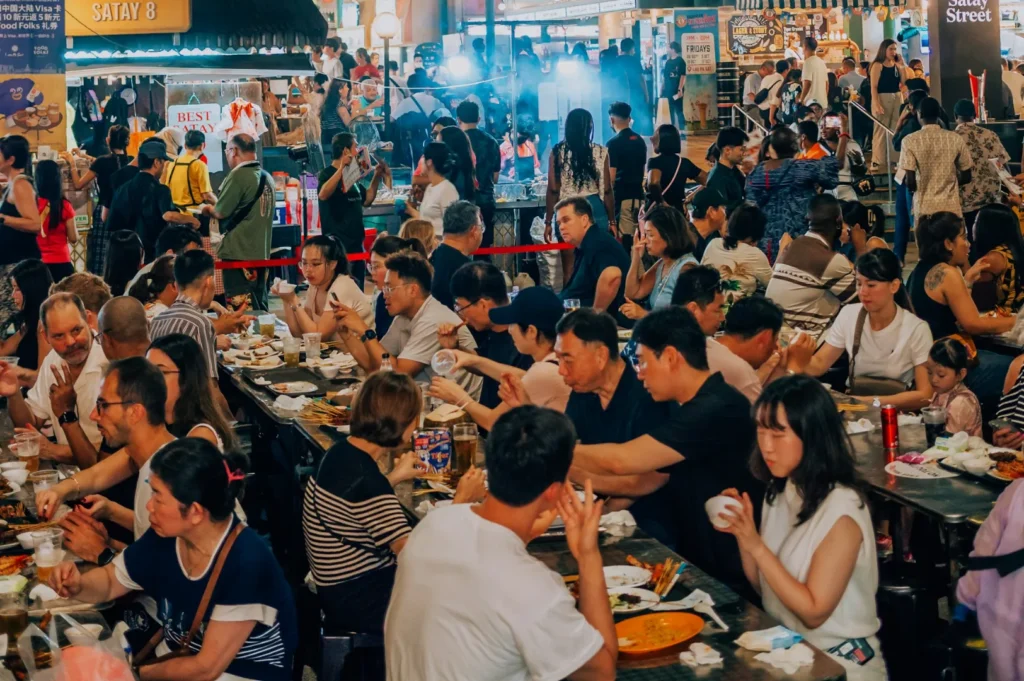
The culture is not frozen.
Younger hawkers are entering the trade, some trained formally, others carrying a family recipe they want to keep alive. Modern food courts are rethinking their spaces, their payment systems, their menus. Specialty stalls focused on a single dish, made with unusual care, are appearing alongside classics that have not changed in decades.
Plant-based options are more common now. International cuisines have found their way into hawker-level pricing. Cashless payments are standard in many centres, and online delivery has extended the reach of stalls well beyond their physical walls.
The tables are still shared. The food is still the point.
Tips for First-Time Visitors to Singapore Food Centres
- Visit slightly before or after peak hours, roughly 12 to 1pm for lunch and 6 to 7pm for dinner, to avoid the longest queues
- Learn the tissue-packet system: a packet left on a seat means it is taken
- Check whether a stall accepts cashless payment before ordering; smaller operators sometimes prefer cash
- Watch what regular customers are ordering before you decide
- You do not have to order everything in one pass; walk the whole centre first, then go back
- Share dishes with whoever you are eating with to try more without committing to one plate
- The stall with the longest queue is not always the one worth waiting for; trust your instincts
More Than a Place to Eat
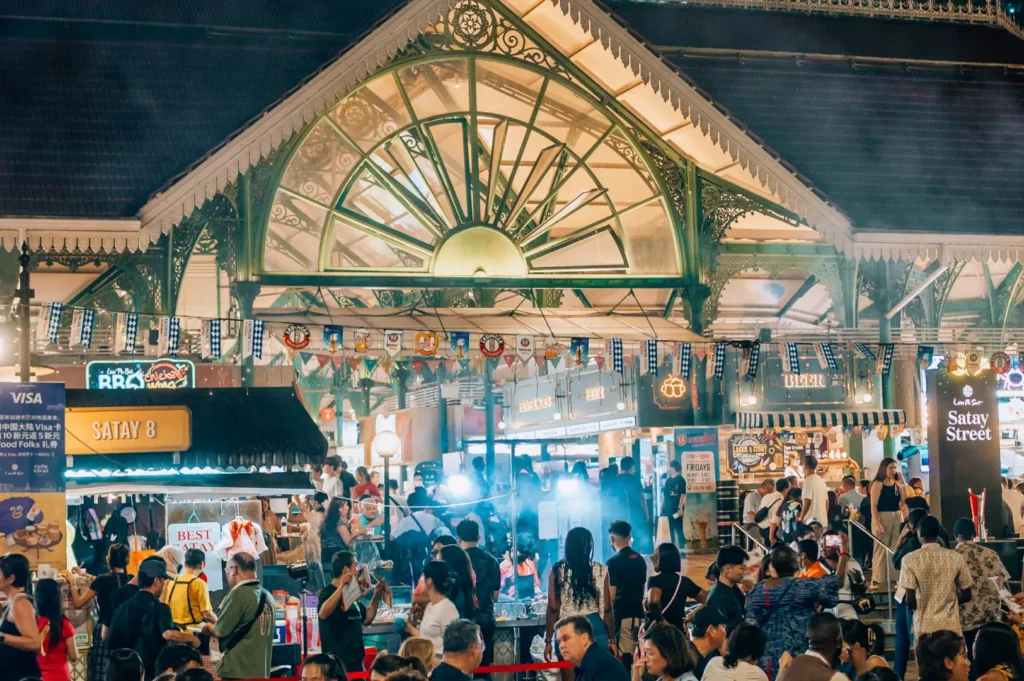
Singapore food centres matter because they make eating a shared act, not just a private one.
They are where the city’s multicultural identity turns up in the most unhurried, unselfconscious way. No explanation offered. No performance required. Just a tray, a table, and the quiet understanding that everyone here is hungry, and that is enough to sit down together.
That steadiness is worth noticing.