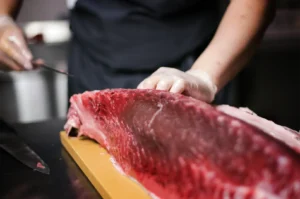
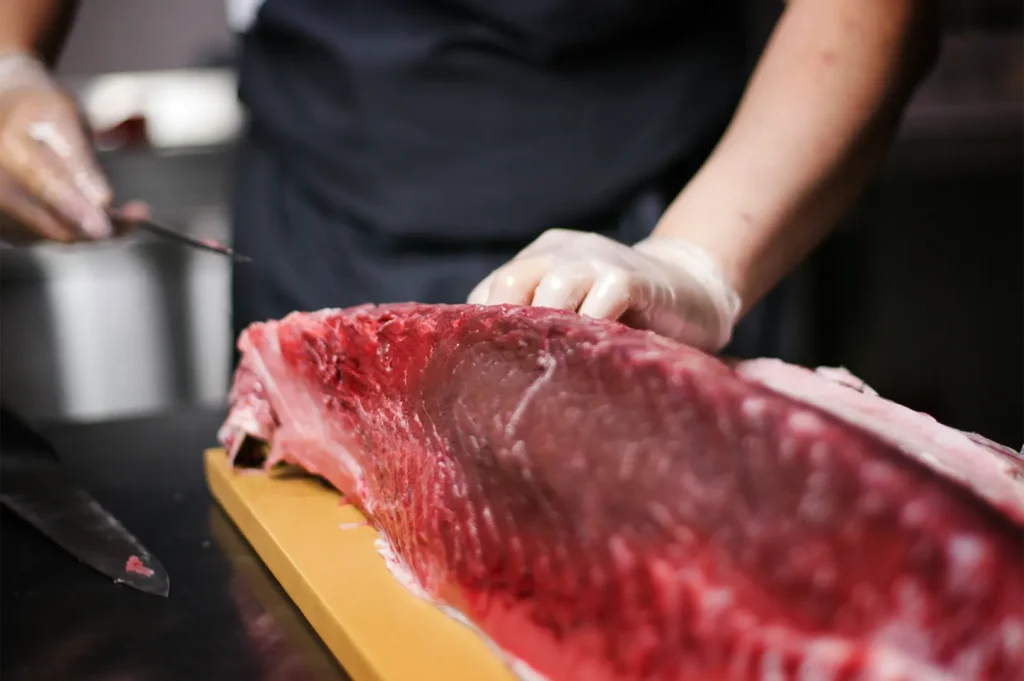
There is a moment, if you watch closely, when a block of frozen tuna stops being cargo and starts becoming food.
It happens under the knife. The right pressure, the right angle, the slow reveal of colour beneath the surface, deep red bleeding into pink, the fat marbled like snow in soil. Get it wrong, and you waste something that traveled across an ocean to reach you. Get it right, and the fish almost seems to breathe again.
Masaki Watanabe has spent his life learning that moment.
A Craft Most People Never See
Before there is a bowl of donburi on a table, there is a whole world nobody thinks about.
Watanabe lives in that world. He is the head chef and managing director behind Maguro Brothers in Singapore, but the word “chef” only tells half of it. He runs both a restaurant and a wholesale business—the shop where you eat and the supply chain that feeds other kitchens too.
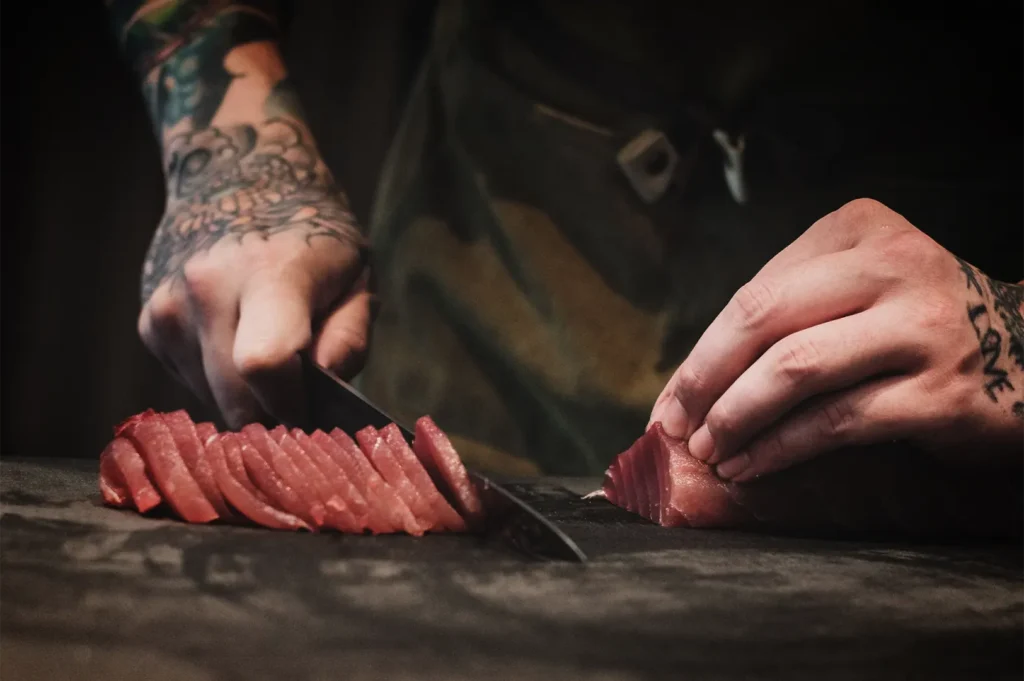
That dual life shapes how he sees a fish. To him, tuna is not just something to plate. It is something to understand from the frozen block onward: how to thaw it without bruising the flesh, how to trim away what should go, how to cut with the grain so each slice holds its shape and its shine.
He has turned that knowledge into something he gives away. Through his Maguro Management workshops, he teaches other cooks the same things, thawing, trimming, cutting frozen maguro. The unglamorous parts. The parts that decide, quietly, whether the meal you eat later is good or merely fine.
It says something about a person, what they choose to teach. Watanabe chose the beginning of the story, not the end.
The Sushi Dog
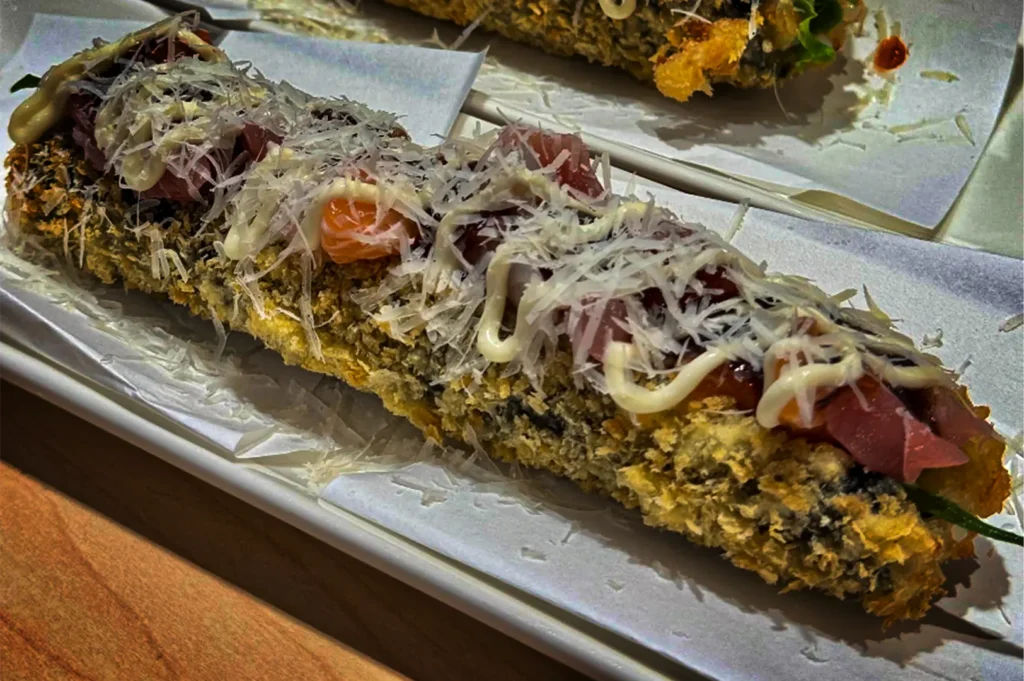
And then, because he is also the kind of man who cannot take any of this too seriously, he made a hot dog out of it.
The Sushi Dog looks like exactly that, a hot dog. But the bun is goldenfried rice and seaweed, crisped and shaped to cradle whatever goes inside. In one version, it holds tuna, salmon, and white fish, layered with shiso leaf, teriyaki, and mayonnaise, finished under heat until the edges turn brown.
The first glance confuses you. You wonder, briefly, if it is even Japanese food. Then you take a bite, and the argument ends. The crackle of the rice. The clean, green lift of the shiso. The sweetsalt pull of the teriyaki. It all lands where it should.
“I want people to enjoy Japanese food more casually,” he says. Even the ones who came only because it looked fun, or photographed well. He does not seem to mind that. If it makes someone smile, or pause, or wonder a little, that, to him, is the job done.
There is a kind of humility in that. A tuna specialist who could lean on his seriousness, choosing instead to hand you something playful and say, here, just enjoy it.
Casual, But Never Careless
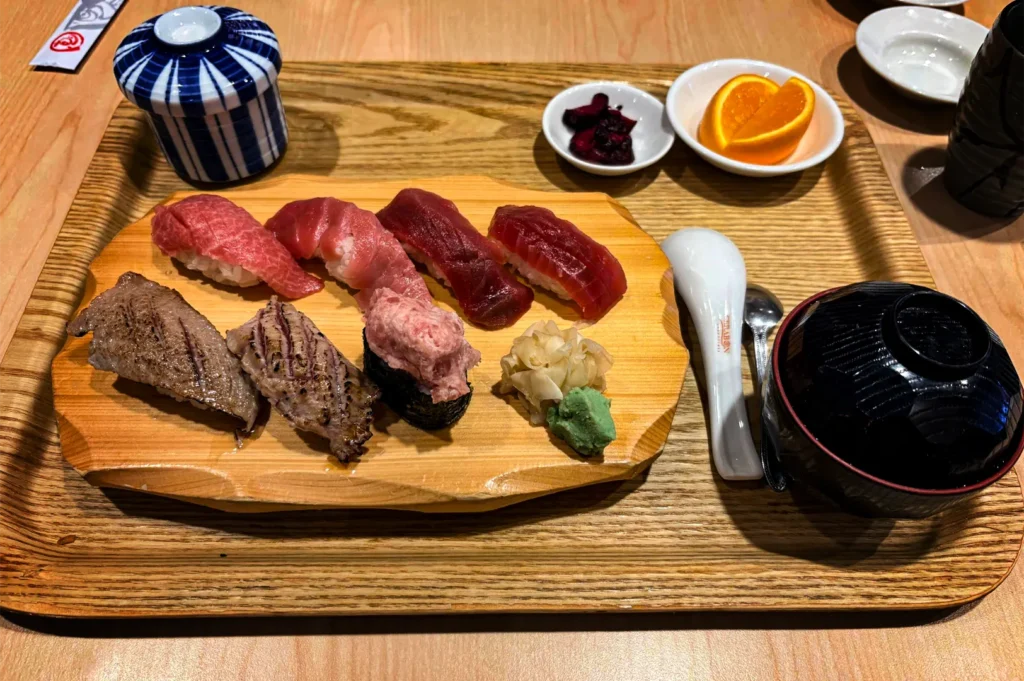
It would be easy to mistake the fun for a lack of rigor. That would be the wrong reading.
The Sushi Dog is silly on purpose, but the fish inside it comes from the same hands that spent years learning to respect maguro down to the cut. The playfulness sits on top of the discipline, never in place of it.
That balance is the whole of him, really. The wholesale expert and the man grinning behind a friedrice hot dog are not two people. They are one, someone who knows the craft well enough to loosen his grip on it.
Changi, and a Different Kind of Table
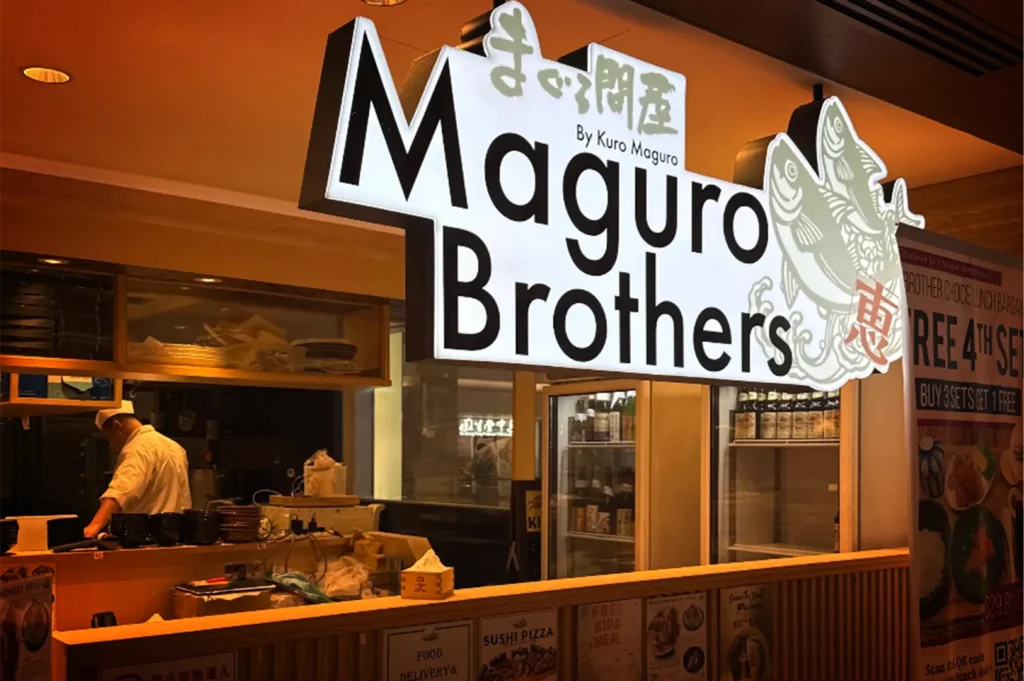
In December 2017, Watanabe brought that thinking to an unlikely place: an airport.
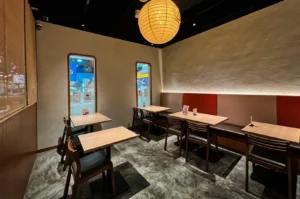
He opened two outlets in the ‘SORA‘ dining area at Terminal 2 of Changi, gathering Japanese dining under one roof for travelers rushing to gates, for airport staff on break, for locals who simply wanted a good bowl of rice and fish — the kind of everyday access that has helped make authentic Japanese restaurants in Singapore feel less reserved for special occasions.
It worked. In 2018, the concept earned the ‘Regional Winner, Asia Pacific’ title in the New Food & Beverage Concept of the Year category at the Airport Food & Beverage Conference and Awards.
An award is an award. What lingers more is the idea behind it: that good Japanese food should meet people where they already are. Between flights. On a lunch break. Not only in the quiet, expensive rooms where such food is usually kept.
What He Leaves on the Plate
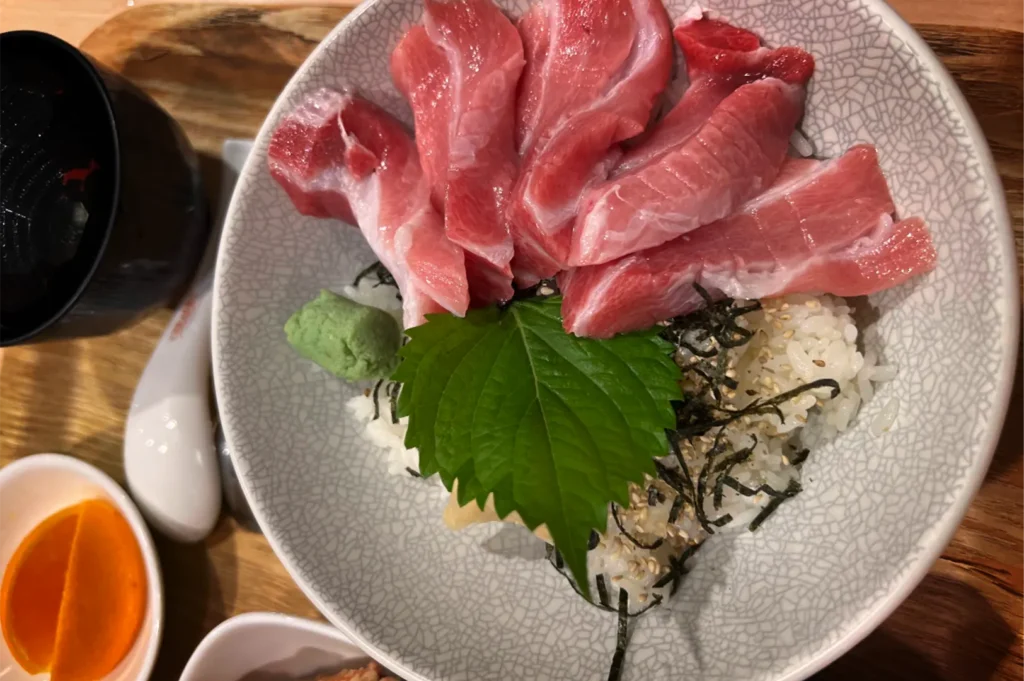
Strip away the wholesale business, the workshops, the airport outlets, and you are left with a single, steady belief.
That the care hidden inside a piece of fish matters, and that the joy of eating it should never feel heavy.
Watanabe spends his mornings on the parts nobody sees, then spends his afternoons making sure you don’t have to think about any of it. You just sit down. You take a bite. Maybe you laugh at the shape of it.
The knowledge is his to carry. The pleasure is yours to keep.
That, in the end, is the whole point.