The first time someone hands you a list of famous Singapore dishes, it feels like a checklist. Chicken rice. Chili crab. Laksa. Eat these, and you have done Singapore.
But that is not really how the city eats.
What matters here is not just what is famous. It is knowing where a dish belongs, when people actually order it, and why it shows up at that hour and not another. A plate of kaya toast means one thing at 8am and something entirely different at 4pm. A bowl of bak kut teh has a rhythm to it, a time and place it makes sense.
This is a guide to reading Singapore through food. Not the best of anything, just the how and the when and the why. Once you understand that, the whole city opens up a little differently.
Start With the Hawker Centre, Not the Hotel Restaurant
If you want to understand how Singapore eats, skip the hotel breakfast buffet on your first morning. Go find a hawker centre instead.
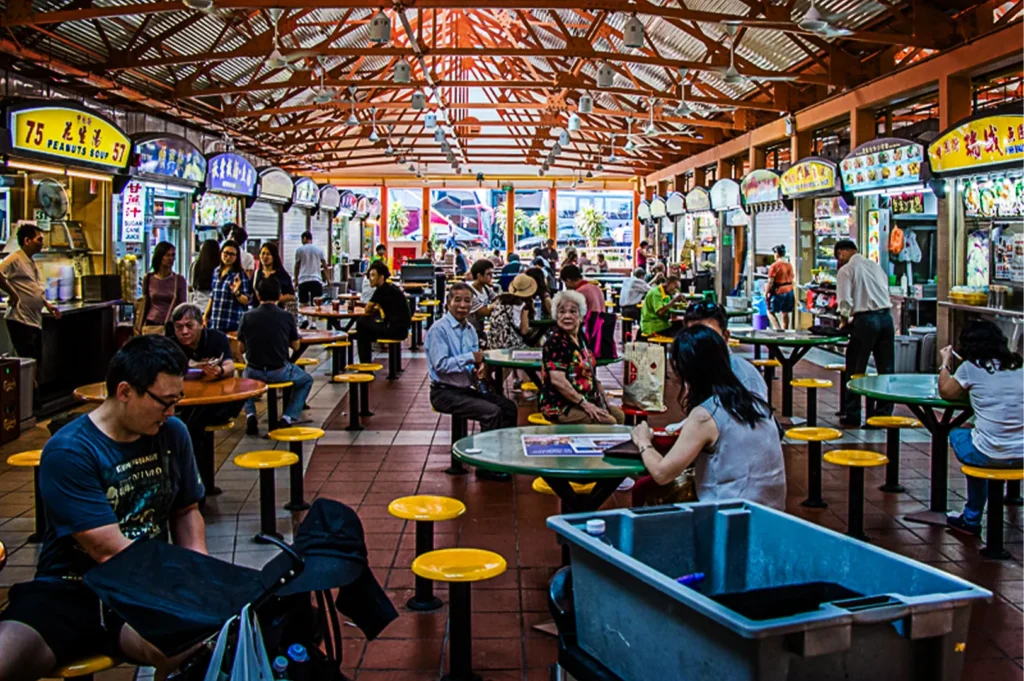
Hawker centres are the foundation of everyday dining here. They are open-air, unpretentious, and built around stalls that often do just one or two things, refined over decades. This is where the country actually eats, not on special occasions, but on ordinary Tuesdays.
Come early and you will see the breakfast crowd move through quietly. Older uncles reading the paper over kopi. Someone slurping fish ball noodles before work. By lunch, the whole mood shifts. Office workers pour in, queues form fast, and the tables fill with strangers sharing space without a second thought.
A few things worth knowing before you sit down:
- Chope your seat. Locals reserve tables by placing a packet of tissues on them. It looks strange, but it works.
- Return your tray. Clearing your table after eating is now expected, and small fines apply if you don’t.
- Follow the longest queue. A line usually means the food is worth the wait.
The everyday rhythm is the whole point. Watch it for a while, and you learn more about Singapore than any guidebook will tell you.
Learn the Difference Between a Food Court, Kopitiam, and Hawker Centre
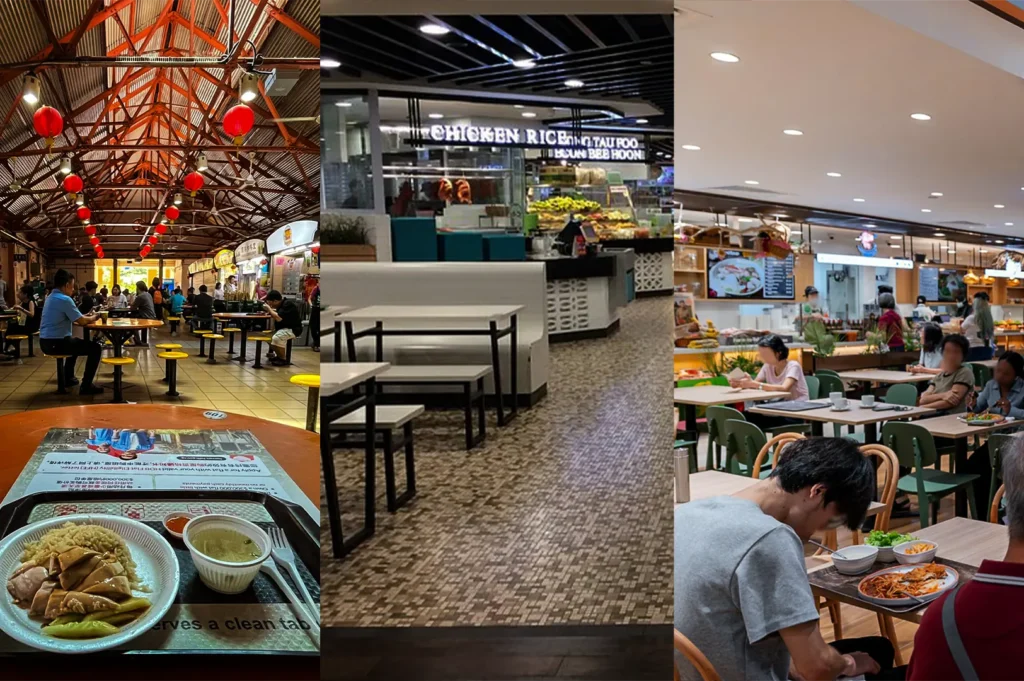
These three get mixed up constantly, especially by visitors. They look similar at a glance, but they are not the same thing.
A hawker centre is usually government-built, open-air, and home to many independent stalls. This is the heart of local food culture, and prices tend to stay affordable because of how these spaces are managed.
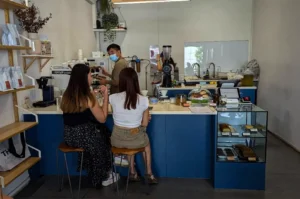
A kopitiam is a traditional coffee shop, often smaller and tucked into the ground floor of an old building or housing estate. The name comes from “kopi,” meaning coffee, and “tiam,” meaning shop. You will find toast, eggs, and drinks here, along with a handful of food stalls. It has a cozier, more neighborhood feel. Modern Singapore’s cafes sit in a different lane, but they can serve a similar purpose when you want coffee, air-conditioning, and a slower pause between meals.
A food court is usually the air-conditioned version, found inside malls. It is convenient and comfortable, but the food often costs a little more and can feel less rooted in tradition.
None of these is better than the others. But knowing which is which helps you set your expectations and read the setting properly.
Follow the Meal Times
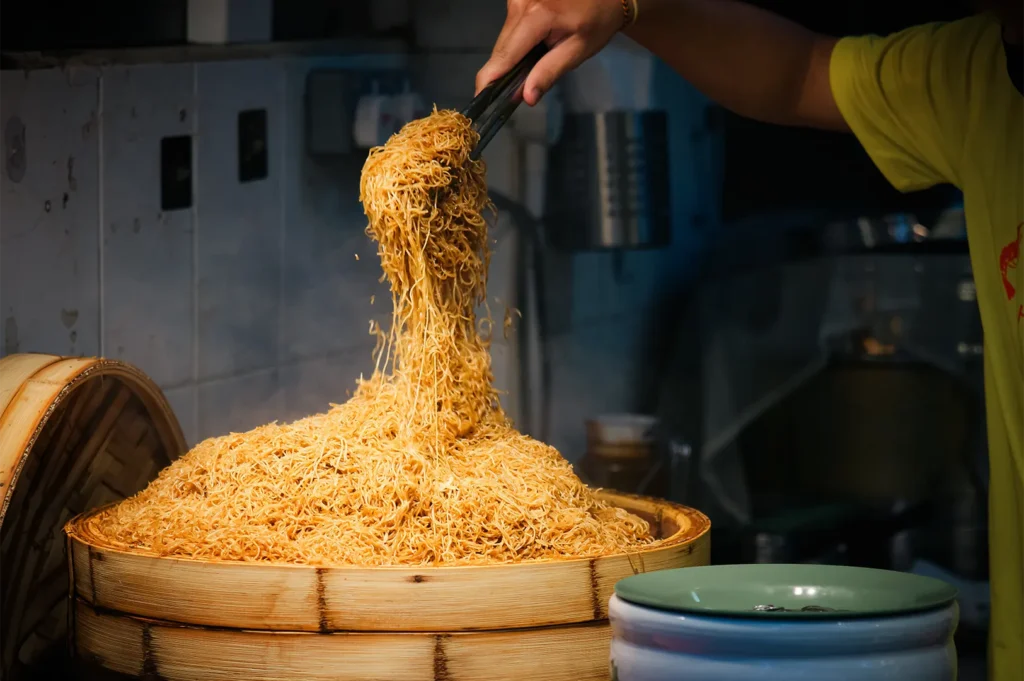
Singapore eats on a schedule, and each part of the day has its own dishes. Follow that rhythm, and you eat the way locals do.
Morning belongs to kaya toast with soft-boiled eggs and a cup of kopi. You crack the eggs into a small dish, add soy sauce and white pepper, then dip the toast alongside. Some people go for a quick bowl of noodles instead.
Lunch is hawker territory. Chicken rice, laksa, economy rice where you point at dishes over rice, and endless noodle plates rule the midday hour.
Afternoon slows down. This is when a kopi break or a light snack like curry puffs helps bridge the gap to dinner.
Dinner often means zi char, where families gather around several cooked-to-order dishes to share. It is casual, loud, and generous.
Late night has its own culture entirely. Roti prata, satay, or a steaming bowl of something warm after midnight. Supper here is part of the fabric.
You do not have to eat all of this. But understanding the pattern tells you what to order and when it will taste right.
Understand the Cultures Behind the Food
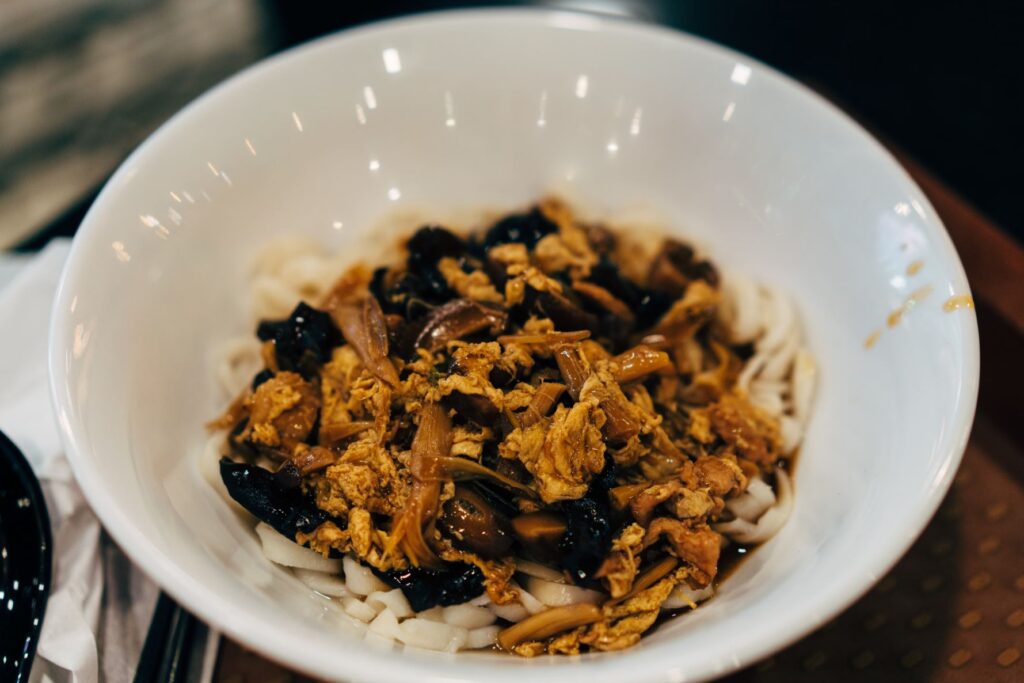
The flavors of Singapore carry a long story of migration, trade, and shared kitchens. Each community brought something, and over generations those traditions started borrowing from one another.
Chinese influence shows up in chicken rice, char kway teow, bak kut teh, and countless noodle dishes. Different dialect groups, like Hainanese, Teochew, and Hokkien, each brought their own specialties.
Malay cooking gives us nasi lemak, satay, and rich rendang, built on coconut, chili, and warm spice.
Indian food adds roti prata, fish head curry, and biryani, full of aroma and heat.
Peranakan cuisine, born from Chinese and Malay heritage, gave us laksa, ayam buah keluak, and dishes layered with real complexity.
Eurasian cooking shows up in plates like devil’s curry, a reminder of how many cultures shaped the table here.
And then there is modern Singaporean food, where young chefs remix all of this into something new while still honoring where it came from.
What I find beautiful is how these lines blur in daily life. A Chinese stall might serve curry. A Malay dish might borrow a technique from next door. The mixing is not a footnote. It is the point.
Know When to Splurge
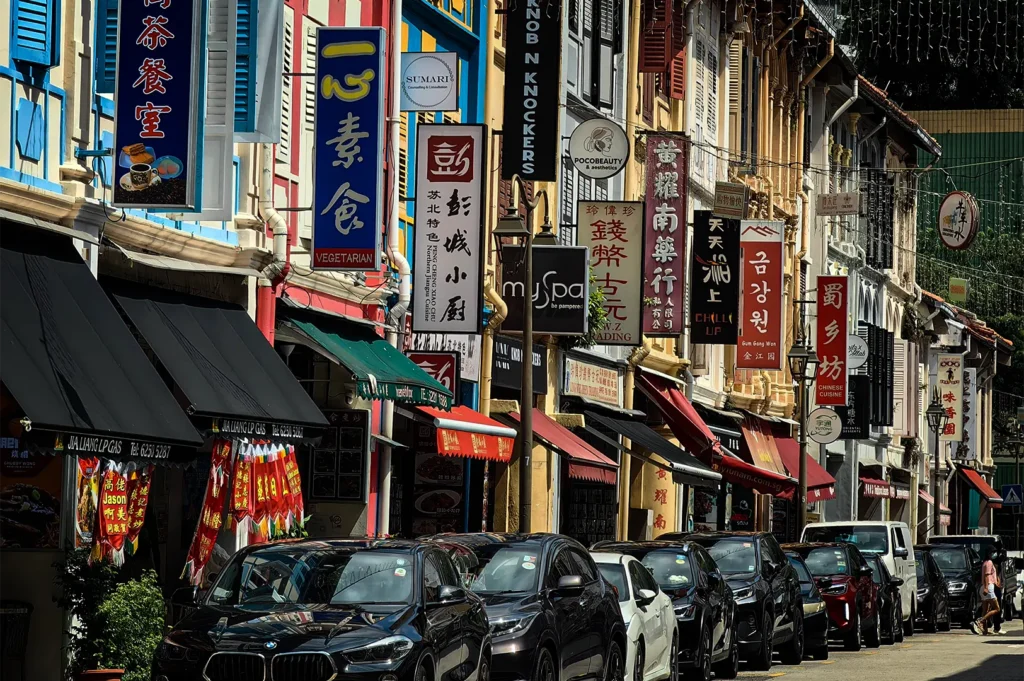
Most of the best eating here costs very little. But there are moments when fine dining makes sense, and Singapore does that well too.
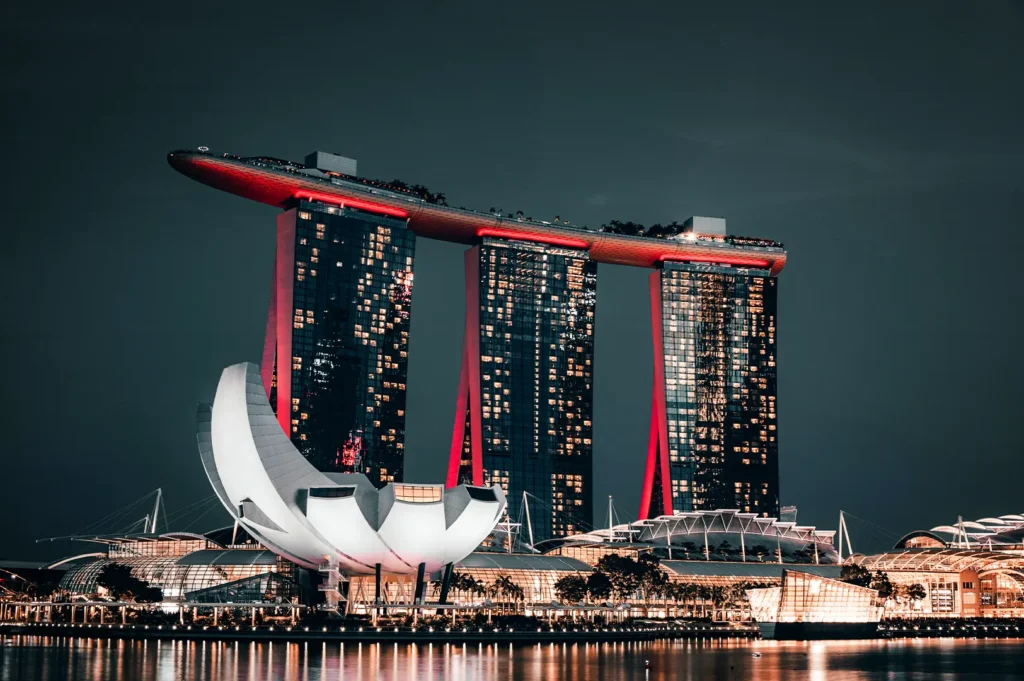
A date night is one. So is a quiet anniversary, or a meal where you want to slow down and be looked after. This is when a tasting menu, an omakase counter, or a restaurant with a skyline view earns its place.
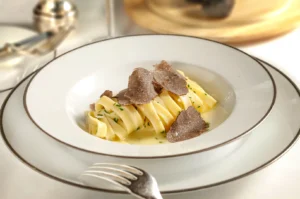
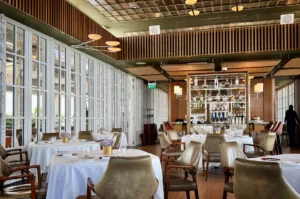
Singapore has Michelin-starred restaurants, elegant hotel dining rooms, and chefs doing careful, personal work. Lunch menus and set courses often give you access to these kitchens at gentler prices, if the full dinner feels like too much.
The trick is matching the meal to the moment. A hawker plate is perfect for an ordinary hungry afternoon. A tasting menu suits a night you actually want to remember. Neither is more honest than the other. They simply serve different needs.
Splurge when the occasion asks for it, not because a guide told you to.
How to Choose Where to Eat Without Falling for Tourist Traps
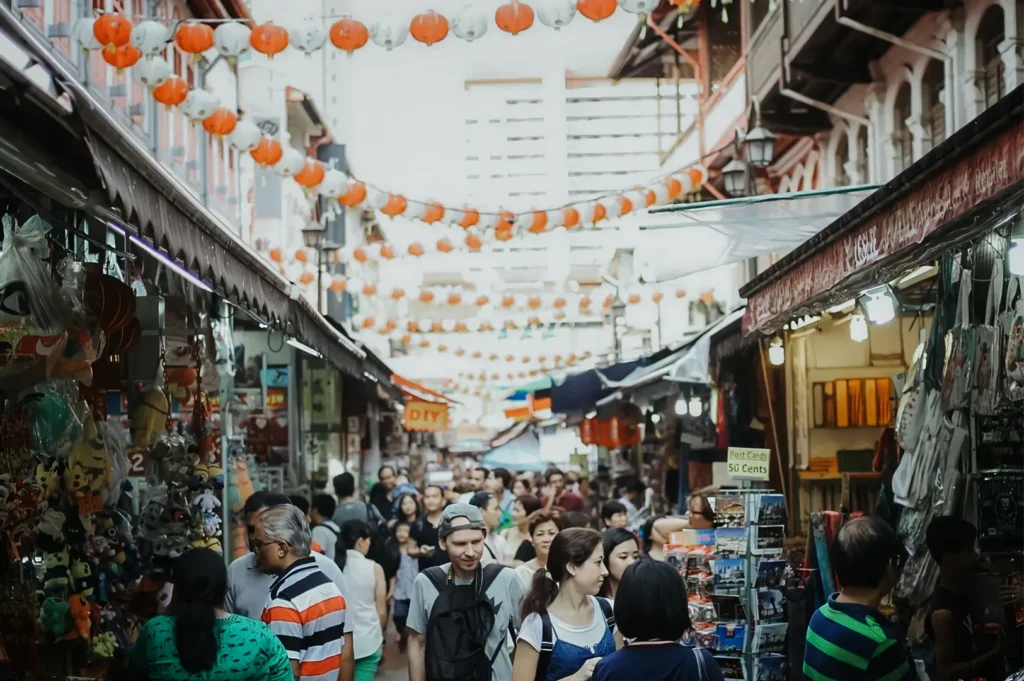
Not every busy stall is good, and not every quiet one is bad. But there are signs worth reading.
Here is what I pay attention to:
- Look at who is eating there. A stall full of locals on a weekday is usually a good sign.
- Trust the queue, but read it. A long line of office workers means one thing. A line of only tourists with cameras means another.
- Check the menu style. Places that do a few things well often beat those with enormous, photo-heavy menus.
- Notice the pricing. If a hawker dish costs far more than usual, ask why before ordering.
- Consider the location. Prime tourist spots sometimes charge for the view, not the food.
- Read reviews with care. Look for repeated, specific comments rather than one glowing rating.
Most of all, match the place to your occasion. A famous restaurant is not worth it if you just wanted a quiet bowl of noodles. The right meal is the one that fits the moment you are actually in.
A Simple Way to Plan a Singapore Food Day
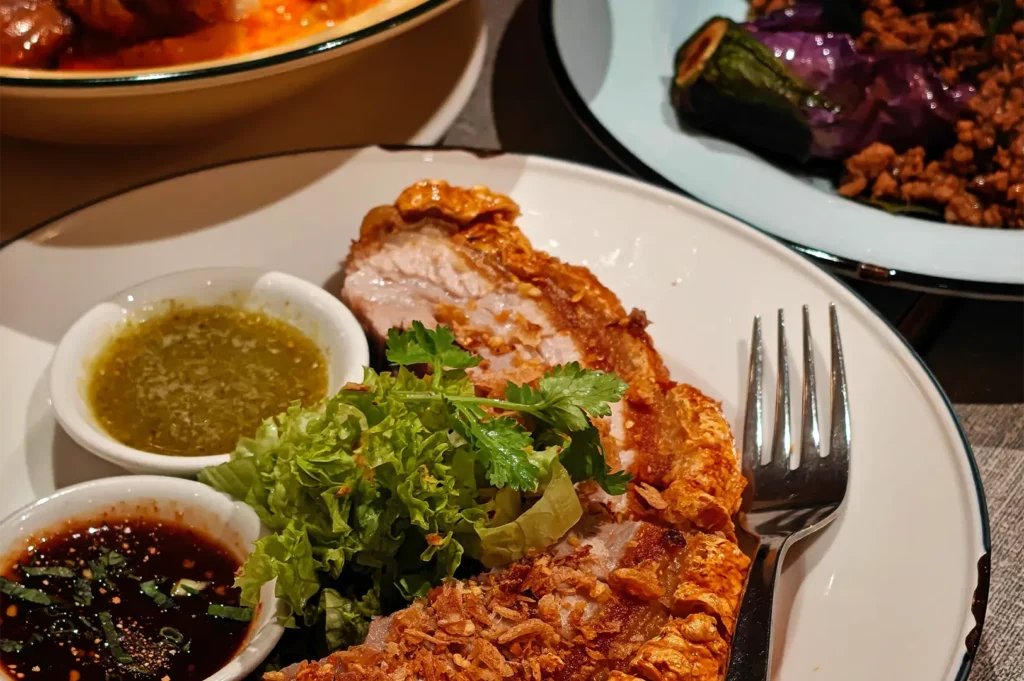
If you want a gentle structure to follow, here is a full day of eating might flow. Treat it as a rhythm, not a rulebook.
- Morning: Kaya toast, soft-boiled eggs, and kopi at a kopitiam. A slow, easy start.
- Lunch: A hawker centre, where you can try two or three dishes without filling up completely.
- Afternoon: A cafe stop or a dessert like chendol to cool down and rest your feet. (If you are near Bugis, this is also a good moment to explore Fortune Centre food places, where local dishes make for an easy stop.)
- Dinner: Zi char with a group, or something more modern, or a fine dining meal if the night calls for it.
- Late night: Roti prata, satay, or a bowl of noodles at a supper spot, eaten without rushing.
Space it out. Leave room between meals. Some of the best food moments here happen when you wander a little and let hunger lead.
Final Thoughts: Singapore Food Is a Map of the City
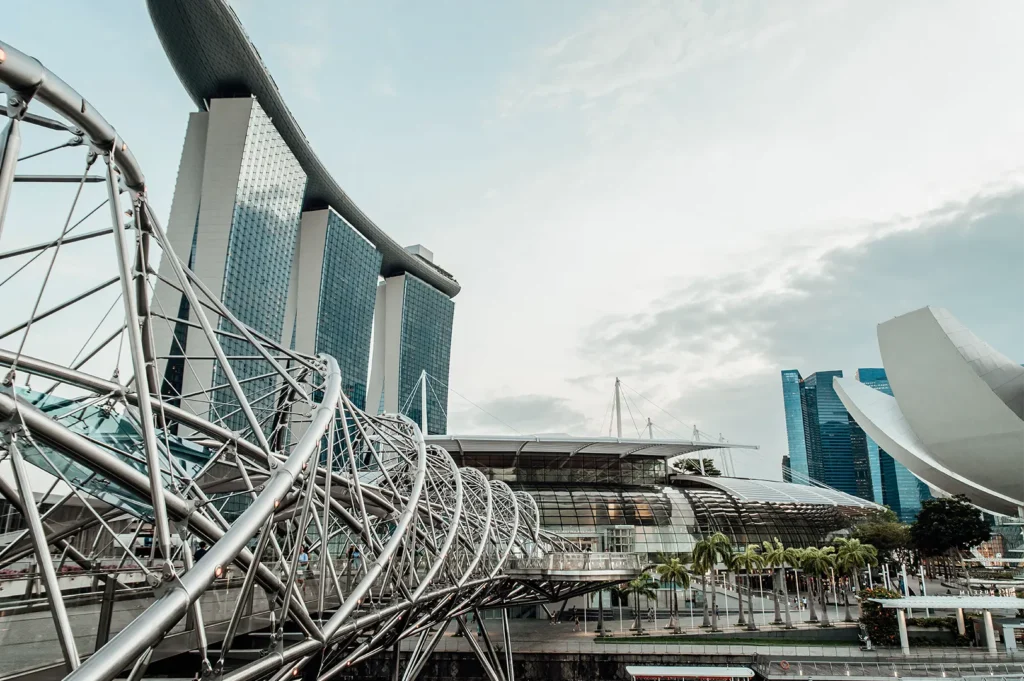
The longer I eat my way through Singapore, the more I think of its food as a kind of map.
Every dish points somewhere. The kopi points to the old coffee shops and the uncles who still order it the same way each morning. The laksa points to a shared history no single culture can claim alone. The late-night prata points to a city that never quite wants the day to end.
You do not need to eat everything to understand this place. You just need to pay attention to where a dish sits, when people reach for it, and why it means what it means.
Start at a hawker table. Follow the rhythm of the day. Let one meal lead you to the next.
That, to me, is how you eat your way through Singapore and actually understand the city. One plate, one hour, one small discovery at a time.