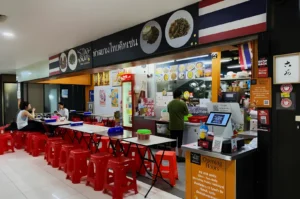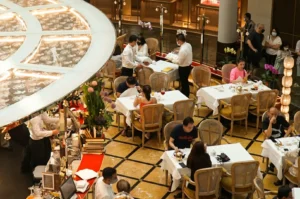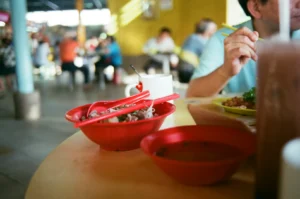
The kopitiam wakes before the city is fully ready. Metal shutters are lifted, kettles begin to boil, and the first cups of kopi are pulled through cloth filters stained by years of use. Before the offices fill and the buses grow crowded, the marble tables are already occupied by people moving through a routine that feels older than the morning itself.
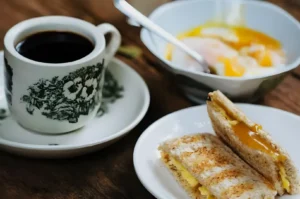
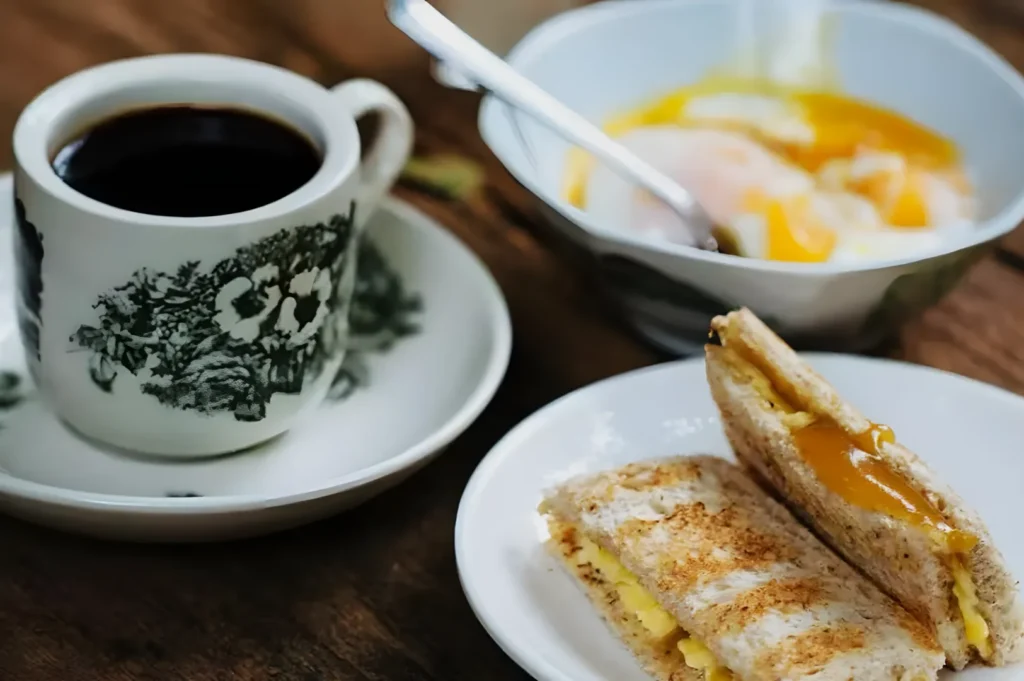
At the center of it is kaya toast, two thin slices of bread pressed together with coconut egg jam and butter, cut into neat rectangles, and placed beside a cup of coffee and a dish of soft-boiled eggs. It is one of Singapore’s most familiar breakfasts, not because it asks for attention, but because it fits so easily into daily life.
You find it in old neighborhood kopitiams, in air-conditioned chains, near MRT stations, below HDB blocks, and in coffee shops where the same orders have been called out for decades. It belongs to the hurried and the unhurried alike. A student eats it before school. An office worker finishes it between messages. An older couple shares a table without needing to speak much. The meal is simple, but its place in the day is steady.
The Shape of the Plate
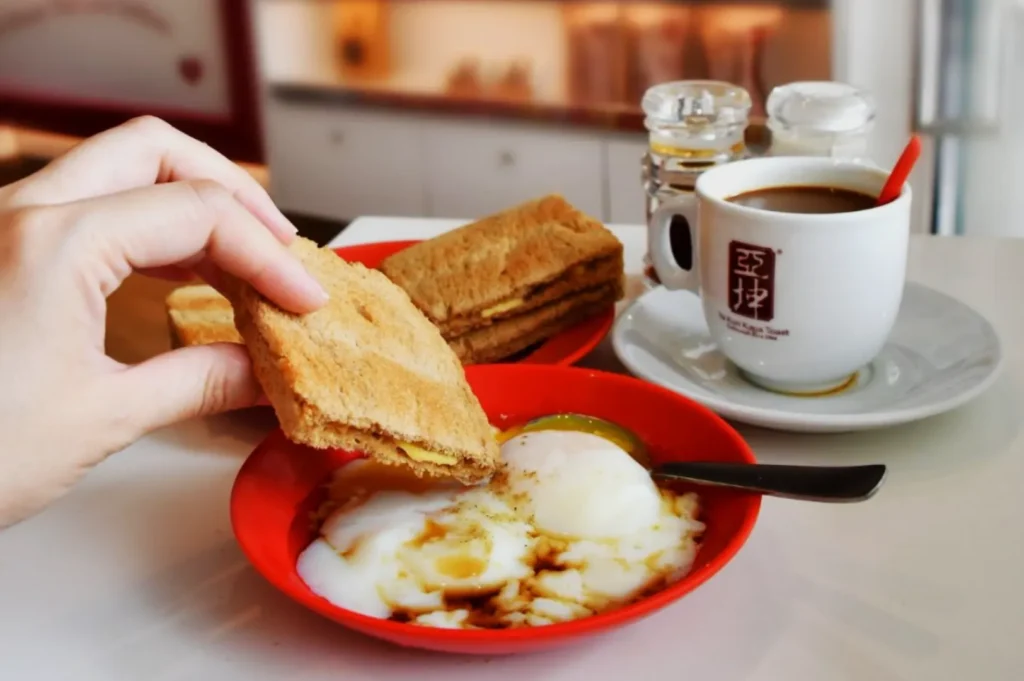
The toast arrives in small pieces, stacked or laid side by side. The bread is thin and crisp at the edges, with a softness that remains close to the center. A layer of kaya peeks out from between the slices, sometimes green from pandan, sometimes golden brown, depending on the stall and its recipe. A slab of cold butter sits inside, already beginning to soften against the warmth of the toast.
There is a quiet precision to this balance. The kaya brings sweetness from coconut milk, eggs, and sugar. The butter gives it salt and weight. The toast keeps everything contained, light enough to be eaten quickly, crisp enough to leave crumbs on the plate.
Part of why kaya toast has endured in Singapore is that it is not trying to become something else. It has remained close to its original shape, even as the city around it has changed. Cafe in Singapore have become chains, breakfast counters have moved into malls, and payment has shifted from coins to cards and QR codes. Yet the plate itself is still recognizable. Toast, kaya, butter, eggs, kopi. The arrangement does not need much revision.
It is a food built for repetition. You do not have to think too hard about it. You already know what the first bite will be like.
The Eggs Beside It
Next to the toast, two soft-boiled eggs rest in a shallow bowl or small ceramic cup. They are barely set, the whites loose and glossy, the yolks still warm. A few drops of dark soy sauce and a shake of white pepper turn them savory.
There is a method to eating them that many people learn by watching. The eggs are cracked, emptied into the bowl, stirred gently. Some eat them with a spoon. Some dip the toast into the yolk and soy sauce. Some lift the bowl and drink the last of it quickly, as if it is the most natural thing in the world.
This is part of the cultural memory of kaya toast. It is not only the food, but the gestures around it. The tearing of the toast. The tapping of the eggshell. The way kopi is stirred until the condensed milk disappears into the dark coffee. These small movements are passed along quietly, from parent to child, from regular to newcomer, from one breakfast table to the next.
No one explains it at length. You sit down often enough, and eventually your hands know what to do.
The Sounds That Fill the Space
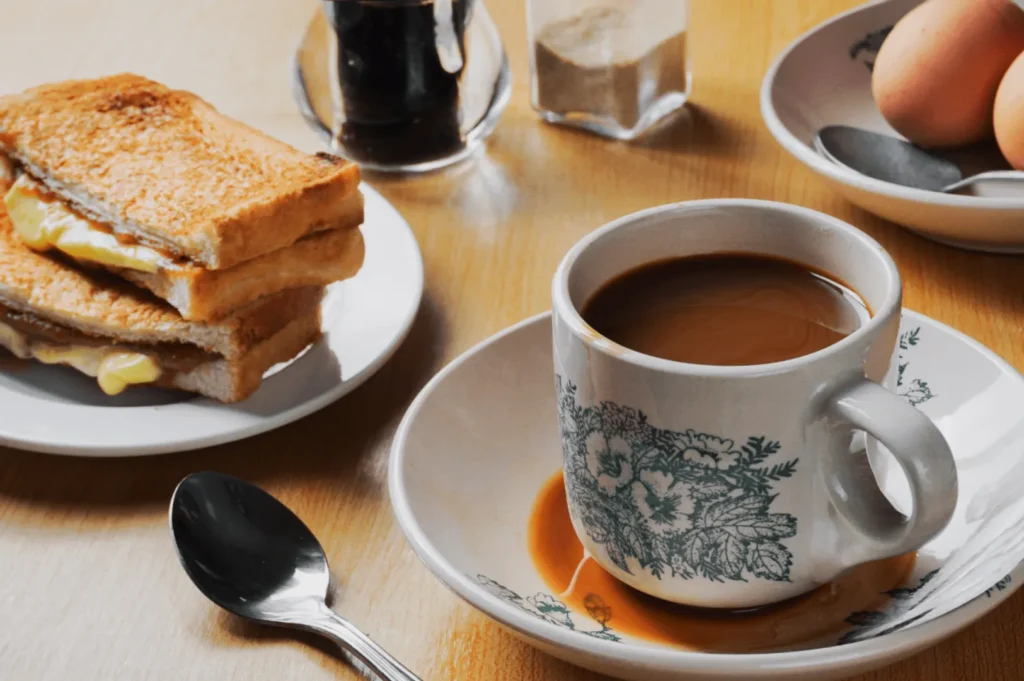
A Singapore breakfast has its own rhythm. The coffee spoon strikes the side of the glass. The uncle at the drinks stall repeats orders in quick shorthand. Kopi, kopi siu dai, teh, teh o. Plates land on trays. Stools scrape against the floor. Someone folds the newspaper with a dry rustle. Someone else checks the time and eats faster.
Kaya toast belongs to this soundscape. It is rarely eaten in silence, even when the person eating it is alone. The kopitiam provides the noise around the meal, soft enough to settle into, busy enough to remind you that the day has begun.
In many ways, this is what makes the dish feel so Singaporean. It does not sit apart from routine. It is woven into the morning systems of the city, the coffee stall, the breakfast set, the shared table, the quick meal before work, the slow one after marketing, the familiar order placed without looking at the menu.
The experience shifts slightly, but the logic remains the same. It is breakfast made efficient without becoming empty.
A Familiarity Without Ceremony
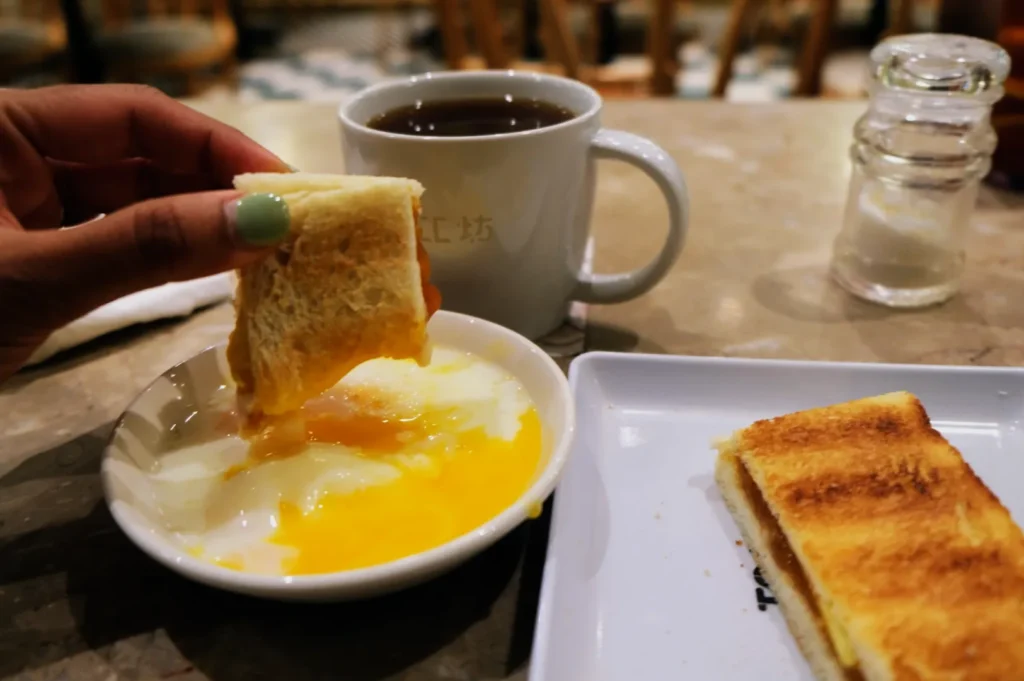
What is striking about kaya toast is how little ceremony surrounds it, despite how deeply it sits in Singapore’s food culture. No one at the next table pauses to admire it. No one treats it as rare. It is eaten quickly, between errands and work calls, beside school bags and office lanyards, beside plastic bags of groceries and folded umbrellas.
The same plate can belong to many generations at once. Older diners may remember it as a coffee shop staple from a slower Singapore, when breakfast was taken under ceiling fans and orders were remembered by face. Younger diners may know it from mall outlets before class, from weekend breakfasts with family, or from takeaway sets carried back to the office. The form changes, but the familiarity holds.
Its simplicity is not plainness. It is a kind of consistency. In a city where buildings are renewed, stalls move, and habits adjust to new schedules, kaya toast remains a small fixed point. It does not stop change. It simply gives the morning something known to return to.
The Last Corner of Toast
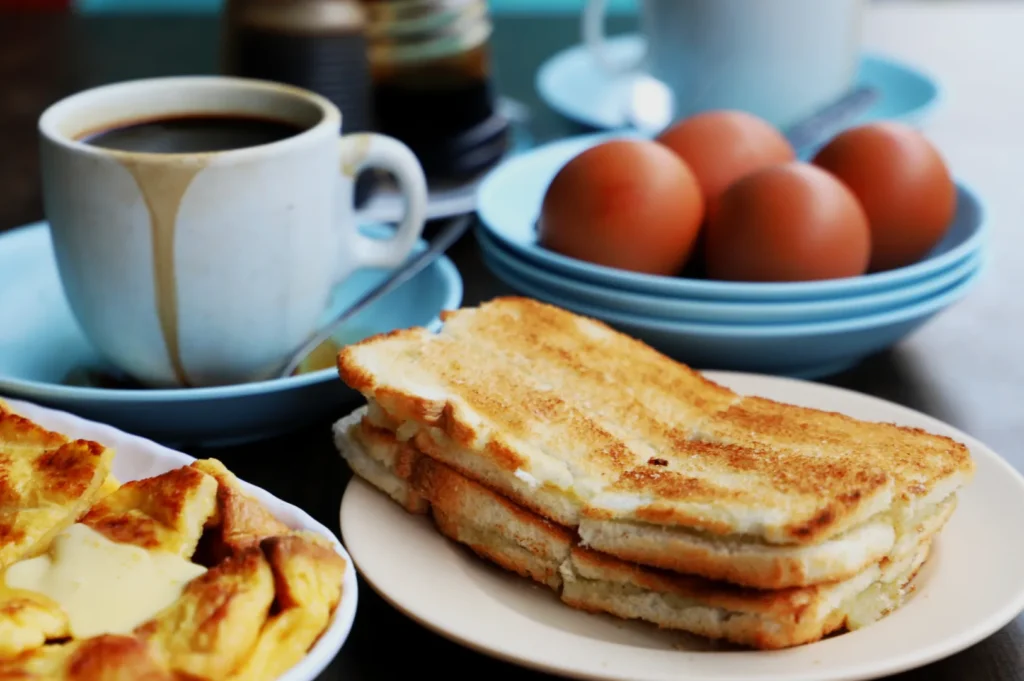
Eventually the plate empties. A few crumbs remain on the surface, along with a thin smear of kaya near the edge. The egg bowl holds a small pool of soy sauce and yolk. The kopi cup is drained to its sweet, milky end.
Around you, the kopitiam continues. Another order is called. Another tray is carried past. Someone leaves, someone else takes the table, and the same breakfast begins again in front of another person.
There is nothing dramatic about this passing of plates. That may be why kaya toast has lasted so well. It does not ask to be remembered as an occasion. It stays because it is useful, comforting, familiar, and quietly shared across the everyday life of the city.
Stepping back into the morning, the sweetness fades slowly from the tongue. The day continues, busy and unfinished. Behind you, the coffee stall keeps moving, and somewhere on another marble table, a fresh plate of kaya toast waits for the next person to begin.