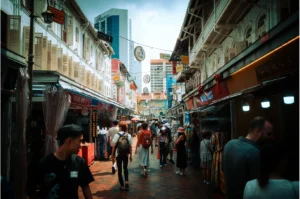
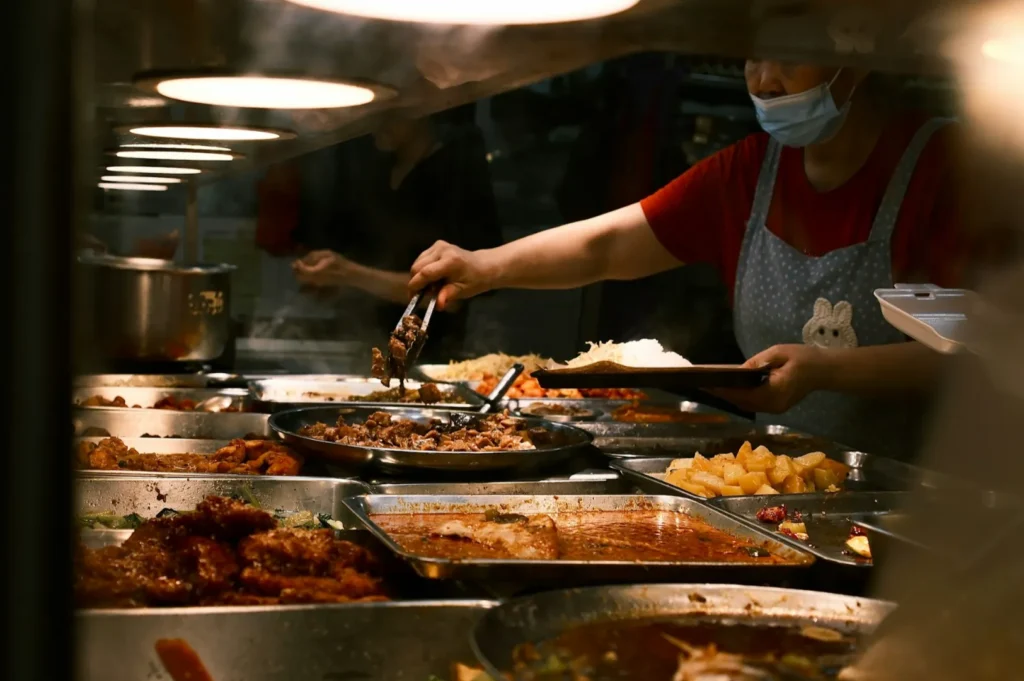
There’s a certain moment that happens when you first walk through a Singapore hawker centre at lunch hour. The air changes before you even notice the food itself. Smoke from sizzling woks drifts through the space. Someone nearby is carrying a tray of Hainanese chicken rice. Metal spoons tap against bowls of soup. A stall selling char kway teow sends up bursts of garlic, dark soy sauce, and pork lard into the air.
For many visitors, Singapore street food begins as a checklist of famous dishes. Chili crab. Hokkien mee. Kaya toast. But once you spend more time around the city, you realise the food is tied to something larger. It reflects migration, labour, adaptation, and everyday routines repeated across generations.
Modern Singapore street foods may now live mostly inside hawker centres rather than roadside pushcarts, but the culture behind them still carries traces of where they came from.
Singapore Street Foods and the Origins of Hawker Culture
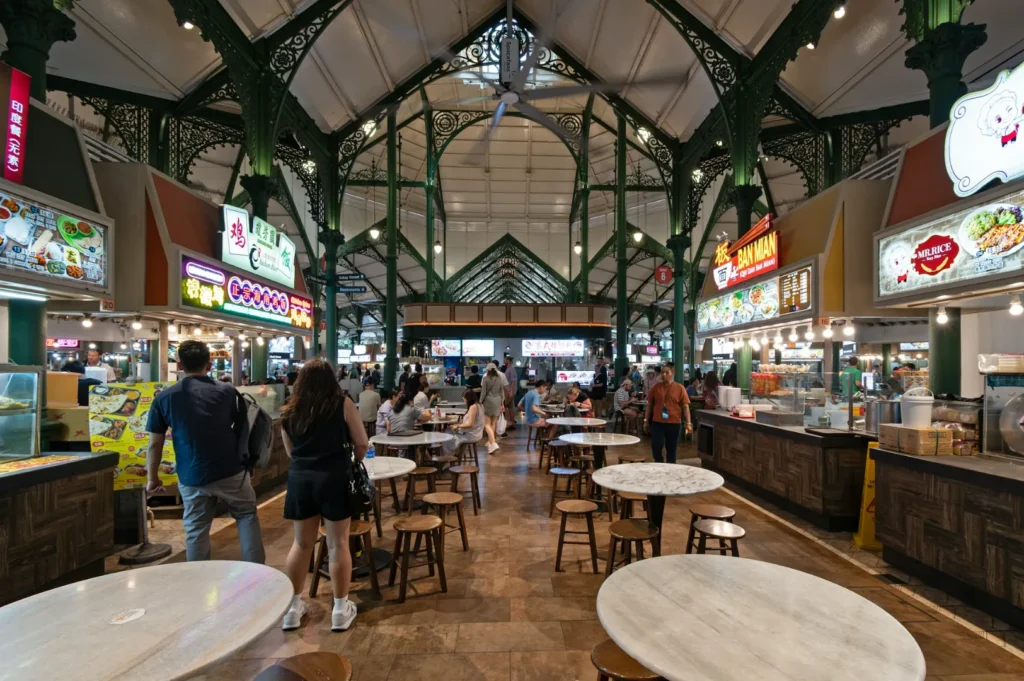
Long before organised hawker centres existed, Singapore’s street food scene was built around mobile pushcart vendors.
In the early 20th century, many immigrants arriving from China, India, and Southeast Asia sold affordable food directly on the streets. Some specialised in noodle soups. Others sold rice cakes, grilled meats, or simple breakfasts with coffee and kaya toast. Food was quick, practical, and deeply connected to working-class communities.
By the 1970s, the government began relocating many street food vendors into structured food centres to improve sanitation and organisation. What emerged became one of Singapore’s defining food systems.
Today, there are over 100 hawker centres housing more than 6000 food stalls, serving a wide variety of local dishes. Hawker centres serve as communal dining spaces where people from diverse backgrounds come together to enjoy affordable and authentic local food. This vibrant hawker culture was recognised by UNESCO as an Intangible Cultural Heritage in 2020, highlighting its significance in Singapore’s social fabric.
Char Kway Teow and Why Wok Hei Matters So Much
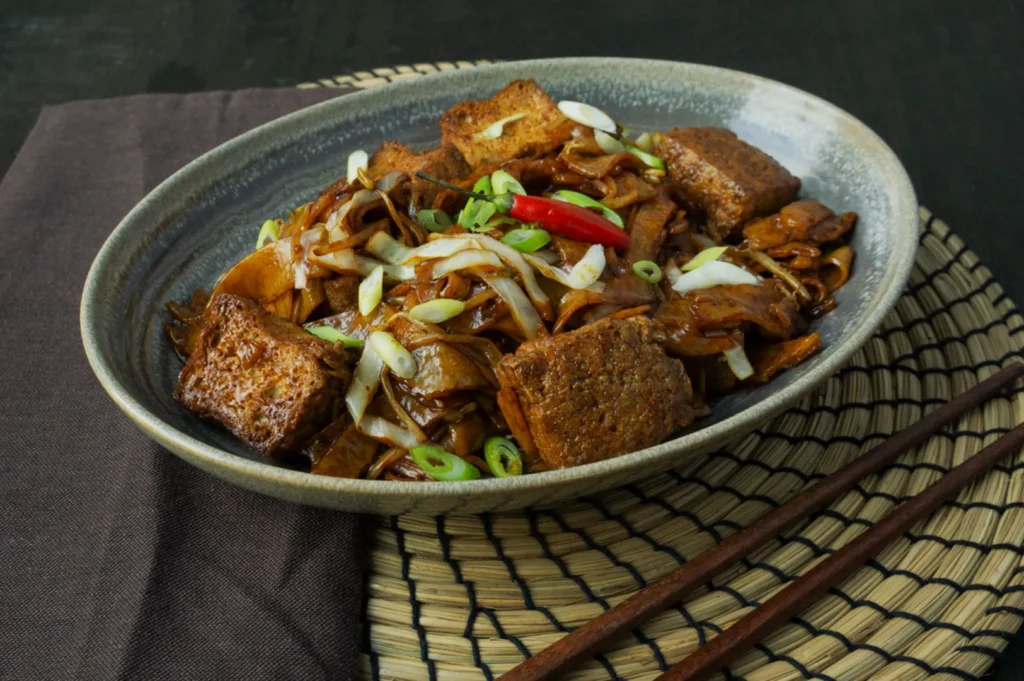
Among the most recognisable Singapore street foods, char kway teow remains one of the clearest examples of how technique shapes flavour.
The dish usually combines flat rice noodles, egg, bean sprouts, Chinese sausage, cockles, shrimp paste, and dark soy sauce, all stir fried quickly over extremely high heat. Good char kway teow carries what locals call “wok hei,” a smoky flavour created through intense heat and movement.
Historically, the dish was popular among labourers because it was inexpensive and calorie-dense. Older versions were often cooked heavily with pork lard for extra richness.
Today, some stalls make lighter versions, while others continue using traditional methods.
At places like Airport Road Food Centre or Chinatown Complex, you’ll still find long queues forming around hawkers who have spent decades refining a single plate of kway teow.
And in Singapore, queues usually mean something. People are willing to wait for food they trust.
Hainanese Chicken Rice and the Importance of Fragrant Rice
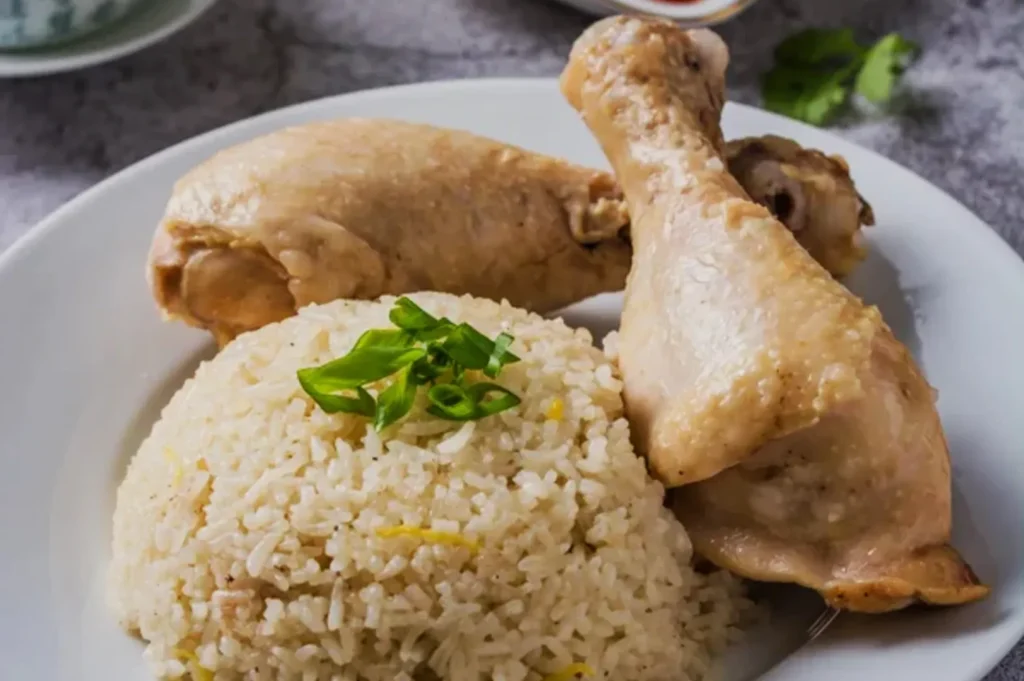
To outsiders, Hainanese chicken rice can look deceptively simple.
Poached chicken. Rice. Soup. Chili sauce.
But good chicken rice depends almost entirely on balance and precision. The rice itself matters just as much as the chicken. It’s usually cooked in chicken fat, garlic, ginger, and chicken broth, giving it a richer flavour and aroma than plain steamed rice.
The best stalls also pay close attention to texture. The chicken should remain tender and smooth, while the accompanying sambal chili sauce adds heat and acidity without overpowering everything else.
Places like Maxwell Food Centre helped turn chicken rice into one of Singapore’s most internationally recognised local dishes, though many neighbourhood hawker stalls remain equally beloved by regulars.
The famous Tian Tian Hainanese Chicken Rice stall at Maxwell Food Centre, visited by chefs like Anthony Bourdain and Gordon Ramsay, exemplifies this perfection. The rice there is fragrant and the chicken tender, making it a must-try for food lovers.
What makes the dish memorable often isn’t complexity. It’s restraint.
Hokkien Mee, Pork Ribs, and Other Local Dishes Built Around Broth
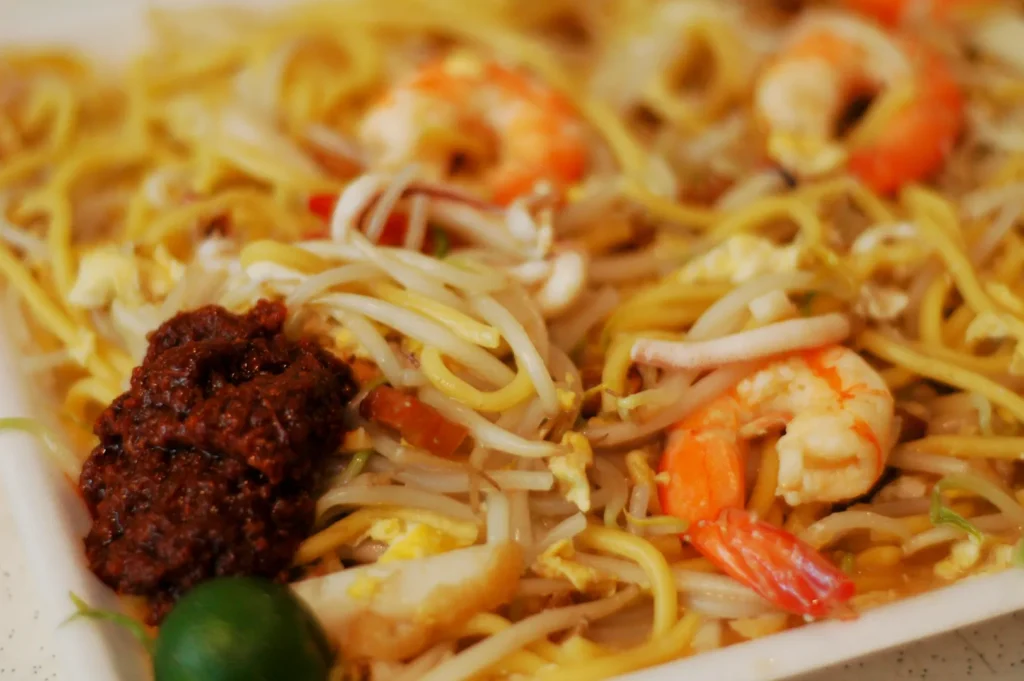
A lot of Singaporean food revolves around depth created slowly over time.
Hokkien mee, for example, combines egg noodles and rice noodles stir fried in seafood stock until the broth reduces into the noodles themselves. Prawns, squid, pork lard, sambal chili sauce, and lime usually complete the dish.
At the legendary Old Airport Road Hawker Centre, Nam Sing Fried Hokkien Mee is a popular stall where the noodles are cooked with a flavorful broth, making the dish saucy and satisfying.
Meanwhile, bak kut teh, a peppery pork ribs soup originally brought by Chinese immigrants, reflects another side of Singapore street food culture. Different versions exist across Southeast Asia, but Singapore’s style tends to focus more heavily on pepper and garlic.
Even dishes like bak chor mee rely heavily on broth and sauce balance. The combination of minced pork, vinegar, chili sauce, sesame oil, fish balls, and noodles creates something deeply savoury and comforting without looking particularly elaborate.
Many of these dishes developed from necessity rather than luxury. But over time, they became cultural anchors.
Carrot Cake, Chai Tow Kway, and the Confusion Around Names
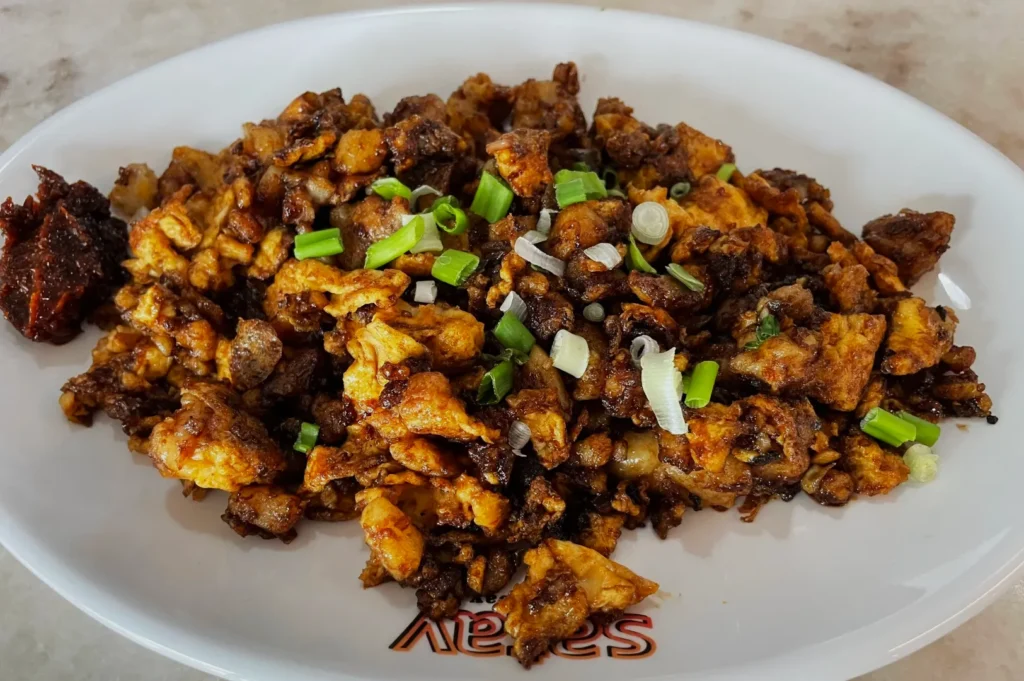
One of the more confusing discoveries for visitors is learning that Singapore’s “carrot cake” contains no actual carrot.
Known locally as chai tow kway, the dish is made from compressed rice cakes and radish, stir fried with egg, preserved vegetables, soy sauce, and sometimes pork lard.
There are usually two versions:
- Black carrot cake with sweet dark soy sauce
- White carrot cake with a crispier texture
The dish evolved from Teochew cooking traditions and became deeply tied to hawker breakfasts and late-night eating.
Like many local foods, it reflects migration and adaptation more than fixed authenticity.
Yong Tau Foo, Nasi Lemak, and the Diversity of Singapore Street Food
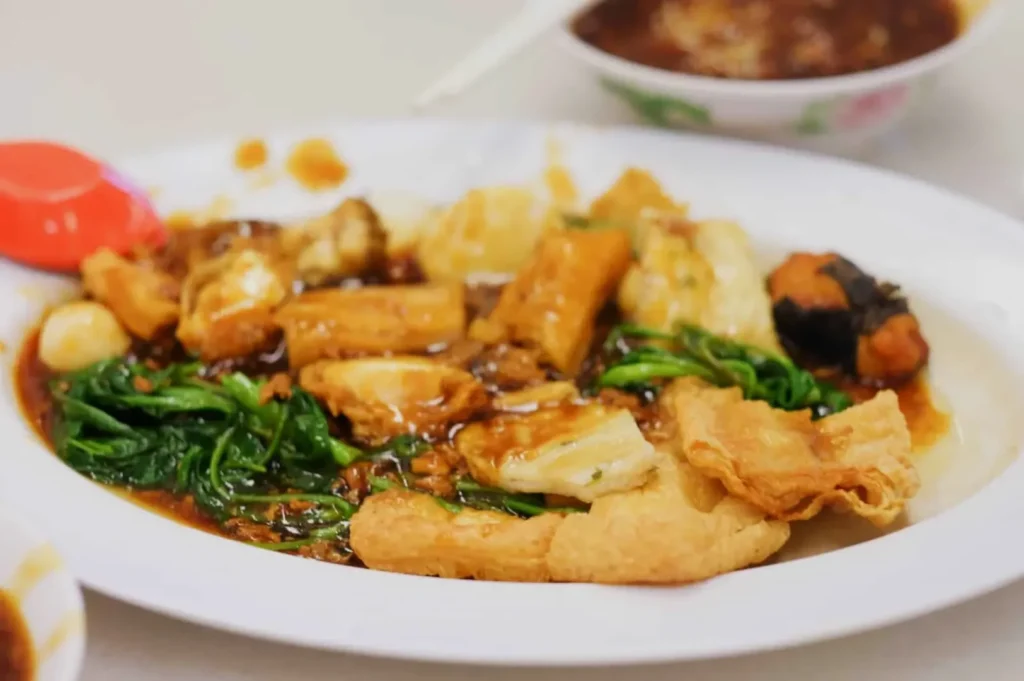
Part of what makes Singapore street foods so distinctive is the range of cultures existing side by side.
You can move from Malay nasi lemak cooked with coconut milk and sambal to bowls of Chinese yong tau foo, then walk a short distance toward authentic South Indian cuisine in Little India.
At some hawker centres, entire worlds exist within walking distance of each other.
A single meal might include:
- Fried tofu stuffed with fish paste
- Peanut sauce over rice cakes
- Char siu and roast pork belly
- Curry leaves and spicy sauce
- Shaved ice desserts with red beans and condensed milk
The variety reflects Singapore itself as a cultural melting pot.
Best Hawker Centres and Why Some Locals Avoid Tourist Traps
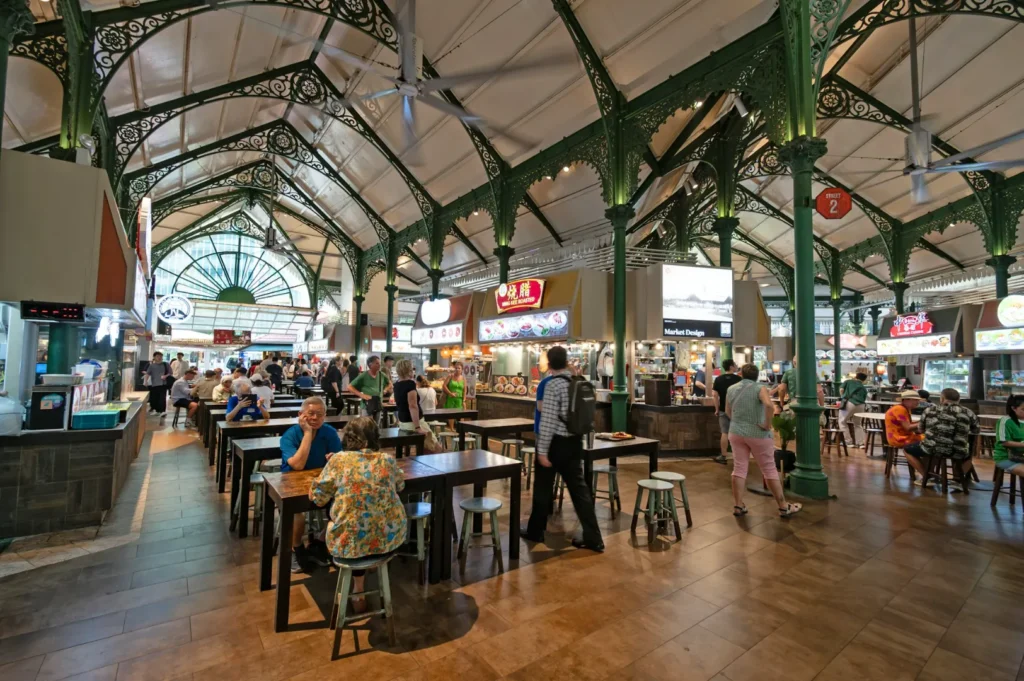
Certain hawker centres have become internationally famous. Lau Pa Sat, Newton Food Centre, and Maxwell Food Centre regularly appear in travel guides.
Some deserve the attention. Others can feel slightly disconnected from everyday eating, especially during peak tourist hours.
Many locals still prefer neighbourhood food centres like:
- Airport Road Hawker Centre – beloved for its long history and legendary stalls like Nam Sing Fried Hokkien Mee and Toa Payoh Rojak.
- Chinatown Complex Food Centre – the largest hawker centre with over 260 stalls, home to the cheapest Michelin-starred meal in the world and stalls like Smith Street Taps.
- Old Airport Road Food Centre – a favourite for authentic Singaporean dishes and a stronghold of traditional hawker fare.
- Tekka Centre in Little India – vibrant with Indian, Malay, and Chinese food options, including famous biryanis and roti prata.
- Newton Food Centre – popular for late-night dining and lively atmosphere, known for its satay and seafood stalls.
- Lau Pa Sat – historic hawker centre with colonial architecture, famous for Satay Street that opens in the evening.
Hawker centres originated from street food vendors and were centralized in the 1960s and 70s to improve hygiene and safety standards. They serve as communal hubs where diverse culinary traditions converge, embodying the spirit of Singapore’s multicultural identity.
The Role of Food Stalls and Street Vendors in Singapore’s Food Scene
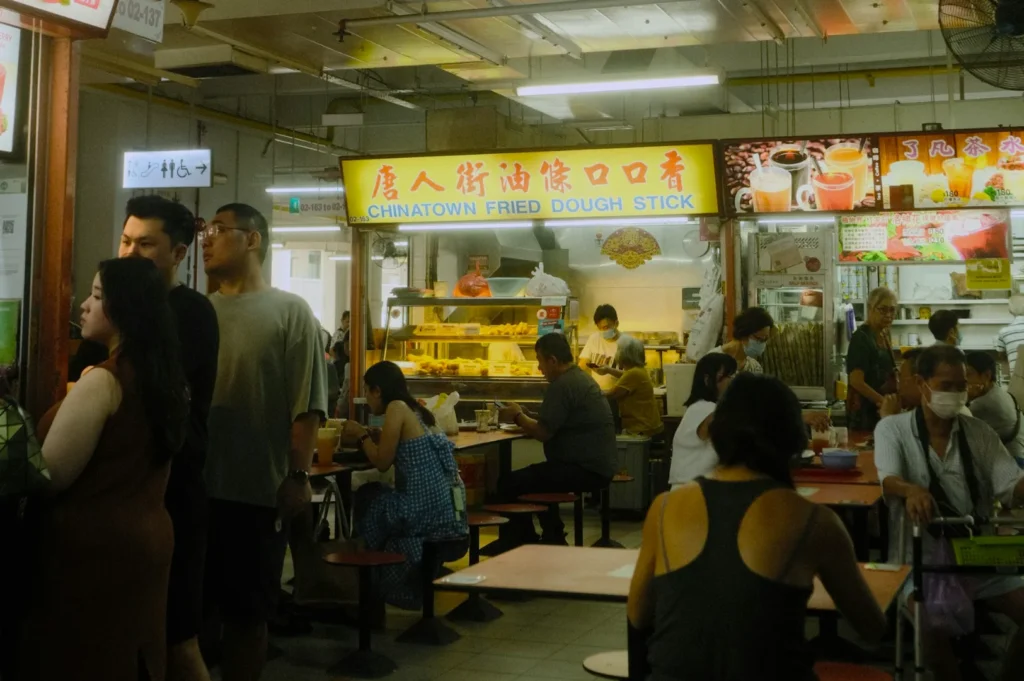
The heart of Singapore’s street food culture lies in its food stalls and street vendors. These small-scale operators often run family-owned businesses passed down through generations, preserving recipes and cooking methods that define Singapore’s culinary heritage.
At hawker centres and food courts, each stall specialises in a particular dish, from Chinese food classics like bak kut teh and yong tau foo to Malay and Indian delicacies.
The atmosphere is lively, communal, and authentic, allowing locals and visitors alike to share meals and stories.
Iconic Dishes to Try and Their Unique Flavours
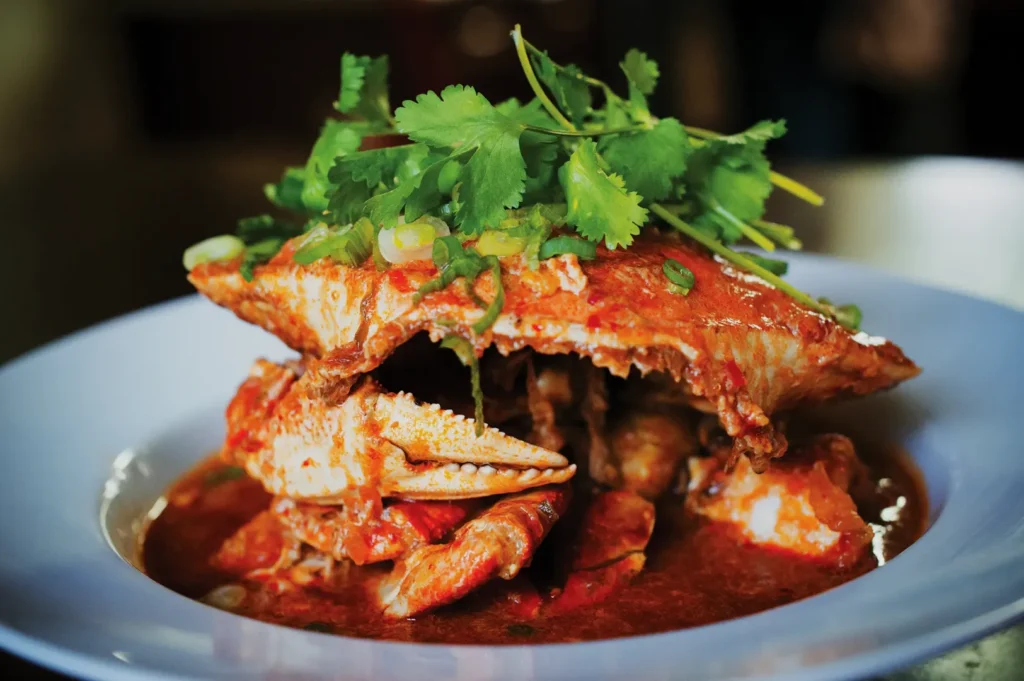
A few iconic dishes you shouldn’t miss include:
- Singapore chili crab – often hailed as a national dish, featuring crabs cooked in a thick, sweet, and mildly spicy tomato-based sauce. It’s messy but unforgettable.
- Laksa – a popular noodle dish combining Chinese and Malay flavours, with rice noodles in a spicy coconut milk soup, topped with prawns and fish cakes.
- Kaya toast – a breakfast staple featuring toast spread with creamy coconut jam (kaya), butter, and often served with hard boiled eggs and a cup of kopi (coffee).
- Bak chor mee – minced meat noodles, a popular dish served dry with a vinegar and chili sauce, often accompanied by a light broth.
- Fish bee hoon – rice noodles served in a light fish broth with slices of fish and vegetables.
- Rojak – a traditional salad mixing fruits and vegetables with a sweet and spicy sauce, offering a bold taste that excites the taste buds.
Singapore’s street food is a vibrant, delicious, and deeply cultural experience. Whether you’re exploring bustling hawker centres like Smith Street or sampling treats in a food court, the diversity and history behind each dish make every bite a story worth savoring. Places like Fortune Centre also offer unique culinary experiences beyond typical hawker fare, including standout vegetarian options.