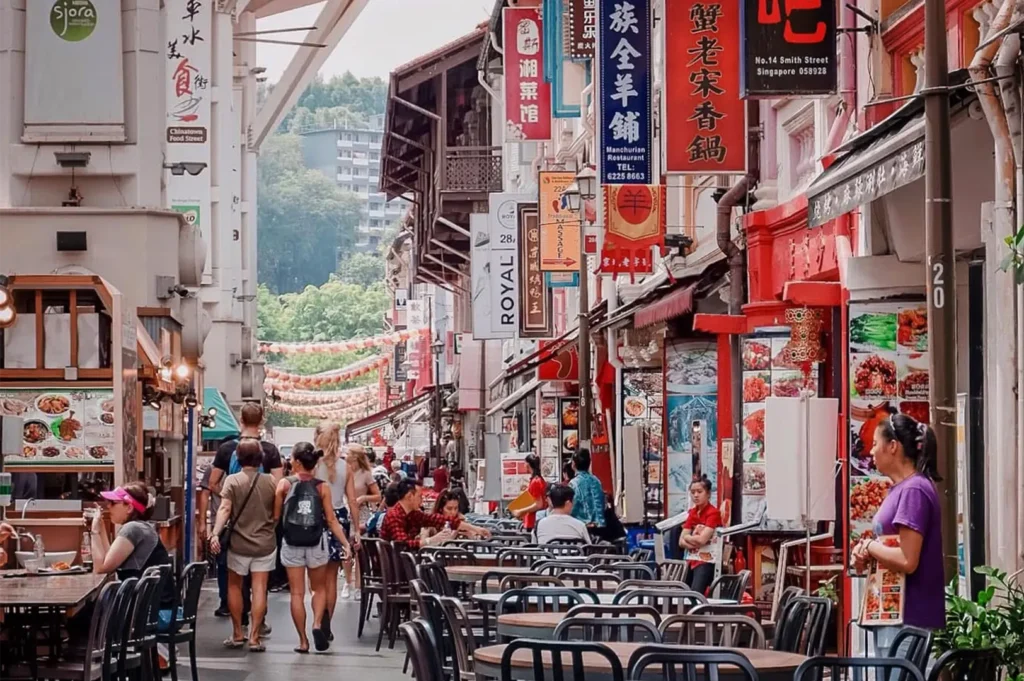
There is a particular kind of quiet in a hawker centre just before the lunch rush. The clatter of woks warming up. A drip of condensation from the ceiling fans. The smell of charcoal, curry, and simmering broth settling into the air like it has always been there.
It has, in a way. What we eat at those shared tables is not just lunch. It is the result of nearly two centuries of people arriving, adapting, cooking, and feeding one another.
Hawker culture is often described as affordable food, and it is. But that description misses the deeper thing. It is a record of who came to this island—what they carried with them, and how they learned to live side by side. In 2020, UNESCO recognized it as Intangible Cultural Heritage. Long before that, it was simply how Singapore ate.
Here is how that story unfolded.
The Origins of Hawker Culture
Early Street Hawkers in Colonial Singapore
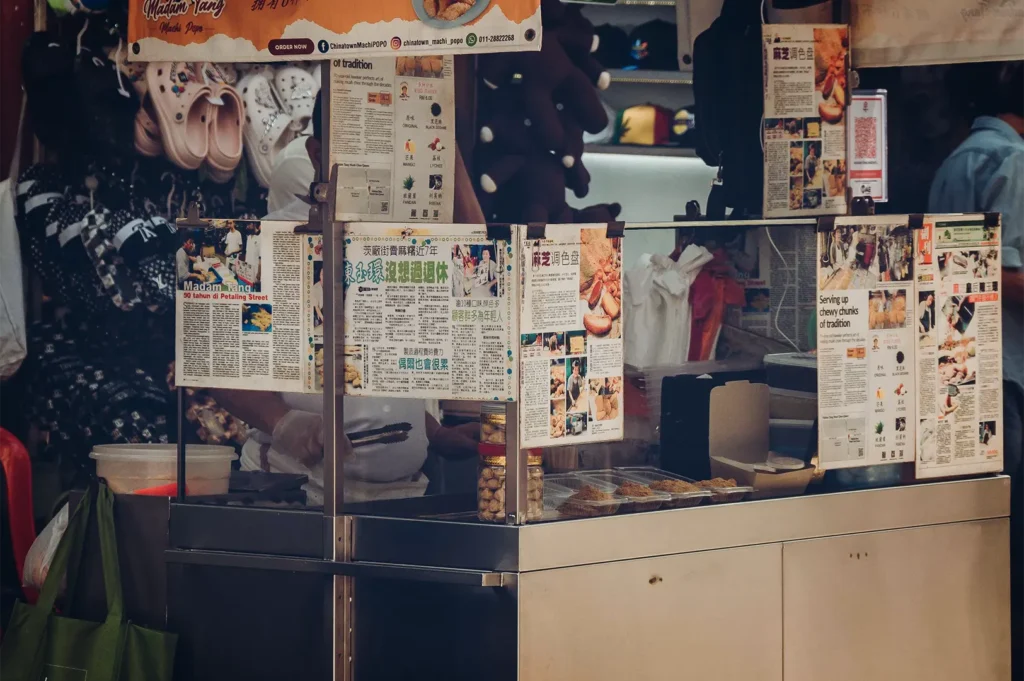
Street hawking in Singapore reaches back to the 1800s, when the island grew into a busy trading port. People came from China, India, the Malay Archipelago, and beyond, drawn by work and the promise of something better.
They arrived hungry, and so did everyone around them. Laborers, sailors, and traders needed cheap meals close to where they worked. Hawkers answered that need, carrying their kitchens through the streets on poles and carts.
These vendors fed a population that was growing faster than the city could keep up with. A bowl of noodles here, a plate of rice there, sold from a spot on the pavement.
Why Hawkers Became Essential
Many people in those early years had no proper kitchen to cook in. Rooms were shared, cramped, and short on running water. Eating out was not a luxury. It was often the only option.
For the vendors, hawking asked for little upfront. Low capital, familiar recipes, and a willingness to work long hours. That made it one of the few paths open to those who had almost nothing.
After the Second World War, unemployment ran high, and hawking rose again. When there was no job to be found, a person could still cook what they knew and sell it. Food became both a livelihood and a way of holding on to home.
For a broader overview of must-try eats and where to find them, see Singapore Street Foods: A Guide to Hawker Centres & Iconic Local Dishes.
From Chaotic Streets to Organised Hawker Centres
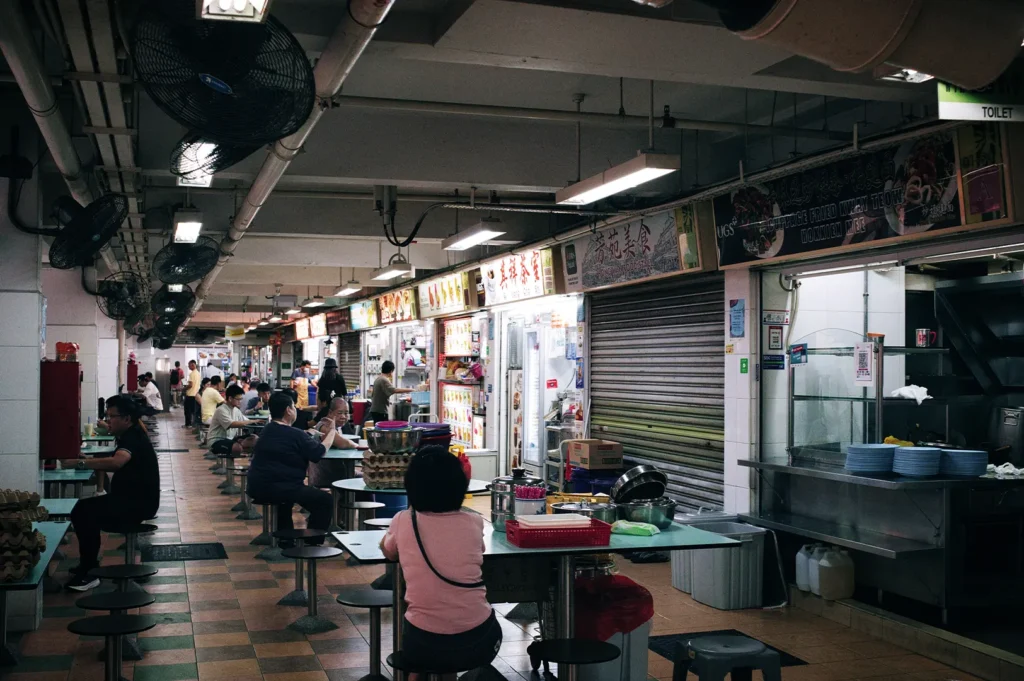
Challenges of Early Street Hawking
The streets grew crowded. As more hawkers appeared, so did the problems that came with cooking in the open.
Water was scarce, and proper storage was rare. Refuse piled up, drawing pests and raising the risk of diseases like cholera and typhoid. The threat to public health was real and serious.
There was also the matter of space. Stalls spilled into roads, blocked foot traffic, and competed for prime ground in commercial areas. It was lively, yes, but also disorganized in a way the growing city could not sustain.
In 1950, the Hawkers Inquiry Commission was set up to study the whole tangle of it, looking at the social, economic, and health questions that surrounded hawking.
The Hawker Centre Transformation
The path forward was to bring hawkers in from the streets. Registration of hawkers took place through the 1960s, a slow and complicated exercise.
Then came the buildings. Between 1971 and 1986, the government constructed markets and hawker centres across the island, purpose-built spaces with running water, proper drainage, and room to cook safely.
In 2004, management came under the National Environment Agency, which today oversees more than 114 markets and hawker centres.
The move helped everyone. Vendors gained cleaner, steadier places to work. Diners gained food that was safer to eat. And something unexpected happened. Gathered under one roof, the stalls became neighbors, and the centre became a place people returned to daily.
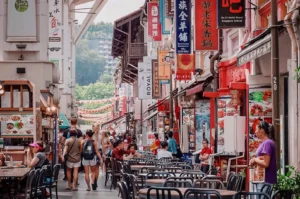
For readers who want to experience these traditions in one of Singapore’s most atmospheric food centres, this guide to where to eat classic hawker dishes at Tekka Centre offers a closer look at the stalls and dishes that keep that everyday heritage alive.
A Reflection of Singapore's Multicultural Identity
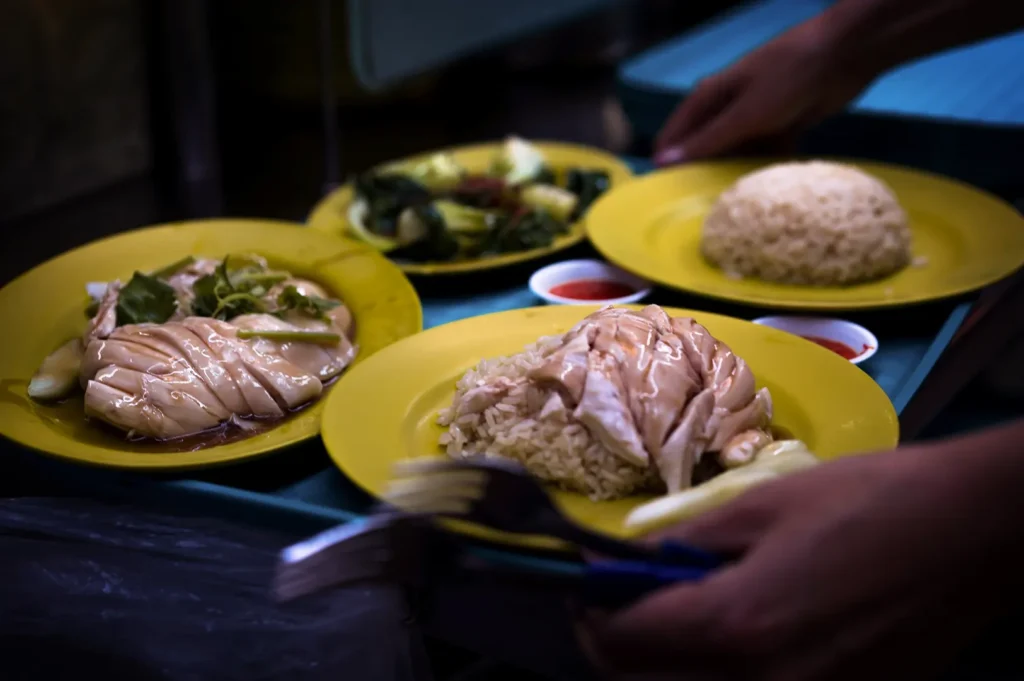
Walk through any hawker centre and you are walking through the island’s history. Each community brought its own kitchen, and over time those kitchens started borrowing from one another.
Chinese Culinary Traditions
The largest share of stalls carries Chinese roots, and even within that, the differences run deep. Hainanese, Teochew, Hokkien, and Cantonese cooks each brought regional dishes with them.
You taste it in the noodle stalls, the braised meats, the rice plates. These were not invented here so much as carried here, then quietly reshaped by local tastes.
Malay Culinary Heritage
Malay cooking brought coconut, chili, and warm spice to the table. Its dishes lean on slow layering of flavor, the kind that fills a space with aroma before the plate ever arrives.
This heritage grounds much of what feels comforting in local food. It is the warmth beneath a great deal of everyday eating.
Indian Culinary Influences
Indian communities added their own depth, from fragrant rice dishes to breads cooked fresh to order and curries built on complex spice.
Little India remains full of this cooking, but its influence spread far beyond one neighborhood. It shows up on breakfast plates and late-night orders across the island.
Peranakan and Eurasian Contributions
Then there are the cuisines born from meeting itself. Peranakan cooking grew out of Chinese and Malay heritage blending over generations, producing dishes layered with real complexity.
Eurasian cooking tells a similar story of cultures folding into one another. These are not borrowed dishes. They are new ones, created here, that could not have existed anywhere else.
Signature Hawker Dishes That Tell Singapore's Story
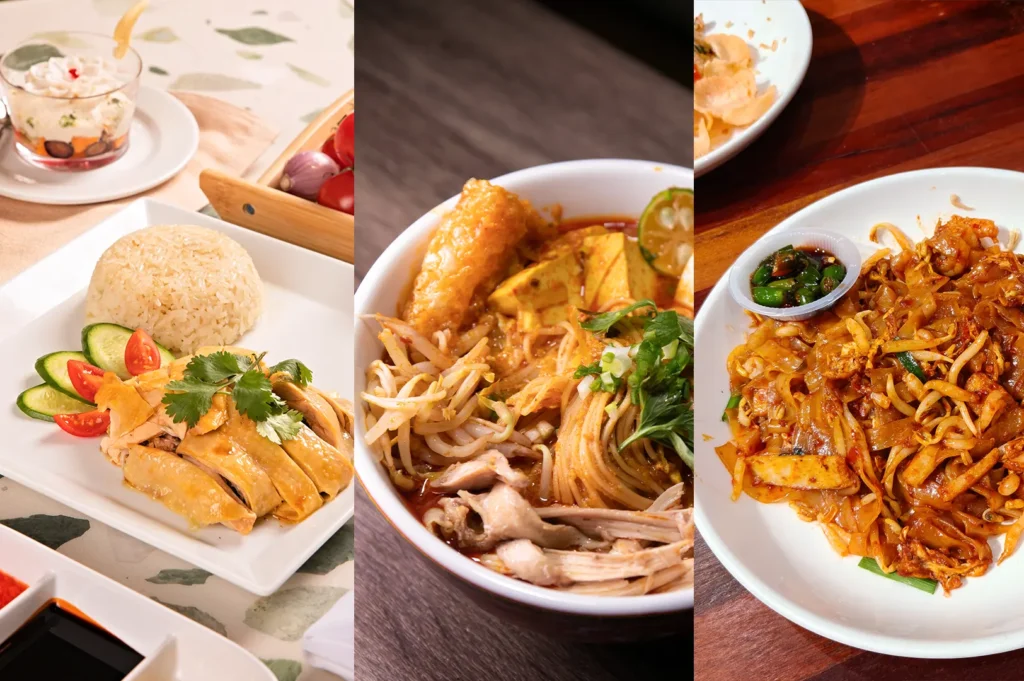
Some dishes carry more than flavor. They carry where people came from and how those origins settled into something local.
Hainanese chicken rice traces back to Hainanese immigrants, who adapted a home-style dish into the fragrant, poached-chicken plate now eaten everywhere. The rice, cooked in chicken fat and aromatics, is the quiet heart of it.
Laksa is Peranakan through and through, a coconut curry broth that speaks of Chinese and Malay traditions meeting in one bowl.
Char kway teow comes from Chinese roots, once a filling meal for laborers, now loved for its smoky wok flavor and slippery flat noodles.
Satay carries Malay heritage, skewers grilled over charcoal and served with peanut sauce, a dish built for sharing.
Nasi lemak is Malay at its core, coconut rice with sambal and small sides, once a humble breakfast and now eaten at any hour.
Roti prata reflects Indian influence, a flatbread cooked fresh and folded with curry, equally at home at dawn or midnight.
Bak kut teh holds Chinese origins, a peppery pork rib soup that started as sustenance for dock workers and became comfort in a bowl.
None of these is better than another. Each is simply a chapter, written by a different community, in the same long book.
Why Hawker Centres Became the Heart of Singapore Communities
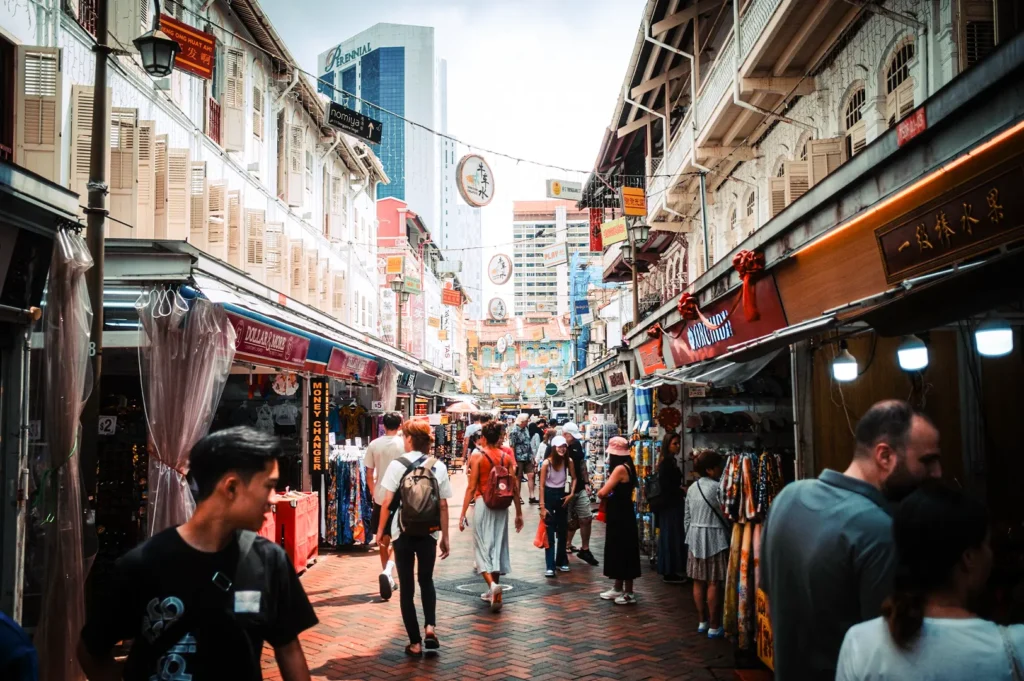
A hawker centre is not only a place to eat. It is where a neighborhood shows up.
The food is affordable, so it belongs to everyone. A retiree, a student, and an office worker can sit at the same table, having paid roughly the same few dollars for lunch.
Those shared tables matter. You take the empty seat across from a stranger without a second thought. Conversations start, or they do not, but the sitting together is its own quiet kind of belonging.
Many stalls are family businesses, recipes passed from one generation to the next. The uncle at the noodle stall might be cooking his father’s dish, in the same spot, for the same regulars.
This is why the centre becomes an anchor. It holds the everyday rhythm of a place, the small routines that make a neighborhood feel like home.
UNESCO Recognition and What It Means
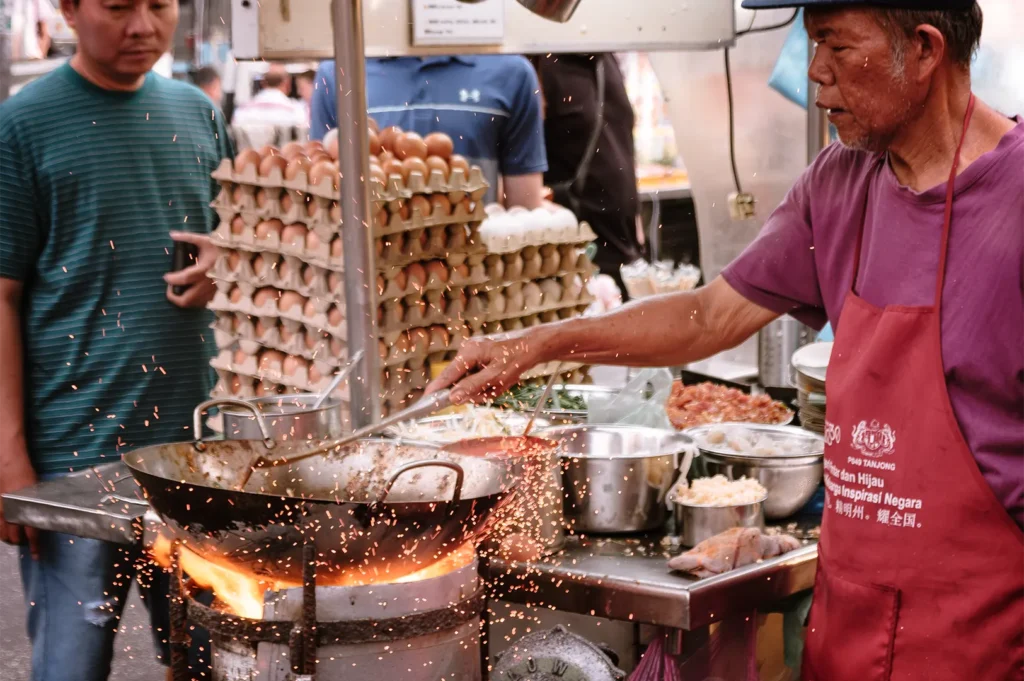
In December 2020, hawker culture was inscribed on UNESCO’s Representative List of the Intangible Cultural Heritage of Humanity. It was Singapore’s first entry on that list.
The recognition was not really about any single dish. It honored the whole living practice: the community dining, the culinary craft, the way people of every background gather at those tables.
What the listing offers is a kind of protection through attention. It says these traditions are worth documenting, worth teaching, worth carrying forward.
For the hawkers themselves, it was acknowledgment of something they had always known. The work they do, often long and unglamorous, holds real cultural weight. The bowl of soup an auntie has ladled for decades is heritage, even if she never called it that.
The Challenges Facing Hawker Culture Today
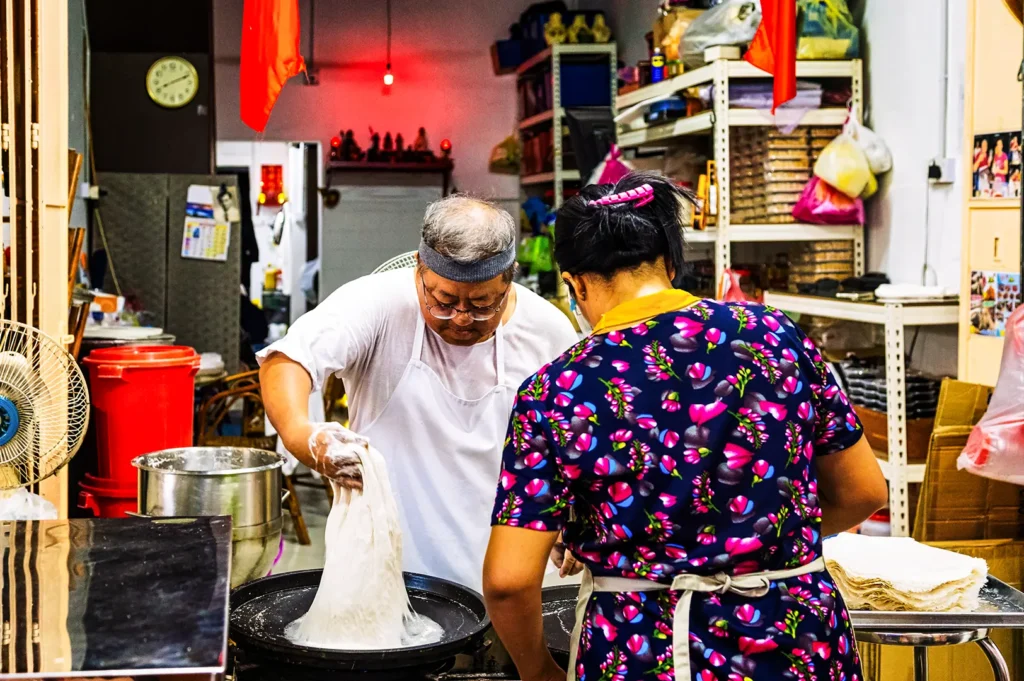
For all its recognition, hawker culture faces a quieter set of struggles.
Many of the finest hawkers are aging. Some have cooked the same dish for forty years or more, and the question of who continues after them is not easily answered.
Succession is hard. The hours are long, the margins thin, and younger family members often choose other paths. A recipe can be passed down, but only if someone is willing to take it on.
Costs keep rising too. Rent, ingredients, and utilities all press on stalls that were built to keep food cheap. Holding prices low while covering higher bills is a daily balancing act.
Consumer habits shift as well. Delivery apps, air-conditioned food courts, and changing tastes all pull attention in different directions.
There is hope in it, though. Government initiatives now encourage younger people to take up hawking, and a new generation of cooks is finding ways to innovate while keeping the soul of the food intact.
The balance is delicate. Preserve too rigidly, and the culture stiffens. Change too freely, and it loses what made it matter.
Why Hawker Culture Continues to Define Singapore
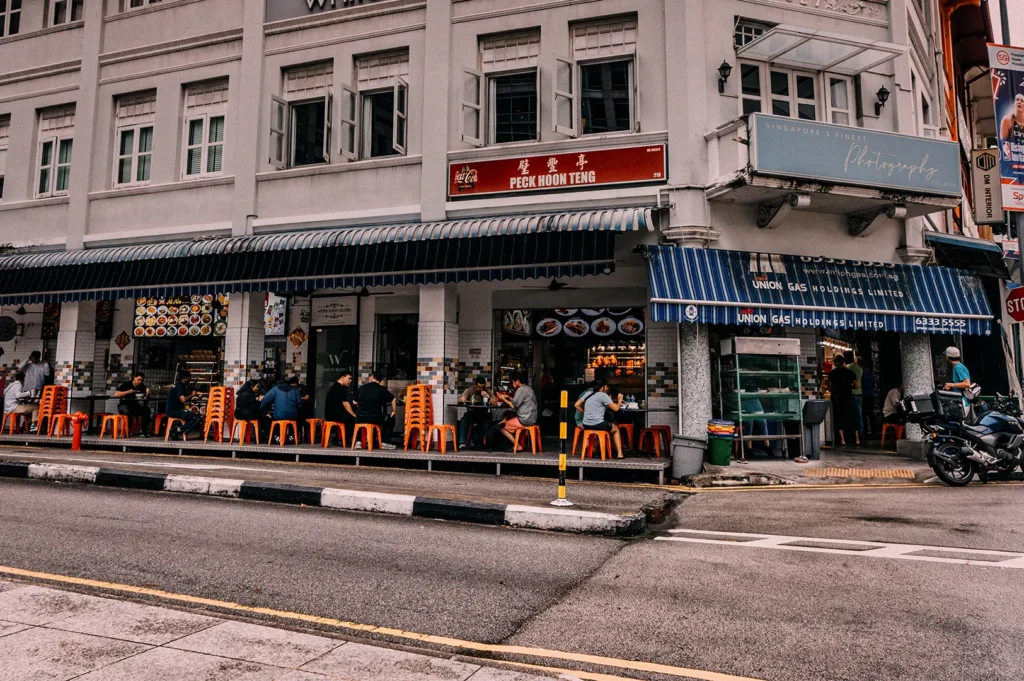
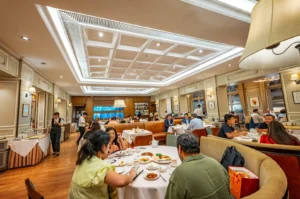
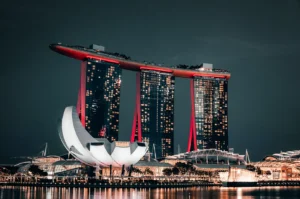
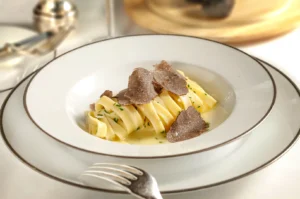
Singapore now has a glittering fine dining scene, tasting menus, and rooms with views. And still, the hawker centre holds its place.
Part of it is access. Good food here does not depend on your budget. That openness is rare, and it shapes how the whole country relates to eating.
Part of it is honesty. There is little performance at a hawker stall. The cook makes the dish, hands it over, and lets the food speak.
And part of it is shared identity. Ask people about the best version of any dish, and you will get strong opinions, warm memories, and directions to a stall they swear by. That debate itself is a form of belonging.
Food here is tied to community in a way that does not fade with trends. It is where diversity is not a slogan but a daily, edible reality.
Conclusion
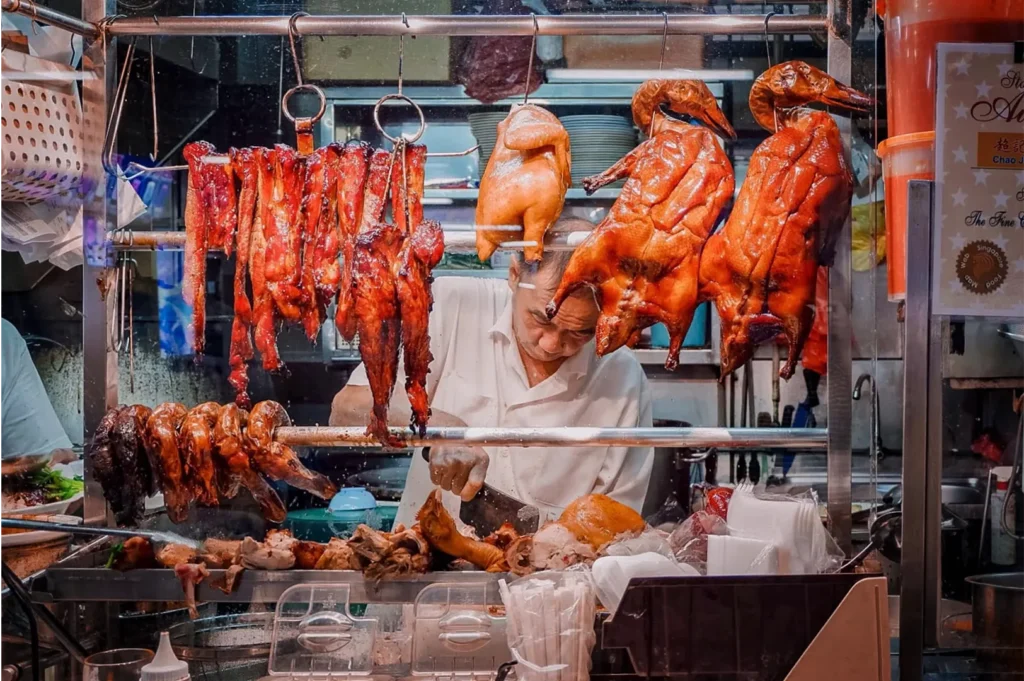
Hawker culture is not a collection of stalls. It is a living record of Singapore, written in rice, broth, and charcoal smoke.
You can trace the whole story through it. The immigrants who arrived in the 1800s. The hardship after the war. The move from crowded streets into purpose-built centres. The slow, generous blending of Chinese, Malay, Indian, Peranakan, and Eurasian kitchens into something wholly its own.
The next time you sit at one of those shared tables, take a moment before you eat. Notice the fan overhead, the queue forming, the auntie who has made this dish ten thousand times.
You are not just having lunch. You are part of a story that keeps being written, one plate, one generation, one quiet table at a time.